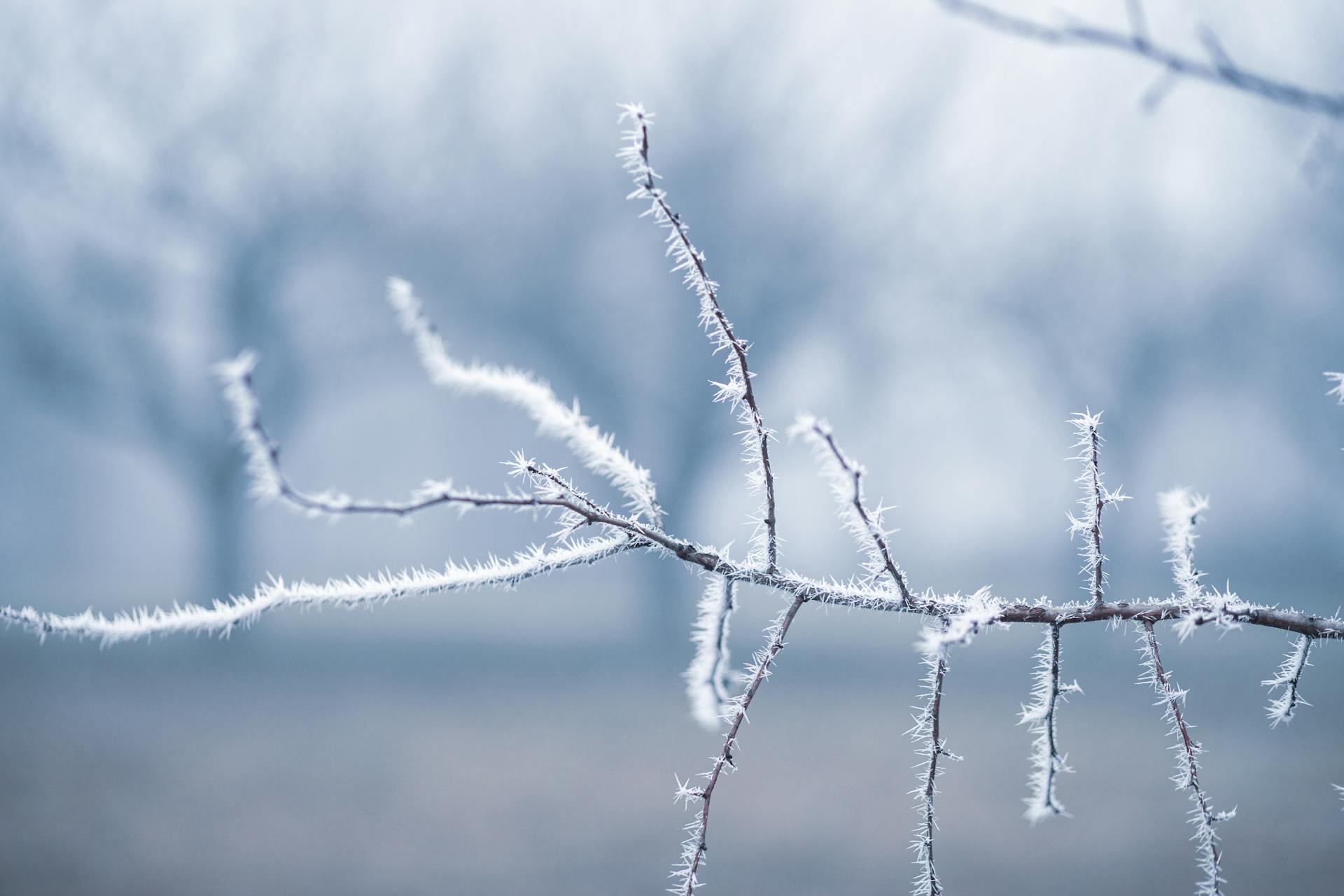
Hoar frost on a tree branch. This visually striking type of frost forms when water vapor in the air comes in contact with an object that has a temperature below freezing (0 °C / 32 °F).
Greetings everybody. 2025 had some amazing scientific discoveries and we’ll take a look back at them. This April will have a spectacular comet visible to many around the globe. Of course, there’s plenty to read on science funding cutbacks, emissions, last years billion dollar disasters in the USA, and how so many of this week’s links will directly affect you. There are changes in this week’s US Drought Monitor; improvement for some, same conditions for others.
Don’t forget to read the latest installment of the Tornado Quest Chronicles, check your NOAA weather radio, and prepare for winter weather before you’re left out in the cold.
So, grab a cup of coffee, settle in, and let’s get started!
- It’s not too far into 2026 to take a look back at some of the amazing scientific discoveries of 2025.
- A newly discovered comet may become the brightest of 2026 and could be visible to the naked eye when it passes closest to Earth on April 27.
- If the U.S. falls behind in science due to political divisions and funding cuts, you could face worse healthcare, weaker technology, and fewer job opportunities while other countries surge ahead.
- Ethylene oxide, a toxic gas from industrial plants, was recently found to be far more cancer-causing than thought, but political and industry push back may prevent the EPA from updating safety rules…leaving communities exposed to unacceptable health risks.
- If cities don’t drastically cut construction emissions, like using better designs and materials, your cost of living could skyrocket, housing shortages could worsen, and extreme weather could damage homes and infrastructure, all while making climate goals impossible to meet.
- This new study demonstrates a technological breakthrough in correcting NOAA’s snow‑cover data, confirming a decline in Arctic snow and strengthening climate science, not providing ammunition for climate change denial.
- Rising global temperatures, nearing irreversible thresholds, threaten to intensify extreme weather, disrupt food supplies, and harm health while political rollbacks on climate science leave communities more vulnerable.
- In 2025 the U.S. faced 23 billion‑dollar weather disasters including record‑cost wildfires, severe storms and tornadoes causing $115 billion US dollars in damage and highlighting how climate change is making extreme events more frequent and costly.
WHEN SNOW MEETS SCIENCE: WHAT EVERY NON-METEOROLOGIST NEEDS TO KNOW

WINTER WEATHER PREPAREDNESS
US DROUGHT MONITOR
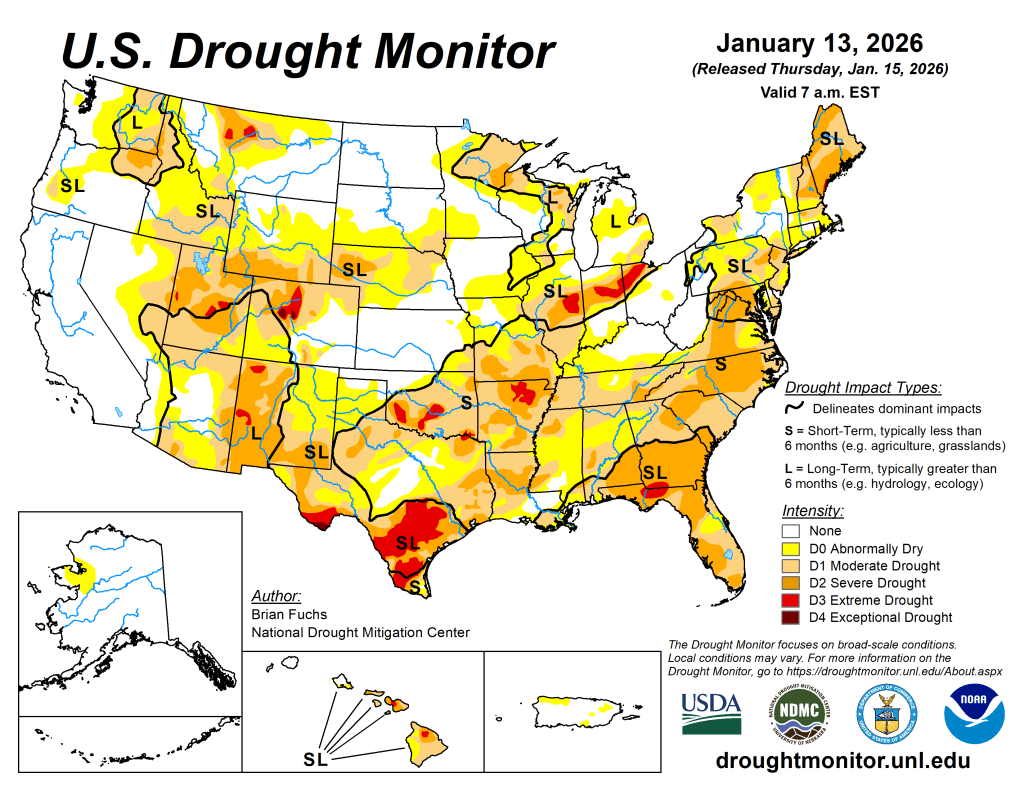
Here’s this week’s US Drought Monitor. The past week saw heavy rains in the central U.S., with over 5 inches in parts of Mississippi and Alabama, while unseasonably warm temperatures kept precipitation as rain rather than snow in the Plains and Midwest. The Southwest and Rocky Mountains saw beneficial rain and snow, easing drought conditions. Looking ahead, the western U.S. will likely stay dry, while the Northeast and Great Lakes expect rain. Temperatures will swing dramatically…warmer in the West (10–13°F above normal) and cooler in the East (10–13°F below normal). These shifts could impact travel, energy costs, and water supplies, bringing relief in some areas and challenges in others. The latest fire weather outlooks can be found at the Storm Prediction Center website where they are updated daily.
NOAA WEATHER RADIO
Here’s your weekly reminder to check your NOAA weather radio’s batteries, programming, settings, and reception. NOAA has a comprehensive page on NOAA weather radio…a feature of the National weather Service in the USA that has saved countless lives.

CITIZEN SCIENCE
Citizen science lets everyday people actively shape real research by sharing observations and data. Join now to make a tangible impact, discover new insights, and become part of a global community driving scientific breakthroughs!
- The CoCoRaHS project invites weather enthusiasts to become citizen scientists by submitting daily precipitation reports that support forecasting and climate research even on dry days.
- Another path into becoming a citizen scientist is using the free mPING app! Your weather reports go directly to the National Severe Storms Laboratory in Norman, Oklahoma!
That’s a wrap for this week! Thanks for stopping by! See you next Saturday!
™ Tornado Quest © 1998‑2026 Tornado Quest, LLC. All Rights Reserved.
 TORNADO QUEST
You must be logged in to post a comment.