Greetings everyone. Winter is still going strong across North America and the rest of the northern hemisphere. Southern USA states are getting a respite for the next few days. However, we’ve still got the possibilities for substantial winter weather events. Just to be on the safe side, check out the Winter Weather Preparedness page for essential tips to keep you and your loved ones safe. If you’d like to learn how winter precipitation forms and why it’s such a challenge for meteorologists to forecast, visit the ‘When Snow Meets Science’ page to uncover the fascinating secrets few know. Don’t forget to read the latest installment of the Tornado Quest Chronicles and check your NOAA weather radio. And as always, I’ve curated several thought-provoking reads for this week to keep you informed and inspired. Be sure to check out this week’s read on big changes at NOAA’s Storm Prediction Center regarding your severe weather outlooks. Stay safe, stay warm, and stay hungry for knowledge!
- A massive, invisible clump of dark matter might be sitting near our solar system, helping scientists learn more about this mysterious substance.
- The sun rotates, but its rotation speed varies depending on where you look and your vantage point in space.
- This is a case of catch 22. The use of chemicals to replace ozone-depleting substances has led to a significant increase in a potentially harmful “forever chemical” called TFA in our environment.
- AI has many useful purposes, but can it be used to prevent wildfires?
- Panic buying before storms isn’t preparedness but it is foolish because it wastes food, increases emissions, and makes it harder for everyone, especially those in need, to get essential supplies.
- Adding nitrogen to young tropical forests can significantly speed up their growth, helping them absorb more carbon dioxide from the air.
- The recent massive winter storms in America with frigid temperatures and large snowfalls feel more extreme due to recent mild winters caused by climate change, but don’t be fooled. Cold snaps like this are still dangerous and a stark reminder of nature’s power.
- There are some very important changes coming March 3, 2026 to the Storm Prediction Center’s severe weather outlooks. Here’s a brief overview that explains the changes with largely concentrate on tornado, damaging wind, and hail probabilities. If you have any concerns or interests in severe weather, these are changes you need to be aware of.
WHEN SNOW MEETS SCIENCE: WHAT EVERY NON-METEOROLOGIST NEEDS TO KNOW

WINTER WEATHER PREPAREDNESS
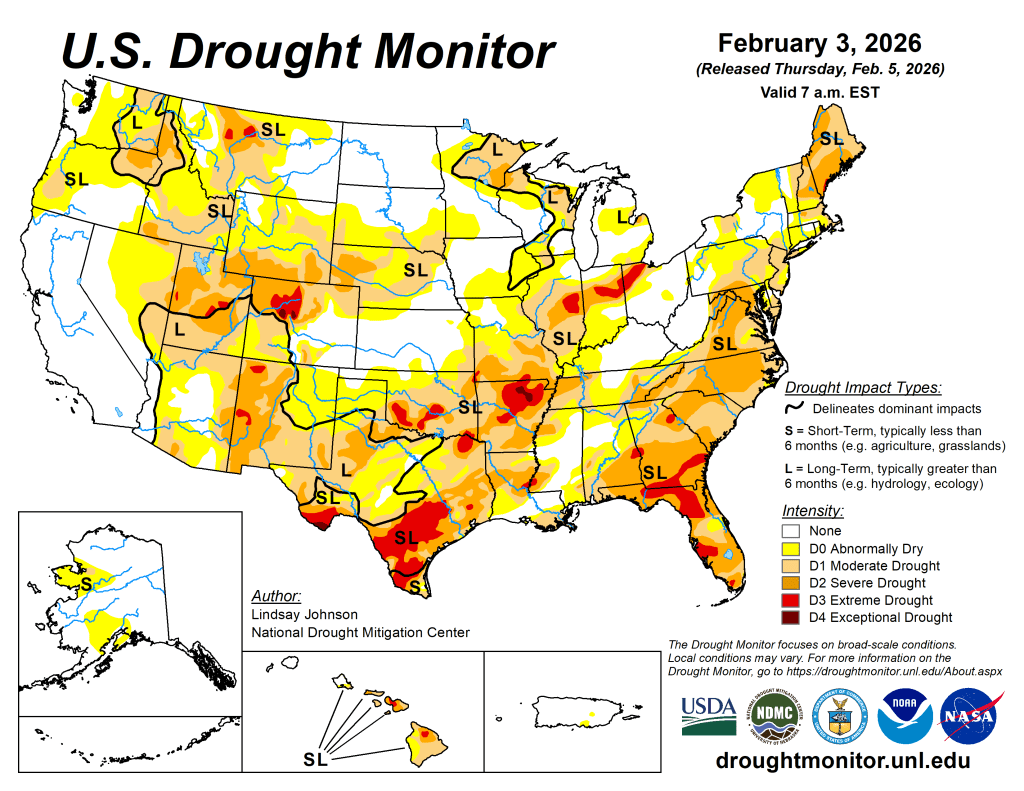
US DROUGHT MONITOR
Here’s this week’s US Drought Monitor. This week, the U.S. saw a temperature divide with colder weather in the East and warmer conditions in the West. Most areas received little rain or snow, worsening droughts in the West and expanding dry conditions in the South. A winter storm hit parts of the Southeast with snow. Over the next week, expect rain and snow in the central and eastern U.S., with heavy precipitation in the Mississippi and Ohio valleys. The West will see widespread rain and snow, especially in the northern mountains. Next week, temperatures are likely to be above average across most of the country, with more rain expected in the West and normal conditions elsewhere. The latest fire weather outlooks can be found at the Storm Prediction Center website where they are updated daily.
NOAA WEATHER RADIO
Here’s your weekly reminder to check your NOAA weather radio’s batteries, programming, settings, and reception. NOAA has a comprehensive page on NOAA weather radio…a feature of the National weather Service in the USA that has saved countless lives.

CITIZEN SCIENCE
Citizen science lets everyday people actively shape real research by sharing observations and data. Join now to make a tangible impact, discover new insights, and become part of a global community driving scientific breakthroughs!
- The CoCoRaHS project invites weather enthusiasts to become citizen scientists by submitting daily precipitation reports that support forecasting and climate research even on dry days.
- Another path into becoming a citizen scientist is using the free mPING app! Your weather reports go directly to the National Severe Storms Laboratory in Norman, Oklahoma!
That’s a wrap for this week! Thanks for stopping by! See you next Saturday!
™ Tornado Quest © 1998‑2026 Tornado Quest, LLC. All Rights Reserved.
 TORNADO QUEST
You must be logged in to post a comment.