Greetings everyone. Meteorological spring is starting on 1 March 2026. Winter weather continues for many regions, but it’s time to look at and prepare for another weather hazard. Check out the Severe Weather Preparedness And Tornado Safety page for a wealth of very important information. Also this week, I’ve got the newest installment of the Tornado Quest Chronicles. It’s hot off the press, so don’t miss it. Get ready for a cerebral workout. I’ve curated several thought-provoking reads for this week to keep you informed and inspired. Settle in for some good reads, brush up on your severe weather and tornado safety information, and always stay hungry for knowledge.
- We know that lightning occurs on many planets, but could it also exist on Mars, the planet that we know more about than any other in our solar system?
- Here’s an interesting read on the history of our home, planet Earth. At one time, it was more like a snowball than the home we know today.
- This year’s winter Olympics was challenging, but not for some of the most obvious reasons.
- Deserts and oceans would, logically, be separated by vast distances. The reality on our planet it something else.
- The Antarctic Peninsula acts as an early warning signal for climate change and shows already visible warming impacts and warnings for the rest our home planet, but decisive action now could still prevent irreversible damage.
- Stricter climate policies in leading economies successfully cut carbon emissions by targeting major polluting sectors and leveraging international cooperation, a study finds.
- Peat lands, though covering only 3% of Earth’s surface, store more carbon than all the planet’s forests combined, but their expansion in the Arctic due to warming and increased precipitation could lead to a dangerous release of stored carbon if they dry out and catch fire.
- A warming, increasingly rainy Southern USA climate is turning homes into mold‑friendly hot spots, underscoring how climate change is amplifying everyday health risks.
- The conditions that fuel massive wildfires are increasingly happening at the same time in multiple regions, leading to more devastating blazes and inescapable smoke worldwide. All the more reason to stock up on N95 face masks and pay close attention to fire weather forecasts, watches, and warnings.
- Brace for impact, America. A new study warns that weather disasters in the US (tornadoes, hurricanes, wildfires, floods, etc.) could cost over $1 trillion by 2030, with extreme events becoming more frequent and destructive.
- NOAA’s Storm Prediction Center in Norman, OK is an essential element to keeping you safe from a myriad of weather hazards year round. Here’s a FAQ on an essential part of NOAA that is priceless.
- Last but not least, a comprehensive introduction to clouds.
SEVERE WEATHER AND TORNADO SAFETY AND PREPAREDNESS
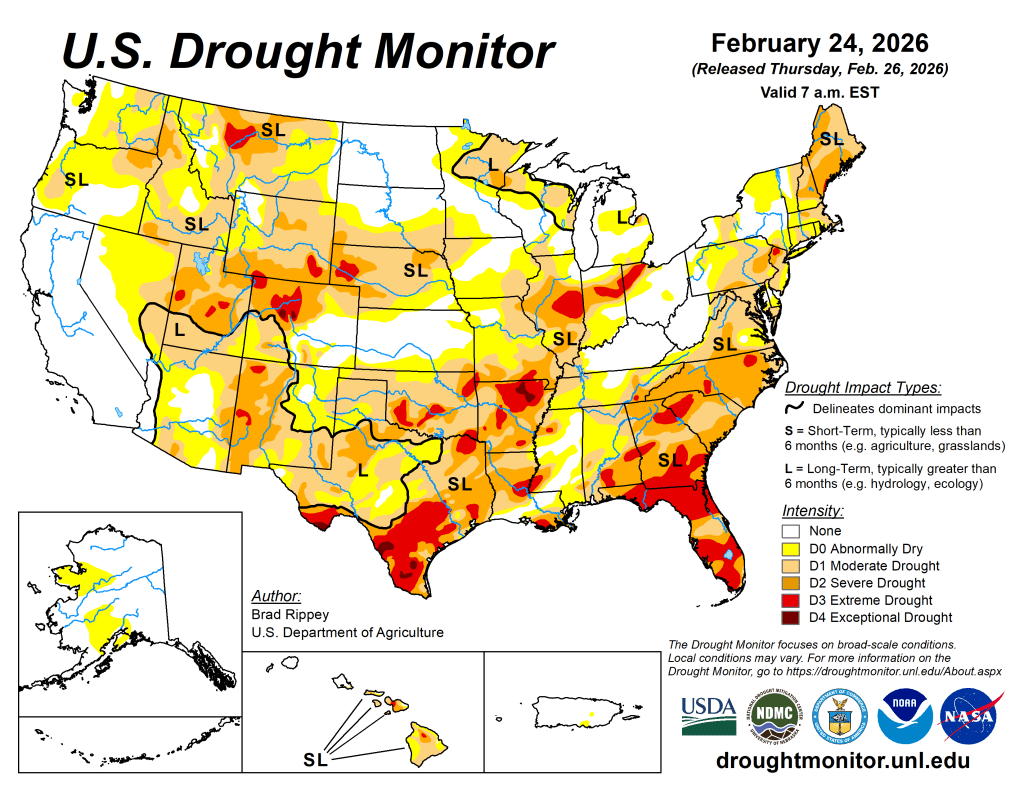
US DROUGHT MONITOR
Here’s this week’s US Drought Monitor. Stormy, cooler weather in California added a modest snow layer to the Sierra Nevada, yet heavy 4‑to‑8‑foot falls caused travel woes and the nation’s deadliest avalanche near Lake Tahoe in 45 years. The central U.S. saw record heat, gusty winds and massive wildfires, most notably the Ranger Road Fire, which scorched over 280,000 acres in Oklahoma and Kansas, harming livestock and property. The East Coast experienced a late‑winter blizzard dumping a foot‑plus of snow from Philadelphia to Boston, with a record 37.9 inches in Providence. Upcoming days will bring dry, record heat conditions to the Southwest and High Plains, rain to the Southeast, and a new Pacific moisture surge that will deliver wintry precipitation to the central Plains and Mid‑Atlantic early next week. Overall, a warmer‑than‑normal outlook for most of the USA. The latest fire weather outlooks can be found at the Storm Prediction Center website where they are updated daily.
NOAA WEATHER RADIO
Here’s your weekly reminder to check your NOAA weather radio’s batteries, programming, settings, and reception. NOAA has a comprehensive page on NOAA weather radio…a feature of the National weather Service in the USA that has saved countless lives.

CITIZEN SCIENCE
Citizen science lets everyday people actively shape real research by sharing observations and data. Join now to make a tangible impact, discover new insights, and become part of a global community driving scientific breakthroughs!
- The CoCoRaHS project invites weather enthusiasts to become citizen scientists by submitting daily precipitation reports that support forecasting and climate research even on dry days.
- Another path into becoming a citizen scientist is using the free mPING app! Your weather reports go directly to the National Severe Storms Laboratory in Norman, Oklahoma!
That’s a wrap for this week! Thanks for stopping by! See you next Saturday!
™ Tornado Quest © 1998‑2026 Tornado Quest, LLC. All Rights Reserved.
 TORNADO QUEST
You must be logged in to post a comment.