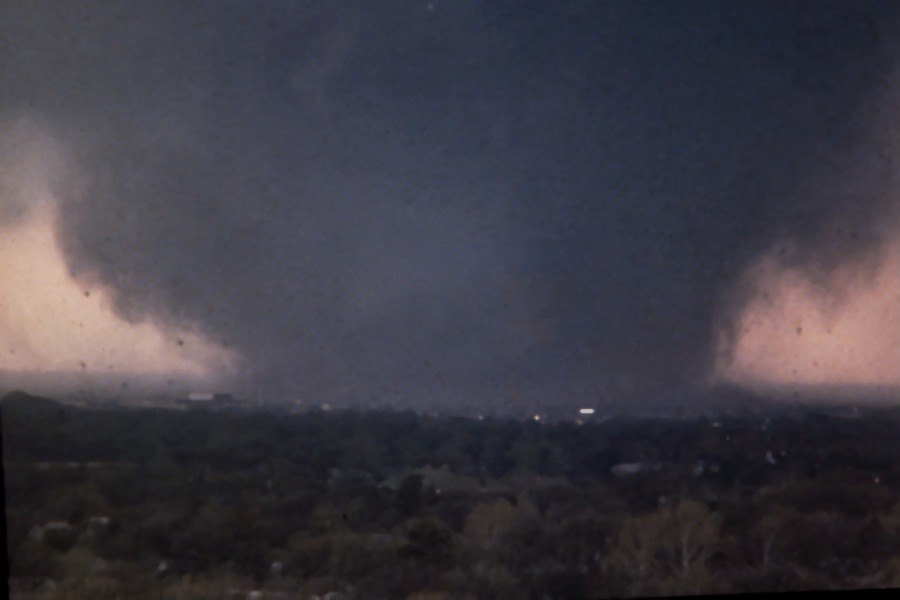
Greetings everyone. It’s time to prepare for severe weather weather hazards including tornadoes across many regions, especially in North America. Check out the Severe Weather Preparedness And Tornado Safety page for a wealth of very important information. Be sure to read the latest installment of the Tornado Quest Chronicles. Get ready for a cerebral workout. I’ve curated several thought-provoking articles for this week to keep you informed and inspired. Settle in for some good reads, brush up on your severe weather and tornado safety information, and always stay hungry for knowledge.
- If the night skies are clear, March of this year could be one of the best years to watch the northern lights in some time.
- Morning sunshine paired with early exercise helps reset our internal clocks after the pointless clock change, therefore we should scrap daylight saving time and stay on standard time all year.
- New, ultra‑precise galaxy maps suggest dark energy isn’t what we thought, shaking the foundations of conventional astronomy theories and sparking a fresh hunt for a better cosmic story.
- People across many backgrounds commonly believe the world could end soon, and those beliefs strongly shape how they respond to big‑scale threats like climate change, pandemics, and technology.
- Are you a snow skier? If so, you’ll want to read this article on ski resorts and the challenges of relying on man-made snow.
- Most sea‑level risk assessments underestimate coastal water heights by about a foot, meaning millions more people face imminent flooding. Understanding this hidden danger is crucial for anyone whose community, livelihood, or future planning depends on accurate climate predictions.
- The USDA settled a lawsuit to keep its climate risk data and tools publicly accessible, ensuring farmers and the broader public can continue to rely on vital information for preparing against extreme weather which is a crucial safeguard for the USA’s food security and community resilience.
- Most sea level studies have underestimated how fast the oceans are rising…by about 20–30 cm (roughly 8–12 inches), a whole century’s worth of change. It’s imperative you have accurate data now to protect your home, property and community from flood risks that are already much closer than we thought.
- Spreading crushed basalt on farmland could pull a billion tons of CO₂ out of the air each year while boosting crops. If the chemistry works as hoped, it may become a game‑changing, yet still debated, climate solution.
- ICYMI: NOAA’s Storm Prediction Center in Norman, OK is an essential element to keeping you safe from a myriad of weather hazards year round. Here’s a FAQ on an essential part of NOAA that is priceless.
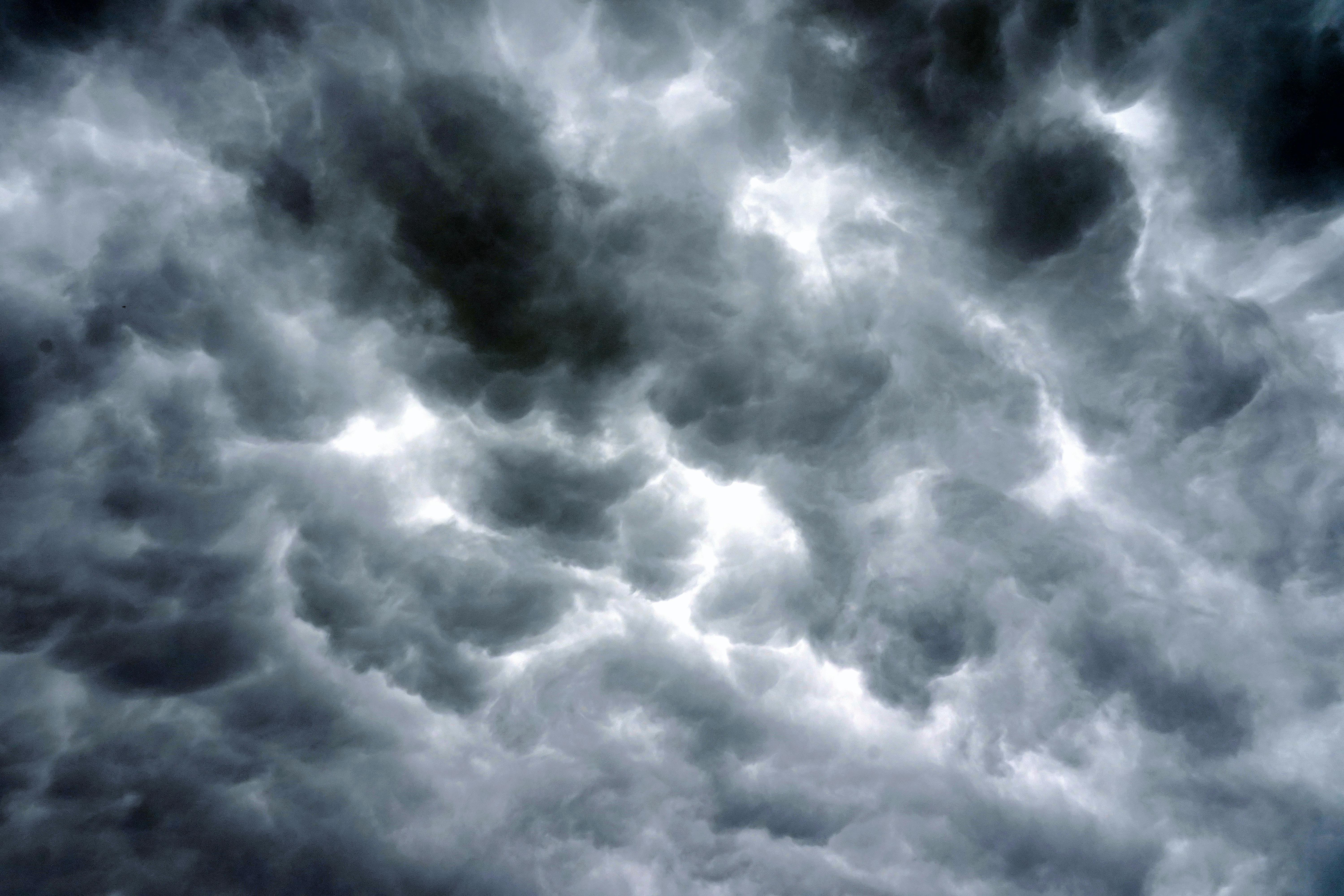
- Not all clouds are alike and the differences are fascinating. Here is a comprehensive introduction to clouds for curious minds of all ages.
SEVERE WEATHER AND TORNADO SAFETY AND PREPAREDNESS
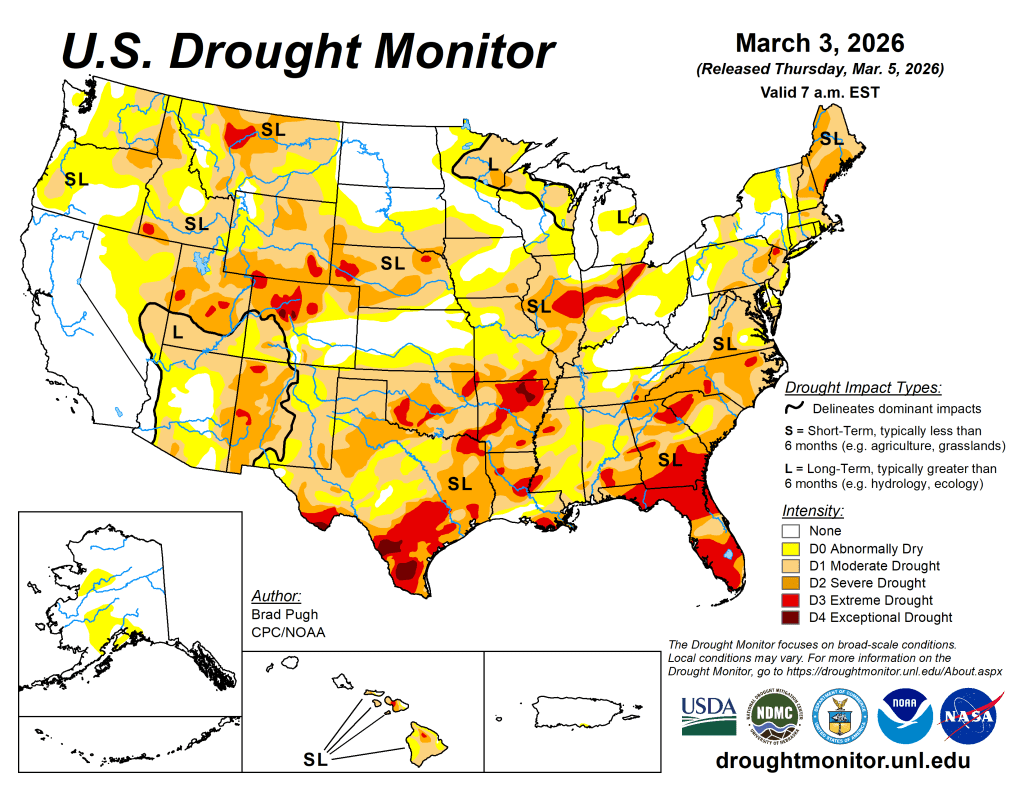
US DROUGHT MONITOR
Here’s this week’s US Drought Monitor. Since December 2025 a La Niña‑driven drought has deepened across the Lower Mississippi Valley, Southern Great Plains, the Carolinas, Georgia, southeastern Alabama and Florida, while the Mid‑Atlantic and parts of the Northeast linger in drought. Late February rains gave modest relief to the Southeast, but most of the Midwest stayed unusually dry and worsened again, spreading the drought west to the Central Plains and Rockies, where low snow pack raises spring concerns. Early March forecasts call for a band of 1 to 3 inches of rain from eastern Texas through the Mississippi and Ohio valleys (with some reach into the Northeast), snowfall in the Northern/Central Rockies, and continued dry, hot conditions from Virginia to Florida. The 6 to 10 day outlook (March 10‑14) keeps temperatures above normal across the Southeast and central U.S., predicts wetter conditions from the Mississippi Valley to the East Coast, cooler weather in the Pacific Northwest to the Northern Great Plains, and abundant rain for Hawaii.
. The latest fire weather outlooks can be found at the Storm Prediction Center website where they are updated daily.
NOAA WEATHER RADIO
Here’s your weekly reminder to check your NOAA weather radio’s batteries, programming, settings, and reception. NOAA has a comprehensive page on NOAA weather radio…a feature of the National weather Service in the USA that has saved countless lives.

CITIZEN SCIENCE
Citizen science lets everyday people actively shape real research by sharing observations and data. Join now to make a tangible impact, discover new insights, and become part of a global community driving scientific breakthroughs!
- The CoCoRaHS project invites weather enthusiasts to become citizen scientists by submitting daily precipitation reports that support forecasting and climate research even on dry days.
- Another path into becoming a citizen scientist is using the free mPING app! Your weather reports go directly to the National Severe Storms Laboratory in Norman, Oklahoma!
That’s a wrap for this week! Thanks for stopping by! See you next Saturday!
™ Tornado Quest © 1998‑2026 Tornado Quest, LLC. All Rights Reserved.
 TORNADO QUEST
You must be logged in to post a comment.