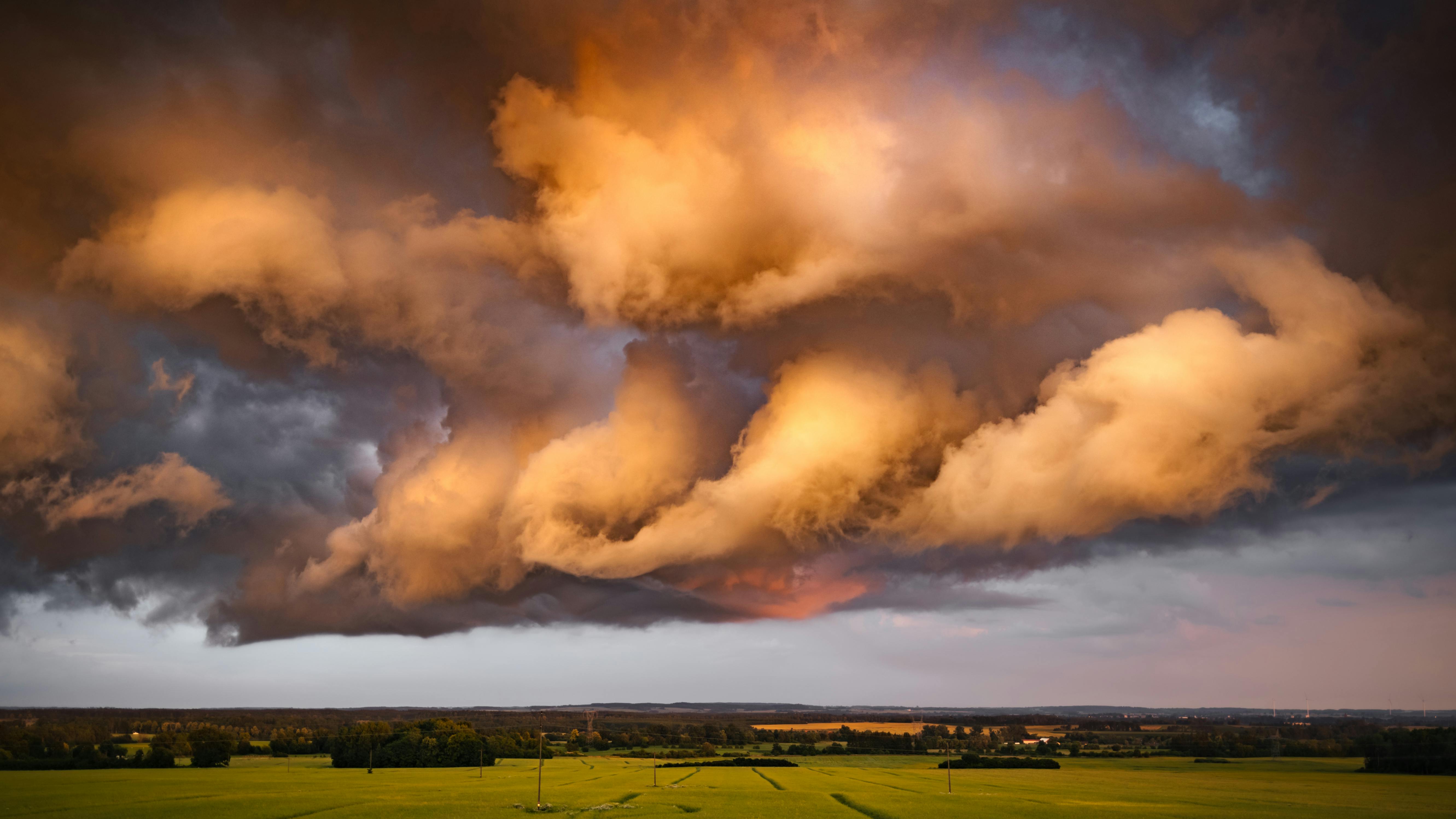
Greetings everyone. The severe weather season across the USA has arrived in full force. Several tornado days, some with fatalities, have taken place. Now’s the time to prepare. Check out the Severe Weather Preparedness And Tornado Safety page for a wealth of very important information. Be sure to read the latest installment of the Tornado Quest Chronicles for a look back at an unusual winter. I’ve curated several thought-provoking articles for this week to keep you informed and inspired. Settle in for some good reads, brush up on your severe weather and tornado safety information, and keep that hunger for knowledge going strong.
- New research reveals our Sun didn’t just form where we see it today, it migrated 10,000 light years from the crowded galactic center alongside thousands of ‘twin’ stars. This means our cosmic neighborhood is far more dynamic and interconnected than we ever imagined.
- The definition of a galaxy is more complex than previously thought, and understanding it could reshape our knowledge of dark matter and the universe.
- As global food systems face increasing uncertainty, taking small steps to prepare today, like stocking familiar foods or growing your own, gives you and your family greater safety, dignity, and peace of mind if a disaster should occur.
- Microplastics are everywhere, including in our bodies, and while the health impacts are not yet fully understood, their pervasive presence is a cause for concern and further research.
- Wildfire smoke is becoming more frequent with less time between events, impacting vulnerable communities the most in the USA and other wildfire-prone countries.
- Arctic sea ice is declining rapidly due to climate change, with this winter’s peak potentially being one of the smallest on record, affecting ecosystems, global climate patterns, and geopolitics, making it a global concern.
- As Alaska’s glaciers melt and form expanding lakes, barren landscapes are being transformed into habitats for salmon and wildlife. This creates a complex picture where environmental change brings both ecological opportunities and challenges.
- Earth is at its hottest in 125,000 years, yet climate news coverage has dropped 40%. This means you may be missing critical updates about a crisis that affects everyone, but staying informed is still within your power.
- The U.S. government is barely tracking geoengineering activities like cloud seeding and other weather modification experiments. You’ve every right to be concerned about this situation. This lack of transparency fuels misinformation and conspiracy theories while leaving communities unaware of what’s happening in their skies.
- Even if you’re skeptical, nine US states just shattered heat records while none broke cold ones. That’s a shift that’s already driving up wildfire risks and insurance costs for everyone, no matter where you live.
SEVERE WEATHER AND TORNADO SAFETY AND PREPAREDNESS
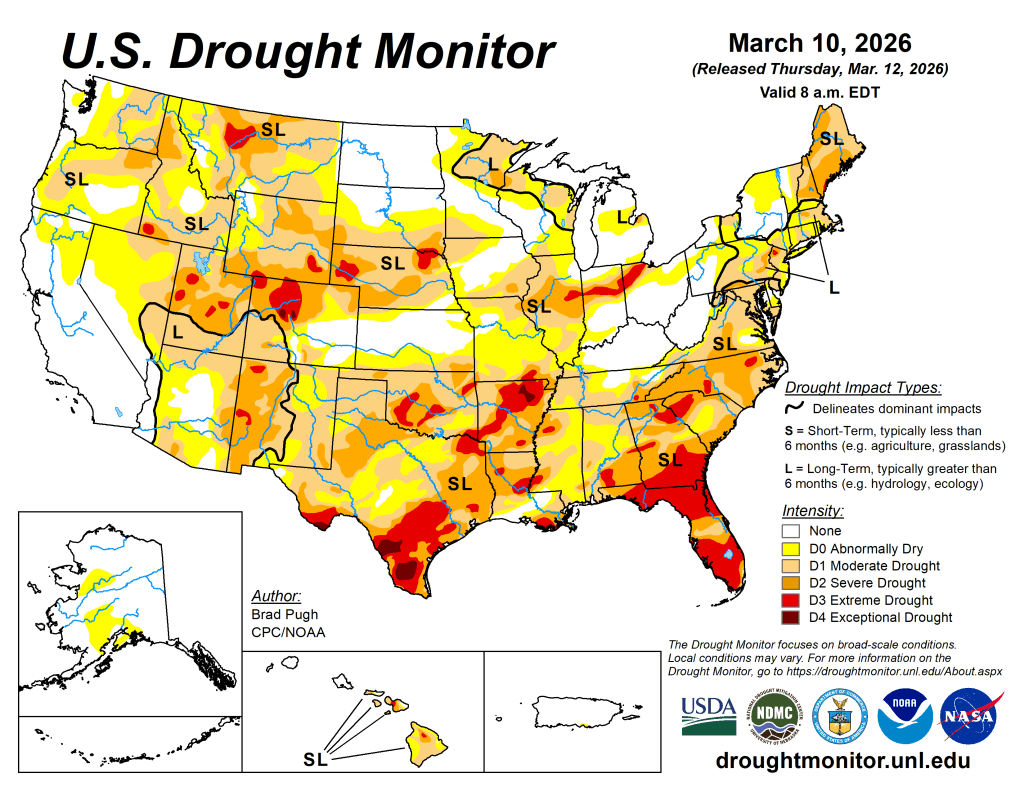
US DROUGHT MONITOR
Here’s this week’s US Drought Monitor. After a dry winter, early March brought welcome rain to parts of the Ohio Valley, Mississippi region, and Northeast, helping ease drought conditions in those areas. However, many regions still face serious water shortages. The Northeast continues dealing with long-term drought, the Southeast and Southern Plains remain in severe drought, and the West has a snow pack deficit. Looking ahead, colder air will move across the eastern U.S. mid-month with more rain expected for the Great Lakes, New England, and Florida. Meanwhile, the West could see record breaking warmth and continued dryness, while Hawaii will stay wet. The outlook suggests cooler temperatures for the East and warmer-than-usual conditions for the West through late March, with most of the country expecting less rain overall. While some areas are finally getting relief, others will need to wait for better conditions. The latest fire weather outlooks can be found at the Storm Prediction Center website where they are updated daily.
NOAA WEATHER RADIO
Here’s your weekly reminder to check your NOAA weather radio’s batteries, programming, settings, and reception. NOAA has a comprehensive page on NOAA weather radio…a feature of the National weather Service in the USA that has saved countless lives.

CITIZEN SCIENCE
Citizen science lets everyday people actively shape real research by sharing observations and data. Join now to make a tangible impact, discover new insights, and become part of a global community driving scientific breakthroughs!
- The CoCoRaHS project invites weather enthusiasts to become citizen scientists by submitting daily precipitation reports that support forecasting and climate research even on dry days.
- Another path into becoming a citizen scientist is using the free mPING app! Your weather reports go directly to the National Severe Storms Laboratory in Norman, Oklahoma!
That’s a wrap for this week! Thanks for stopping by! See you next Saturday!
™ Tornado Quest © 1998‑2026 Tornado Quest, LLC. All Rights Reserved.
 TORNADO QUEST
You must be logged in to post a comment.