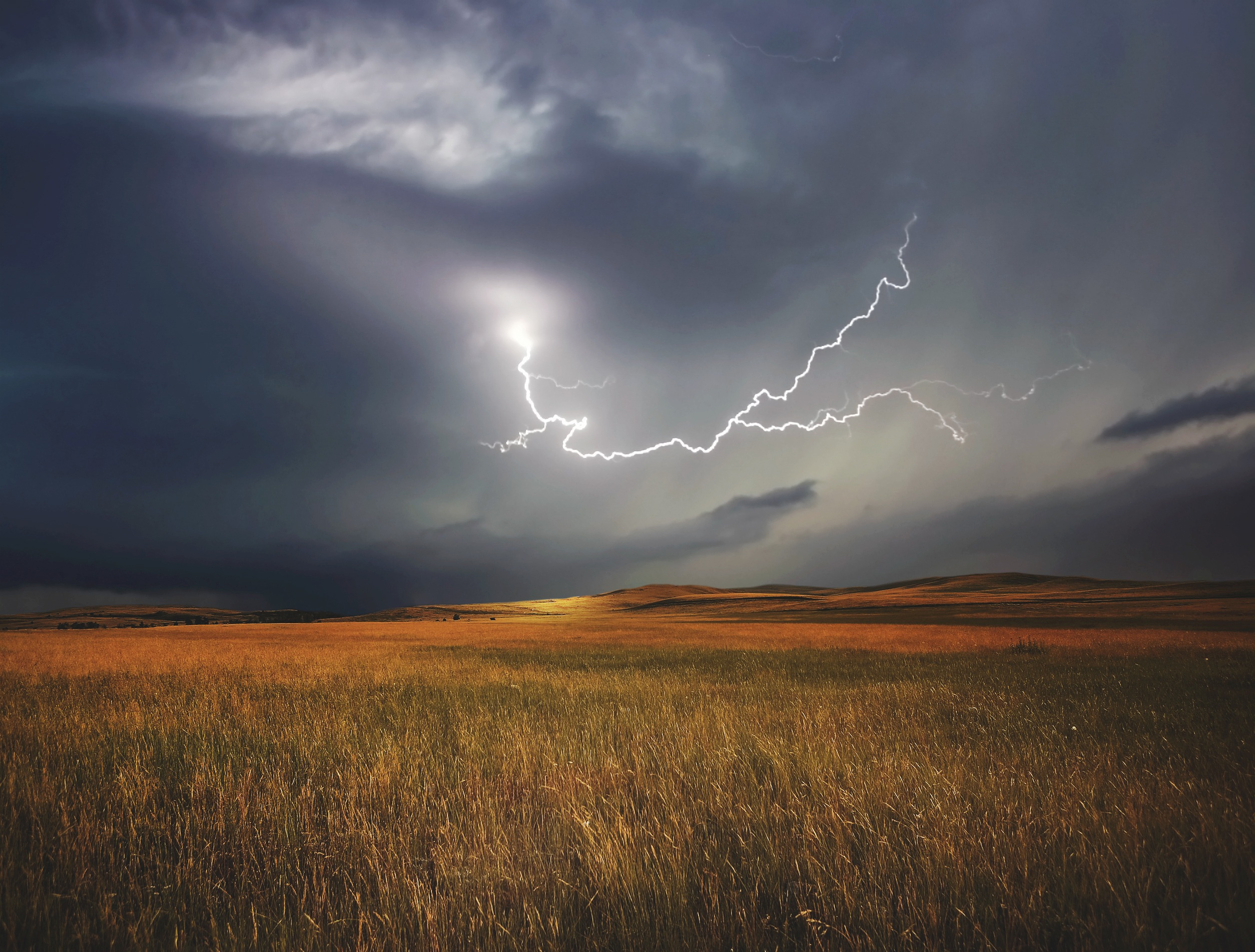
Greetings everyone. The severe weather season across the USA has arrived in full force. Several tornado days, some with fatalities, have taken place. While it’s quiet, now’s the time to prepare. Check out the Severe Weather Preparedness And Tornado Safety page for a wealth of very important information. Be sure to read the latest installment of the Tornado Quest Chronicles for a look back at an unusual winter. I’ve curated several thought-provoking articles for this week to keep you informed and inspired. Settle in for some good reads, brush up on your severe weather and tornado safety information, and keep that hunger for knowledge going strong.
- A little cool rain goes a long way in the appeal of a holiday in Great Britain. Miserable weather? Hardly. They haven’t spend a summer in Oklahoma.
- Here’s a very novel idea that has great potential: using asphalt partially made of…plastic.
- Rapidly melting glaciers in the Alps are destroying a natural time capsule that holds centuries of climate and pollution records. Scientists are racing to preserve this information before it’s lost forever because understanding our past is essential for predicting our climate future.
- Human activity is now slowing Earth’s rotation faster than at any point in 3.6 million years, providing undeniable physical proof that our impact on the planet is reshaping even its fundamental mechanics.
- The real climate heroes might be microscopic. Discover how warming soil is reshaping the underground networks that grow our food, and what farmers can learn from these tiny ecosystem engineers.
- Turns out our brains love a good yes-or-no story, even when it comes to climate change. Watching a lake go from frozen to unfrozen might just be the wake-up call we’ve been missing.
- Arctic sea ice reached its smallest winter maximum ever recorded, covering an area about twice the size of Texas less than normal. This is a worrying milestone that accelerates global warming as dark ocean water absorbs more heat instead of reflecting it away.
- Emergency managers face losing a critical hurricane planning tool just before storm season due to a federal contract dispute. This leaves millions in vulnerable regions without essential evacuation guidance and storm surge simulations.
- If you live in the USA, you need to check out NOAA’s 2026 Spring Outlook No matter where you live in the 50 states, there’s something here for you.
SEVERE WEATHER AND TORNADO SAFETY AND PREPAREDNESS
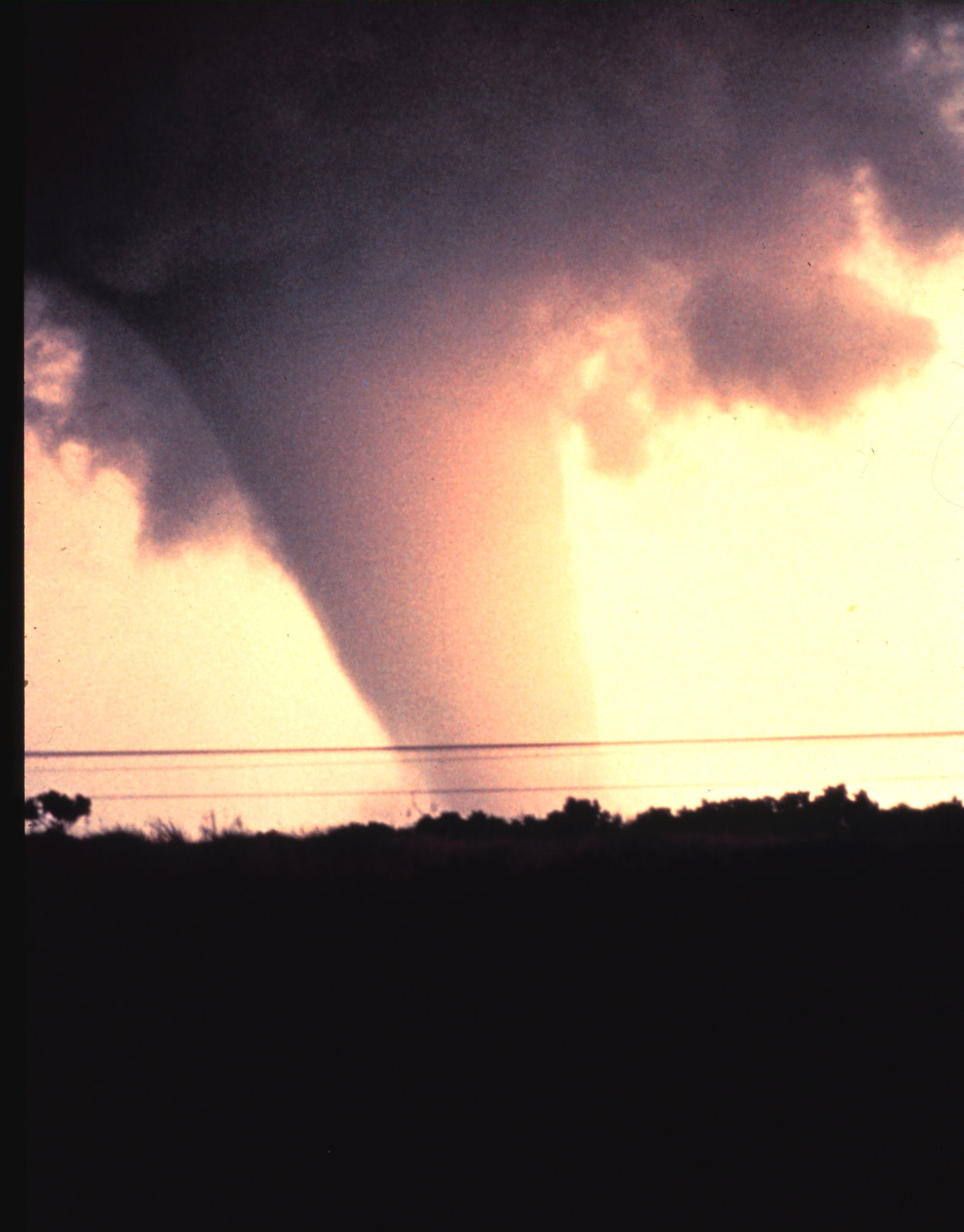
Photo courtesy NSSL
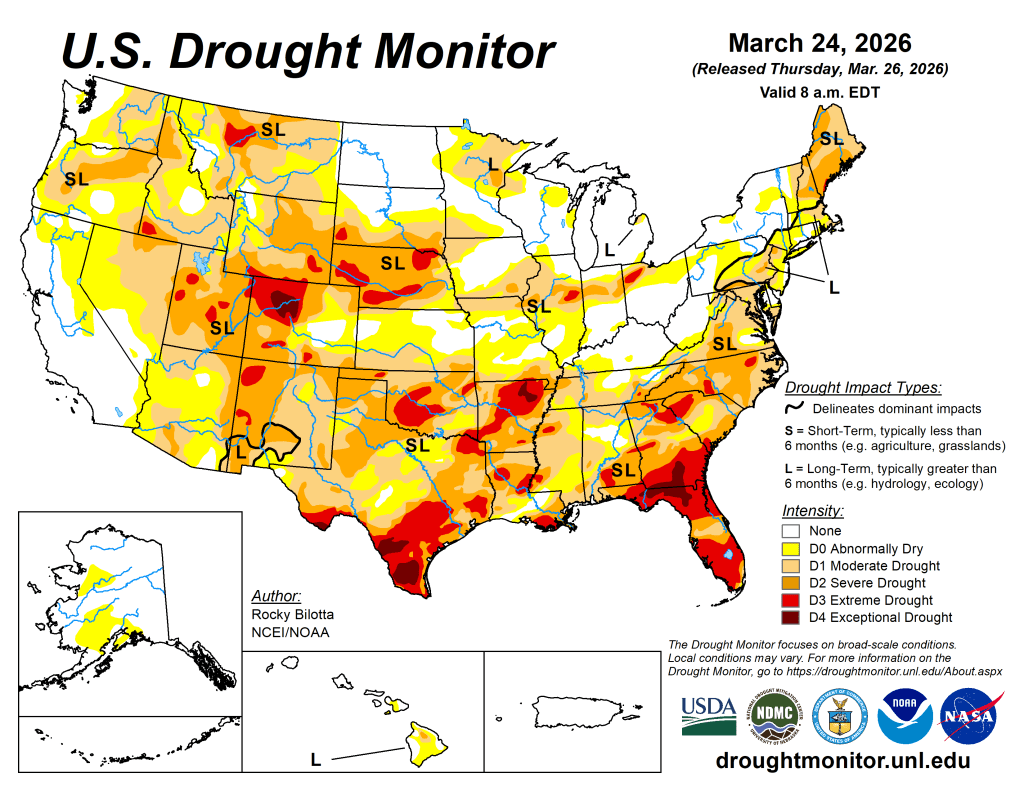
US DROUGHT MONITOR
This week, the United States experienced a dramatic weather tug-of-war, with some regions baking under record shattering heat while others drowned in historic rainfall. In the West and Plains, a stubborn heat dome pushed temperatures 20 to 25 degrees above normal, drying out soil and fueling massive wildfires including Nebraska’s devastating Morrill Fire that burned over 642,000 acres. Meanwhile, other areas got the opposite problem: the Pacific Northwest faced an atmospheric river, the Upper Midwest buried itself under 50 inches of late season snow, and Hawaii saw unprecedented rainfall that triggered dangerous landslides and flooding. Looking ahead, the pattern continues with another week of extreme warmth expected across much of the country, keeping fire risks elevated in the High Plains, while a shifting storm system brings more rain and snow to the Northwest and eventually the East. It’s a vivid reminder of just how volatile our weather has become. Some places desperately need relief from drought, while others are bracing for the next deluge. Stay tuned to local forecasts and take precautions whether you’re preparing for fire danger or flooding rainfalls.
NOAA’s US Drought Monitor website has the full regional details. The latest daily fire weather outlooks can be found at the Storm Prediction Center website.
NOAA WEATHER RADIO
Here’s your weekly reminder to check your NOAA weather radio’s batteries, programming, settings, and reception. NOAA has a comprehensive page on NOAA weather radio…a feature of the National weather Service in the USA that has saved countless lives.

CITIZEN SCIENCE
Citizen science lets everyday people actively shape real research by sharing observations and data. Join now to make a tangible impact, discover new insights, and become part of a global community driving scientific breakthroughs!
- The CoCoRaHS project invites weather enthusiasts to become citizen scientists by submitting daily precipitation reports that support forecasting and climate research even on dry days.
- Another path into becoming a citizen scientist is using the free mPING app! Your weather reports go directly to the National Severe Storms Laboratory in Norman, Oklahoma!
That’s a wrap for this week! Thanks for stopping by! See you next Saturday!
™ Tornado Quest © 1998‑2026 Tornado Quest, LLC. All Rights Reserved.
 TORNADO QUEST
You must be logged in to post a comment.