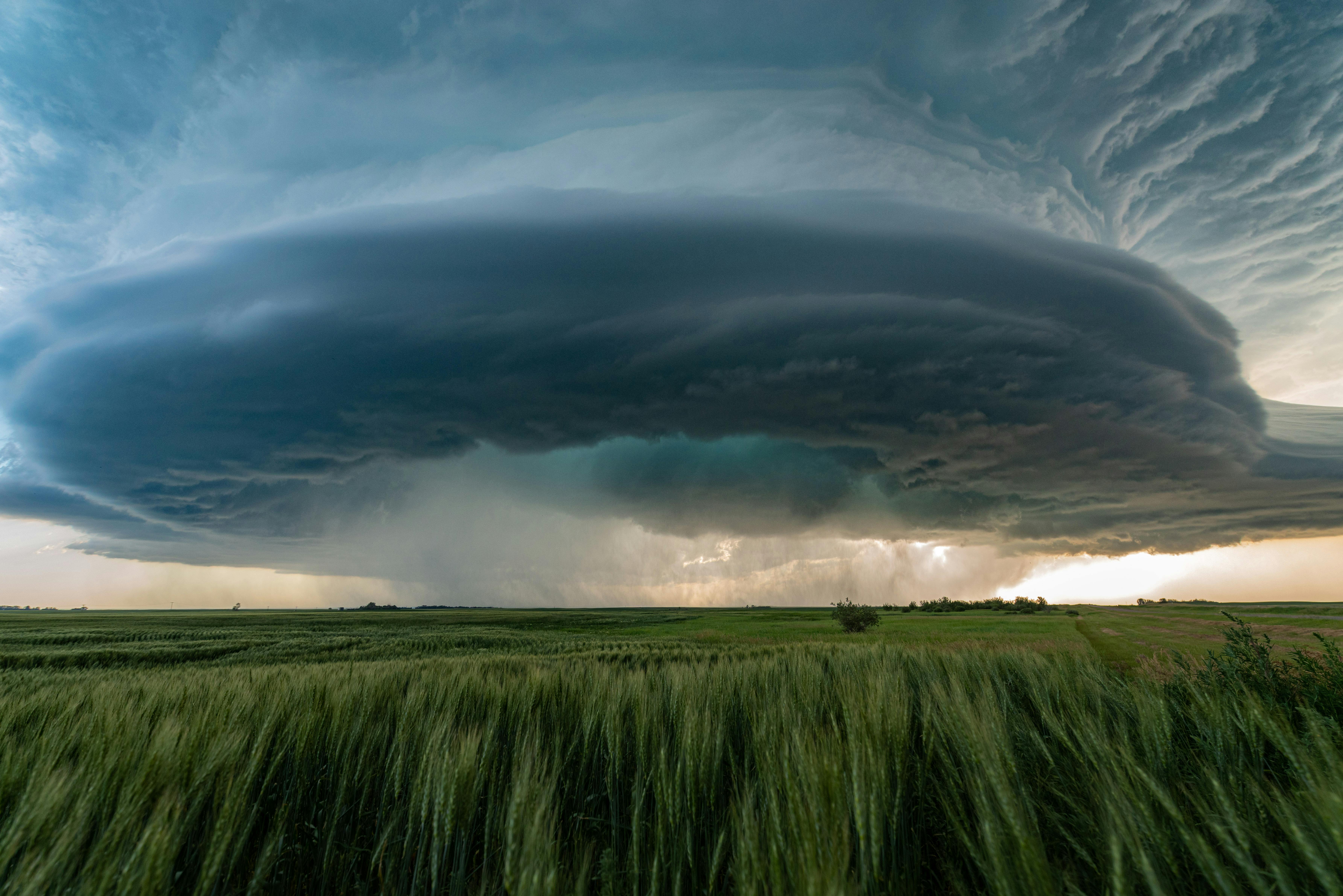
The peak of tornado season is on the doorstep, and this week’s roundup reflects a world that doesn’t slow down for anyone…from the agency most Americans count on when disaster strikes, to a century-old metal tube that quietly became one of the most important tools in water science. There’s also a story about environmental crises you forgot were ever solved, a flood risk number that will stop you cold, and two astronomy finds that will gently rearrange your sense of scale. In addition to ten links this week, you’ve got your severe weather and tornado preparedness info, the latest US Drought Monitor, a reminder to check your NOAA weather radio, and citizen science. Let’s get started.
- Astronomers just mapped something that has never been mapped before, the actual edge of where our galaxy makes its stars.
- Scientists just measured a black hole jet traveling at half the speed of light, and that’s not even the most staggering number in this story.
- FEMA was gutted. Then Kristi Noem was fired. Now the clock is ticking…and nobody inside the agency knows what comes next.
- Despite facing significant political and funding setbacks, climate leaders across healthcare, philanthropy, and communications continue their work because they see tangible progress happening and believe sustained effort can still deliver meaningful results.
- Nearly half of the world’s forest loss over the last decade happened in just four countries, and the United States is one of them.
- The ozone hole, acid rain, and DDT used to dominate headlines. Then they quietly disappeared. Here’s what actually happened to them.
- Heat damages crops, crops drive up food prices, and the most vulnerable children pay with their health. New research just put hard numbers on that chain for the first time.
- New York has more people at flood risk than any city in America. But another U.S. city makes it look almost safe by comparison.
- A classics professor went hiking in the mountains over a century ago and accidentally invented one of the most important tools in water science.
- Scientists have been predicting which oceans warm fastest…and for 70 years, the data has been proving them wrong.
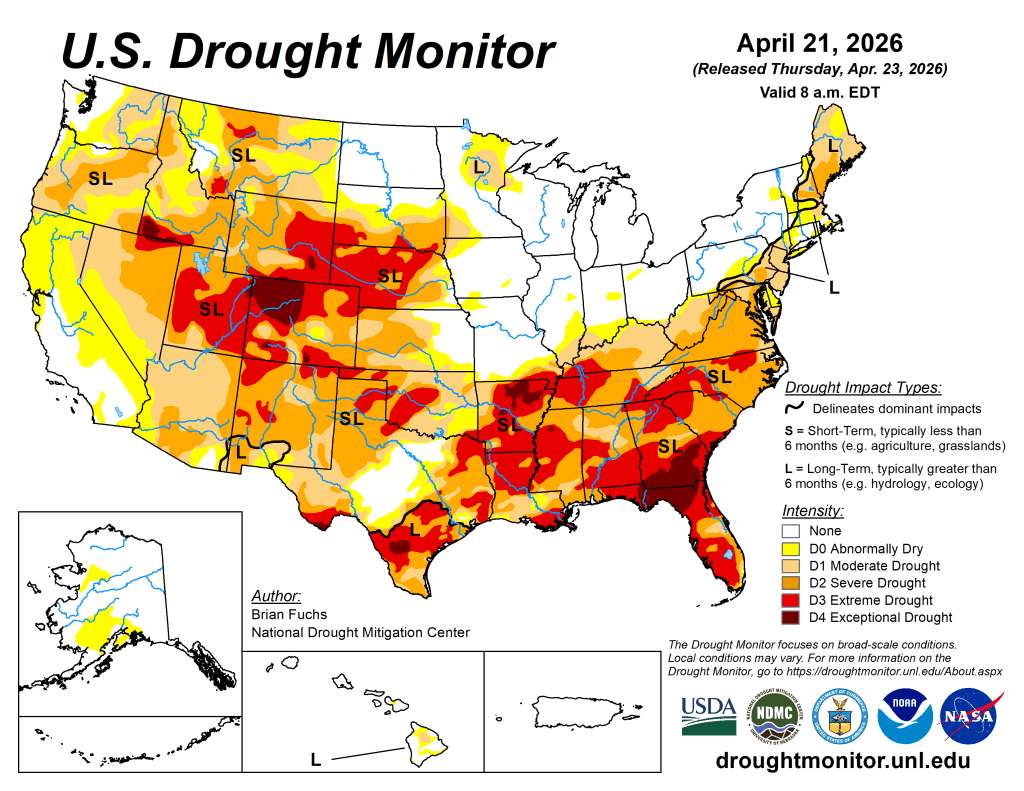
SEVERE WEATHER AND TORNADO SAFETY AND PREPAREDNESS
US DROUGHT MONITOR
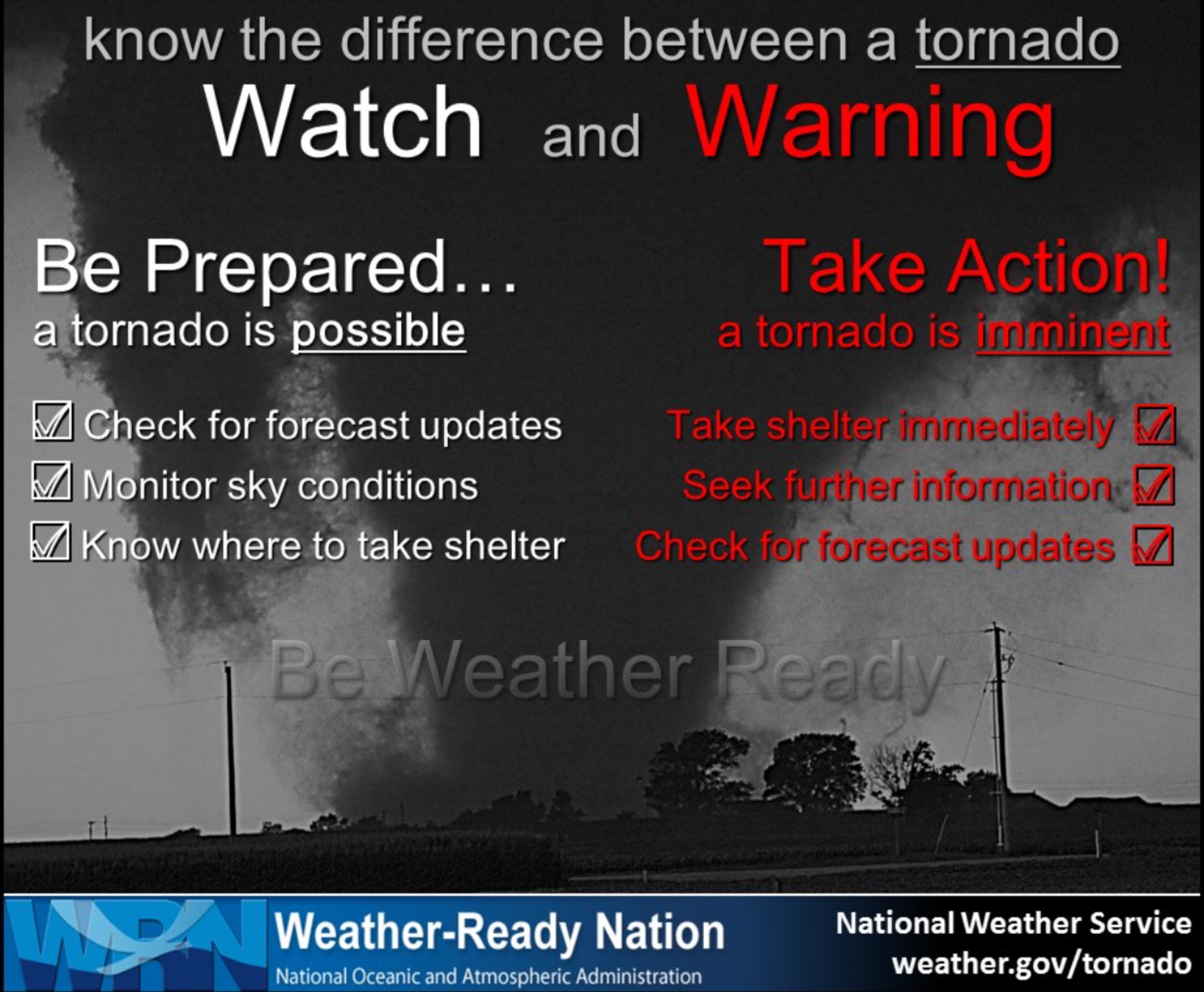
Last week, a heavy rain band drenched the central U.S. from Texas to Wisconsin while the Southeast and West stayed dry, creating a sharp temperature split between cool western skies and warm central heat. Looking ahead, expect continued rain and above-average warmth to dominate the South and Midwest, whereas the northern Plains and California will likely face cooler, drier conditions.
- NOAA’s US Drought Monitor website has the full regional details.
- The latest daily fire weather outlooks can be found at the Storm Prediction Center’s website.
NOAA WEATHER RADIO
Here’s your weekly reminder to check your NOAA weather radio’s batteries, programming, settings, and reception. NOAA has a comprehensive page on NOAA weather radio…a feature of the National weather Service in the USA that has saved countless lives.

CITIZEN SCIENCE
Citizen science lets everyday people actively shape real research by sharing observations and data. Join now to make a tangible impact, discover new insights, and become part of a global community driving scientific breakthroughs!
- The CoCoRaHS project invites weather enthusiasts to become citizen scientists by submitting daily precipitation reports that support forecasting and climate research even on dry days.
- Another path into becoming a citizen scientist is using the free mPING app! Your weather reports go directly to the National Severe Storms Laboratory in Norman, Oklahoma!
That’s a wrap for this week! Thanks for stopping by! See you next Saturday!
™ Tornado Quest © 1998‑2026 Tornado Quest, LLC. All Rights Reserved.


You must be logged in to post a comment.