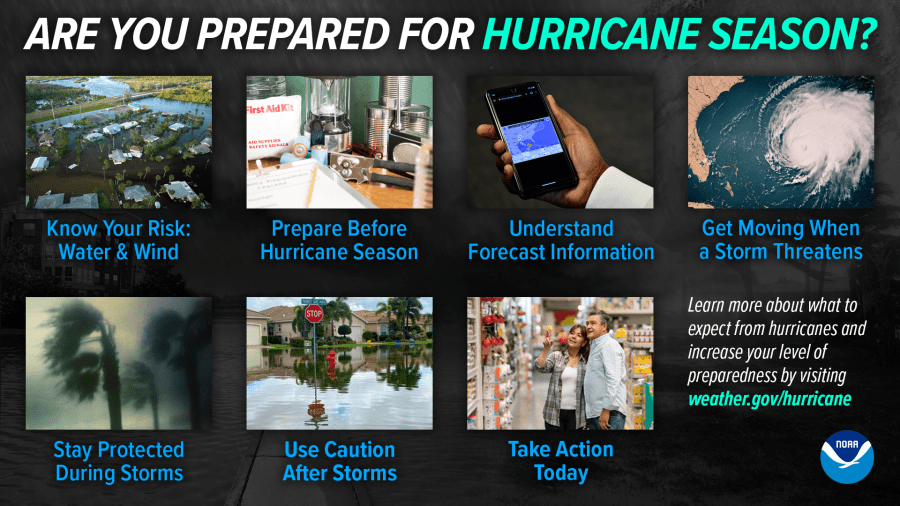
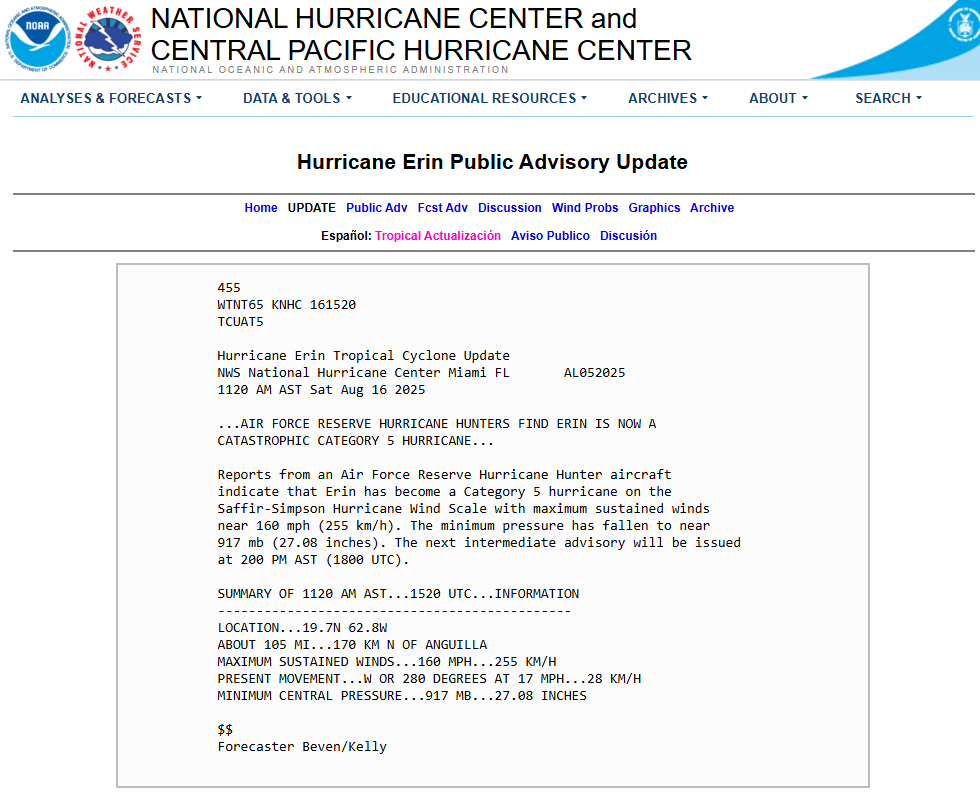
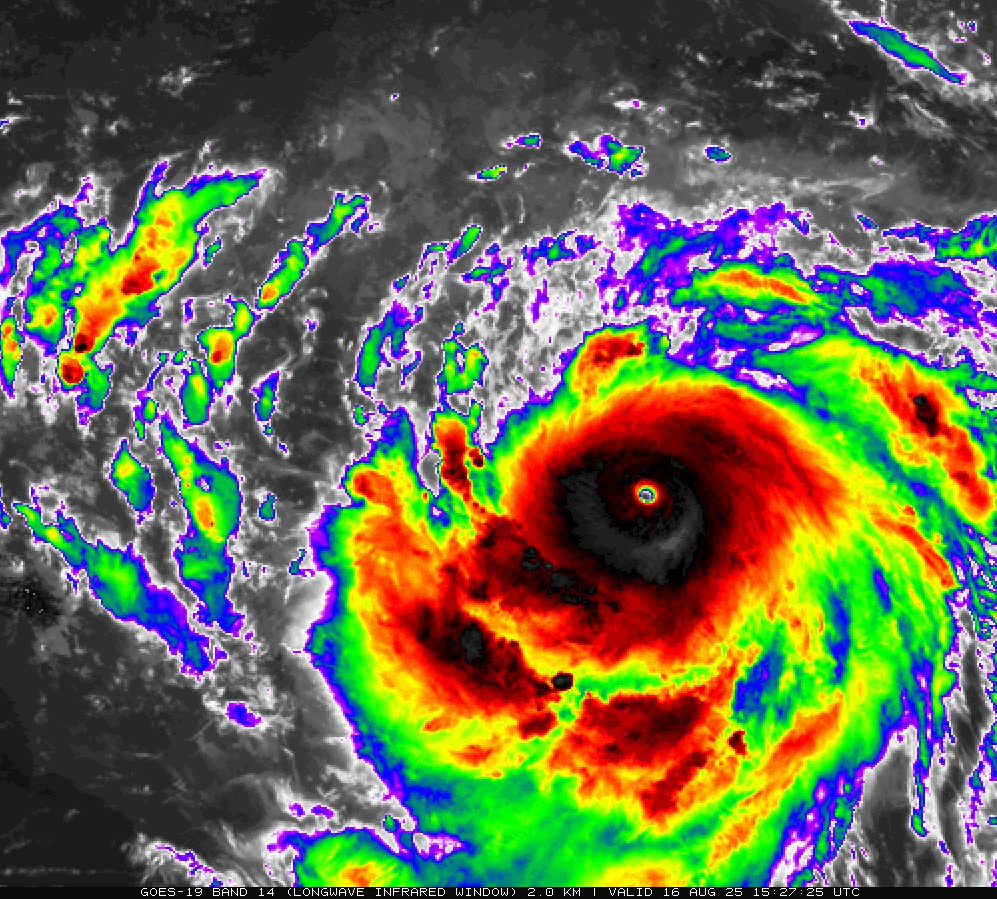
The Atlantic has woken up after a quiet respite of tropical cyclone activity. Hurricane Erin is now roaring westward. As of the time of this post, Erin has reached Category 5 status. Impacts to the USA’s east coast are still uncertain. Having said that, you’ll find a wealth of hurricane preparedness information this week. Now is the time to prepare. There’s also engaging science reads including the updated NOAA outlook on the Atlantic hurricane season, the latest from the U.S. Drought Monitor, and a timely reminder to check your NOAA weather radio. A quick test now could save lives later. Let’s get started.
- UPDATE: As of this post, Hurricane Erin has gone through rapid intensification and is now a very dangerous Category 5 hurricane. For the latest official updates, monitor NOAA’s National Hurricane Center.
- Social media…the good, the bad, and the un-fixable? A recent study using AI simulations suggests that the toxic dynamics of social media – like echo chambers, attention inequality, and amplified extremism – are deeply rooted in its structural design, making most proposed fixes ineffective.
- A seasoned journalist with decades of experience in electric vehicles, renewable energy, and climate science highlights the persistent challenge of combating widespread misinformation and urges collaborative efforts to debunk myths effectively.
- Researchers may have detected a Saturn-sized planet in the habitable zone of Alpha Centauri, our nearest star system, though confirmation remains challenging due to the stars’ brightness and rapid movement.
- Warmer fall temperatures may cause migrating monarch butterflies to start reproducing earlier, significantly shortening their lifespan and potentially disrupting their migration patterns.
- A new study reveals that 60% of global land areas are outside safe ecological limits, with 38% in high-risk zones due to human impact on biosphere integrity.
- Over 70 million Americans experienced record-breaking humidity in June and July 2025, with dangerously high nighttime temperatures in many Eastern U.S. cities due to climate change.
- Amazing visualization! Aerosols, tracked by NASA’s Goddard Earth Observing System, significantly influence Earth’s temperature and air quality by reflecting solar radiation and altering cloud properties.
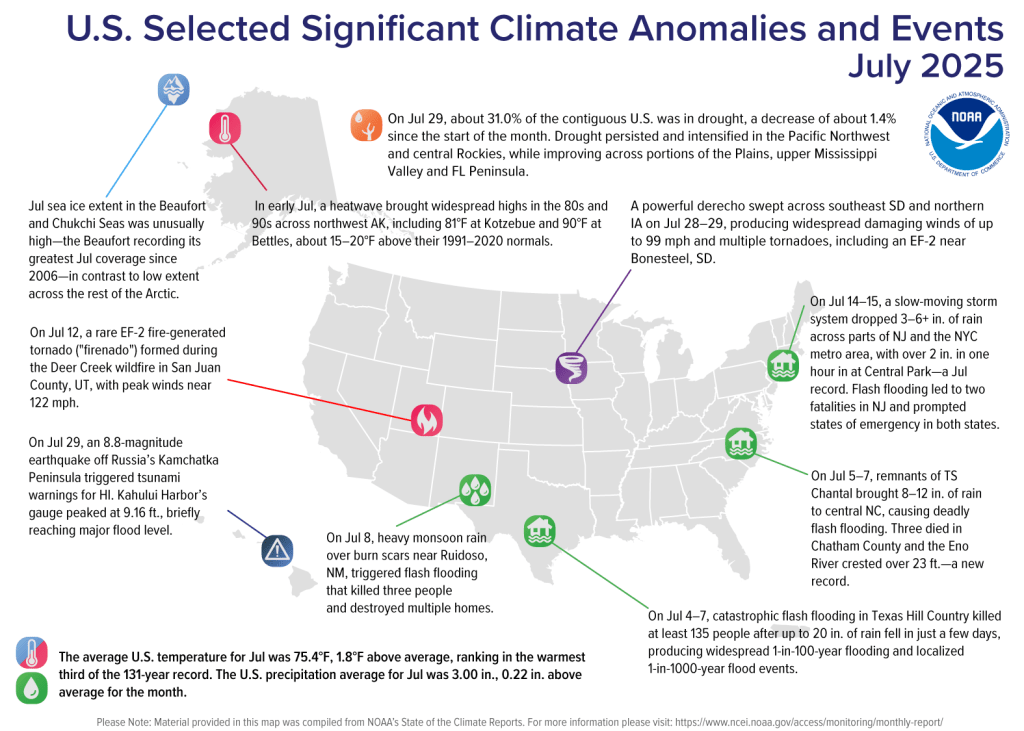
- The Monthly Climate Report from NOAA is out for July, 2025. The deadly Texas floods, among other events, were front and center for the month.
HURRICANE PREPAREDNESS
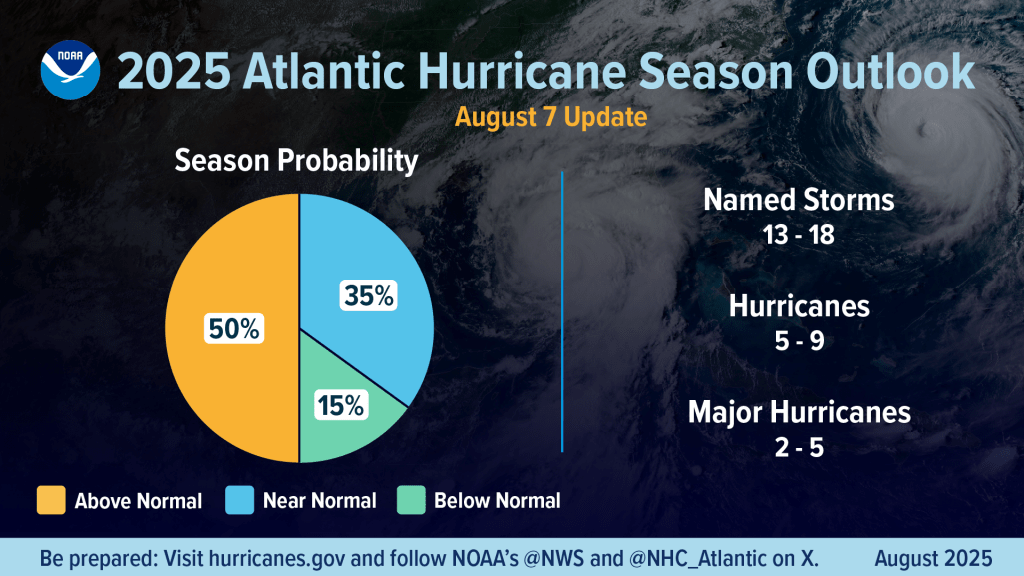
Updated! NOAA’s updated 2025 Atlantic Hurricane Season Outlook predicts 13-18 named storms, including 5-9 hurricanes and 2-5 major hurricanes, with a 50% chance of above-normal activity.
Hurricane Erin is front and center in the Atlantic basin, and there will be more storms to come. The Atlantic is primed, and the peak of hurricane season is just arriving.
Complacency kills. Mother Nature doesn’t check your calendar. Prepare early, stay vigilant, and protect what matters most.
HURRICANE PREPAREDNESS FROM NOAA
HURRICANE PREPAREDNESS FROM RED CROSS
PREPARE YOUR PETS FOR DISASTERS
HOW TO BUILD AN EMERGENCY KIT – INFORMATION COURTESY READY.GOV
THE SAFFIR-SIMPSON HURRICANE WIND SCALE

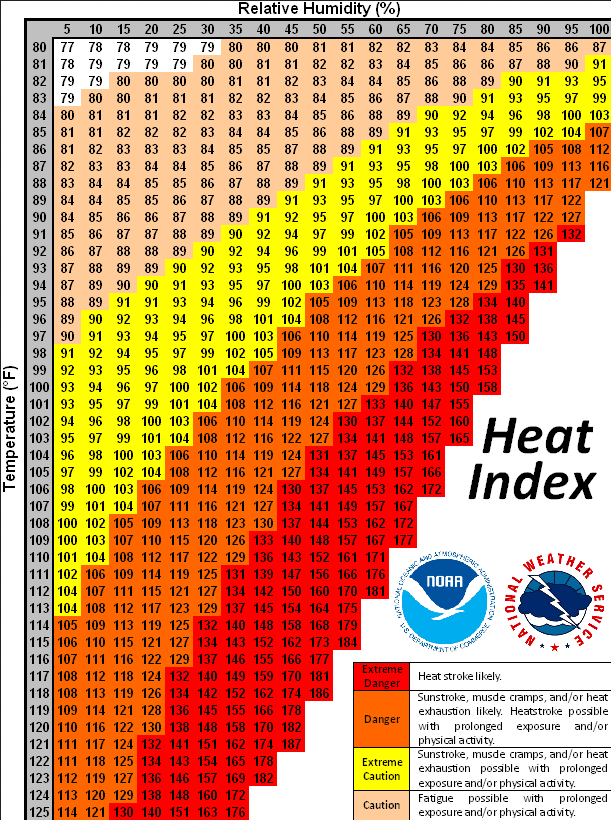
SUMMER HEAT SAFETY
THE BEACH AND SUN: SUMMER SAFETY TIPS FROM NOAA


NOAA WEATHER RADIO
Here’s your weekly reminder to check your NOAA weather radio’s operation and its batteries. NOAA has a comprehensive page on NOAA weather radio…a feature of the National weather Service in the USA that has saved countless lives.

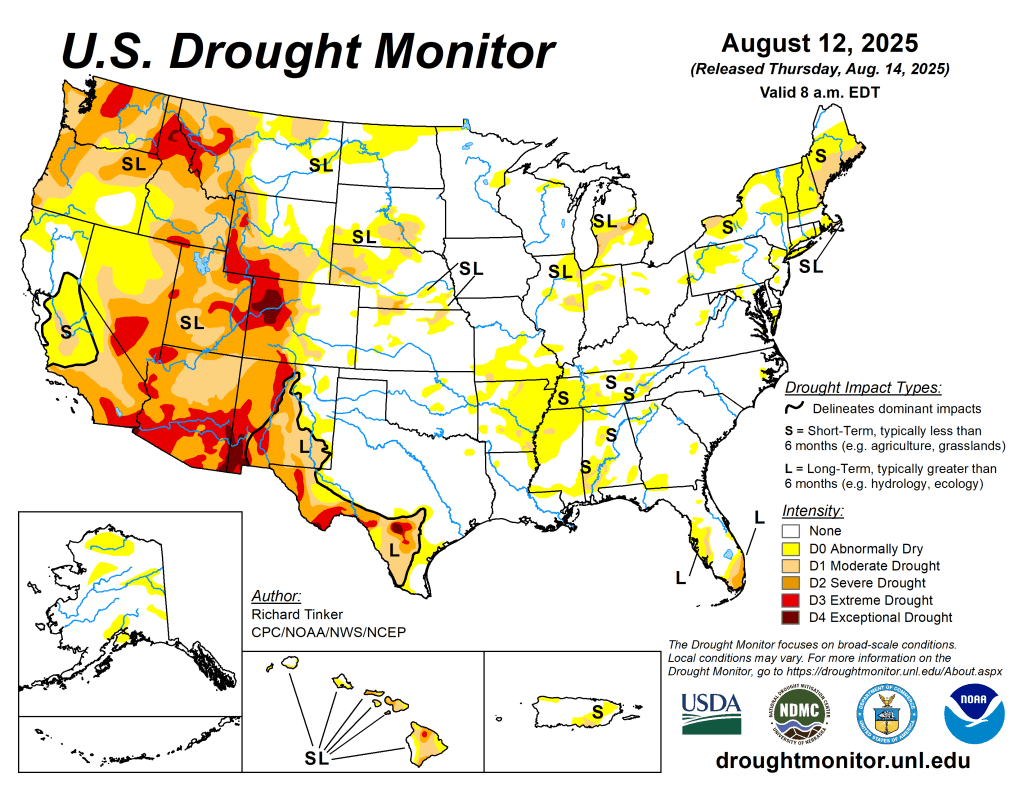
US DROUGHT MONITOR
Here’s the latest update on the US Drought Monitor. The USA saw significant shifts in drought conditions last week, with improvements in some regions due to heavy rain, while others experienced worsening drought from heat and dryness. The latest fire weather outlooks can be found at the Storm Prediction Center website where they are updated daily.
CITIZEN SCIENCE
- The CoCoRaHS project invites weather enthusiasts to become citizen scientists by submitting daily precipitation reports that support forecasting and climate research even on dry days.
- Another path into becoming a citizen scientist is using the free mPING app! Your weather reports go directly to the National Severe Storms Laboratory in Norman, OK!
That’s a wrap for this week! Thanks for stopping by! See you next Saturday!
Copyright © 2025 Tornado Quest, LLC. All Rights Reserved.
 TORNADO QUEST
You must be logged in to post a comment.