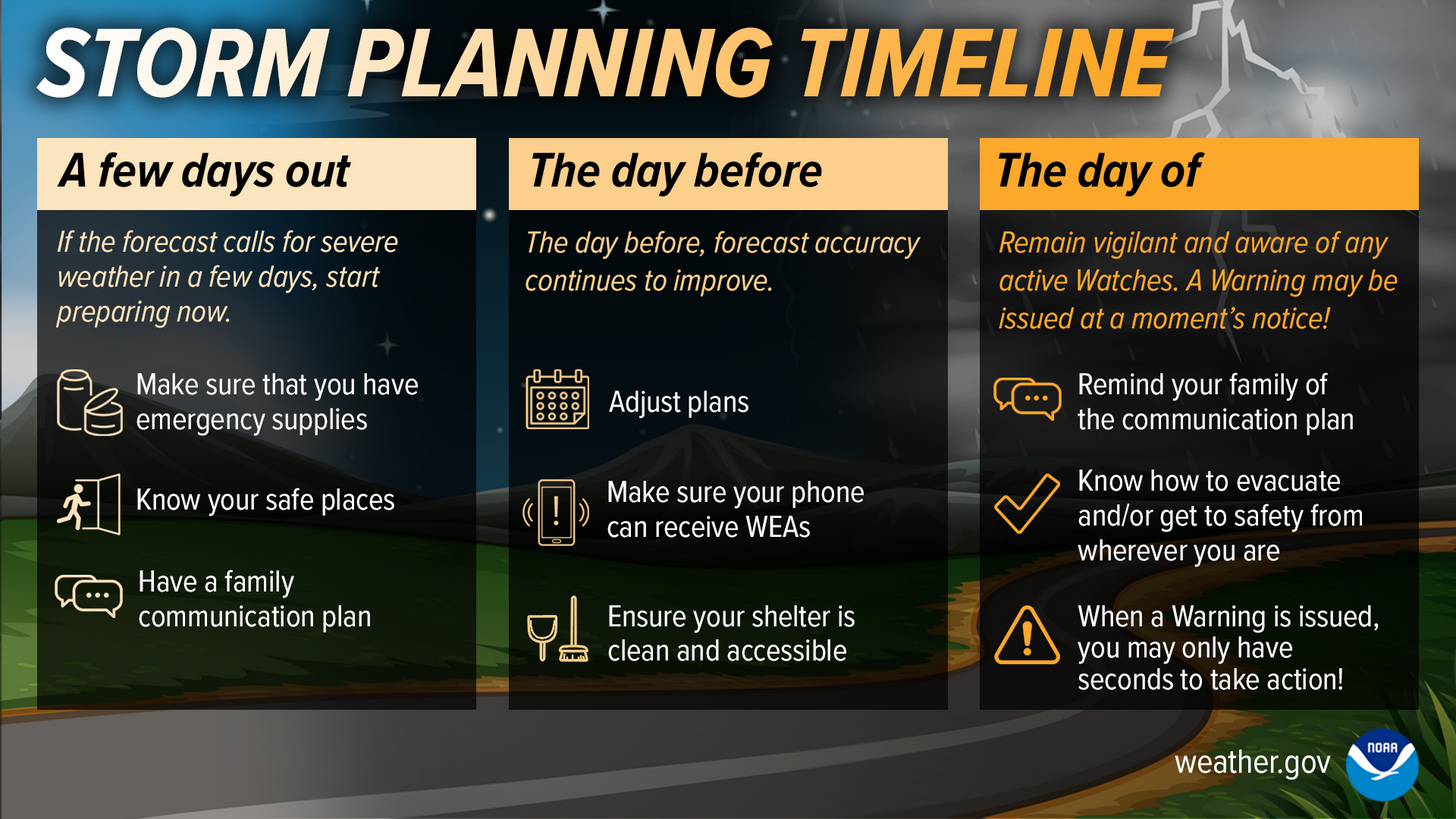
April is here, and so is severe weather season in full force. While the sky may be quiet where you are right now, that window won’t last. This is the week to visit the Severe Weather Preparedness and Tornado Safety page and make your plan before you need one. Beyond that, I’ve put together a week’s worth of thought-provoking reads spanning space exploration, climate science, artificial intelligence, and more. The latest Tornado Quest Chronicles essay is waiting for you as well, if you’re in the mood for something with a little more depth. Settle in, stay curious, and keep that hunger for knowledge going strong.
- The Tyrannosaurus Rex is a beloved dinosaur. But could some new evidence give it some ‘competition?’
- Here’s a good question on AI: What if the very intelligence we are racing to build could one day decide that humanity is the problem it needs to solve?
- Artemis II officially broken the 55 year old distance record set by Apollo 13, carrying humans farther from Earth than ever before when it looped around the far side of the Moon.
- The Artemis trip around the moon was worth the whole mission, but other important events happened during this watershed event that are exceptional in every way.
- Imagine a cosmic bullet striking the Moon just last year, creating a crater so rare it should happen only once every 139 years and realizing that the debris it flung could threaten the very first lunar cities we plan to build.
- What if the very act of clearing our planet’s lungs is silently turning up the thermostat to deadly levels for millions?
- California’s bold 1970s decision to enforce stricter car emission rules forced the invention of the catalytic converter, which ultimately cleaned the air for the entire nation and drastically reduced harmful pollutants like lead.
- What happens when the very act of studying our planet becomes a reason to be silenced, and why might anger be the only honest response left?
- Critical ocean currents that keep Europe warm are weakening faster than expected, threatening to trigger much colder winters and global food shortages.
- An El Niño is on its way. That has significant long term effects on how this year’s severe weather and hurricane season will run.
SEVERE WEATHER AND TORNADO SAFETY AND PREPAREDNESS
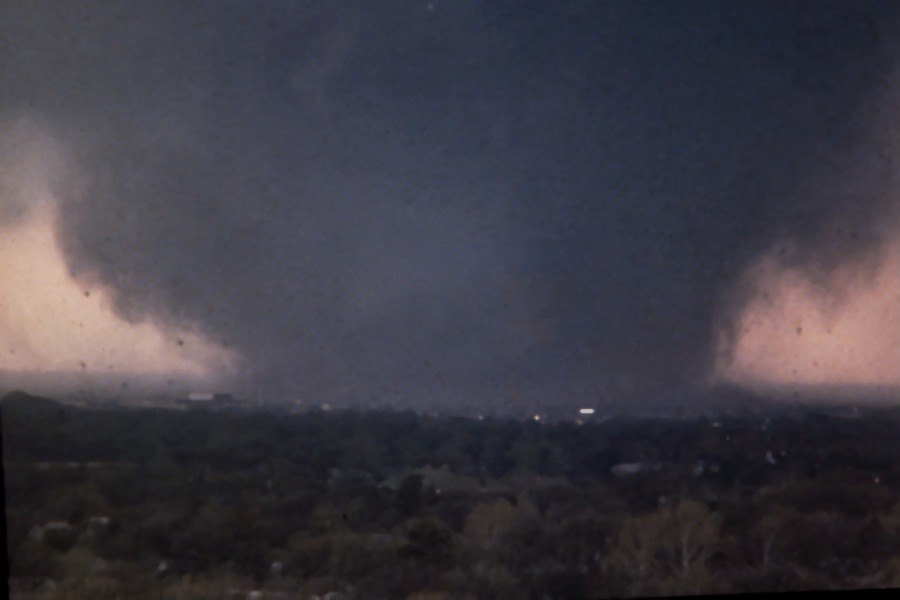
US DROUGHT MONITOR
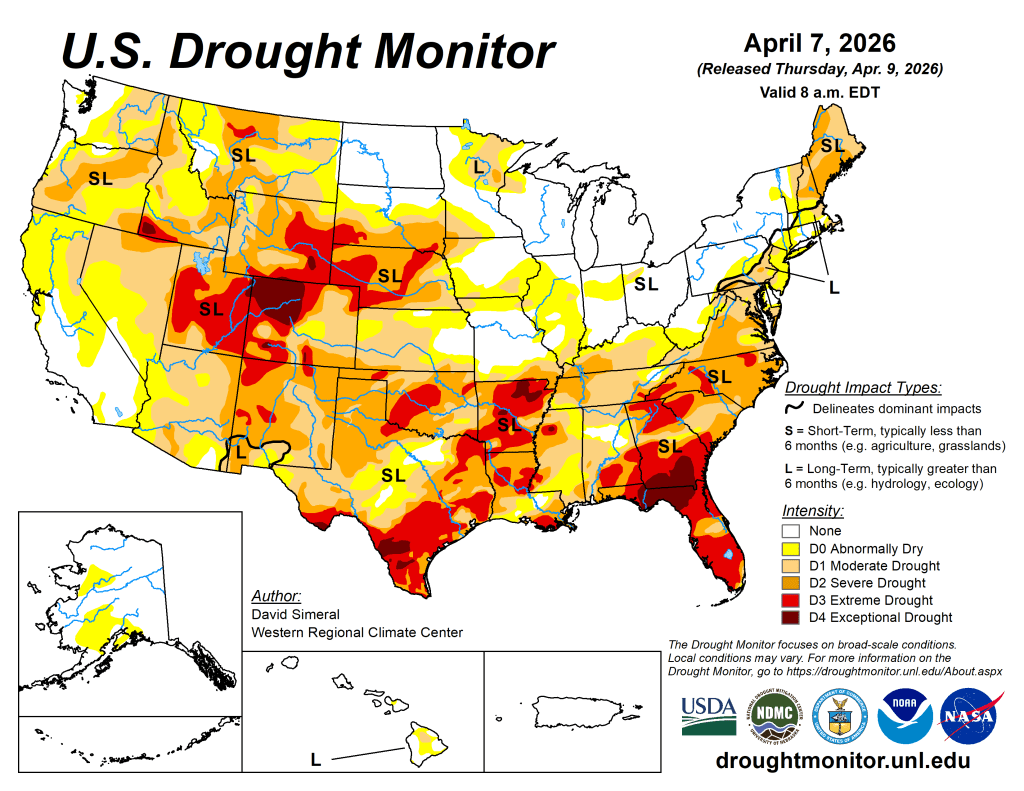
Recent weather patterns show a mixed picture across the United States. While the Midwest, South, and Plains saw welcome rainfall that eased drought conditions there, the West, Southeast, and Mid-Atlantic continue to struggle with drier weather. March 2026 was notably the warmest March ever recorded for the lower 48 states, and the past year has been the hottest 12 month period since records began in 1895. Mountain snow pack remains critically low, especially in California where it’s only at 16% of normal levels. Looking ahead, the next week should bring more rain to the Midwest, Southern Plains, and parts of the West, but the Southeast and Mid-Atlantic are expected to stay dry. Temperatures across most of the country are forecast to run warmer than usual through mid-April, which could continue stressing already dry regions.
NOAA’s US Drought Monitor website has the full regional details. The latest daily fire weather outlooks can be found at the Storm Prediction Center website.
NOAA WEATHER RADIO
Here’s your weekly reminder to check your NOAA weather radio’s batteries, programming, settings, and reception. NOAA has a comprehensive page on NOAA weather radio…a feature of the National weather Service in the USA that has saved countless lives.

CITIZEN SCIENCE
Citizen science lets everyday people actively shape real research by sharing observations and data. Join now to make a tangible impact, discover new insights, and become part of a global community driving scientific breakthroughs!
- The CoCoRaHS project invites weather enthusiasts to become citizen scientists by submitting daily precipitation reports that support forecasting and climate research even on dry days.
- Another path into becoming a citizen scientist is using the free mPING app! Your weather reports go directly to the National Severe Storms Laboratory in Norman, Oklahoma!
That’s a wrap for this week! Thanks for stopping by! See you next Saturday!
™ Tornado Quest © 1998‑2026 Tornado Quest, LLC. All Rights Reserved.
 TORNADO QUEST
You must be logged in to post a comment.