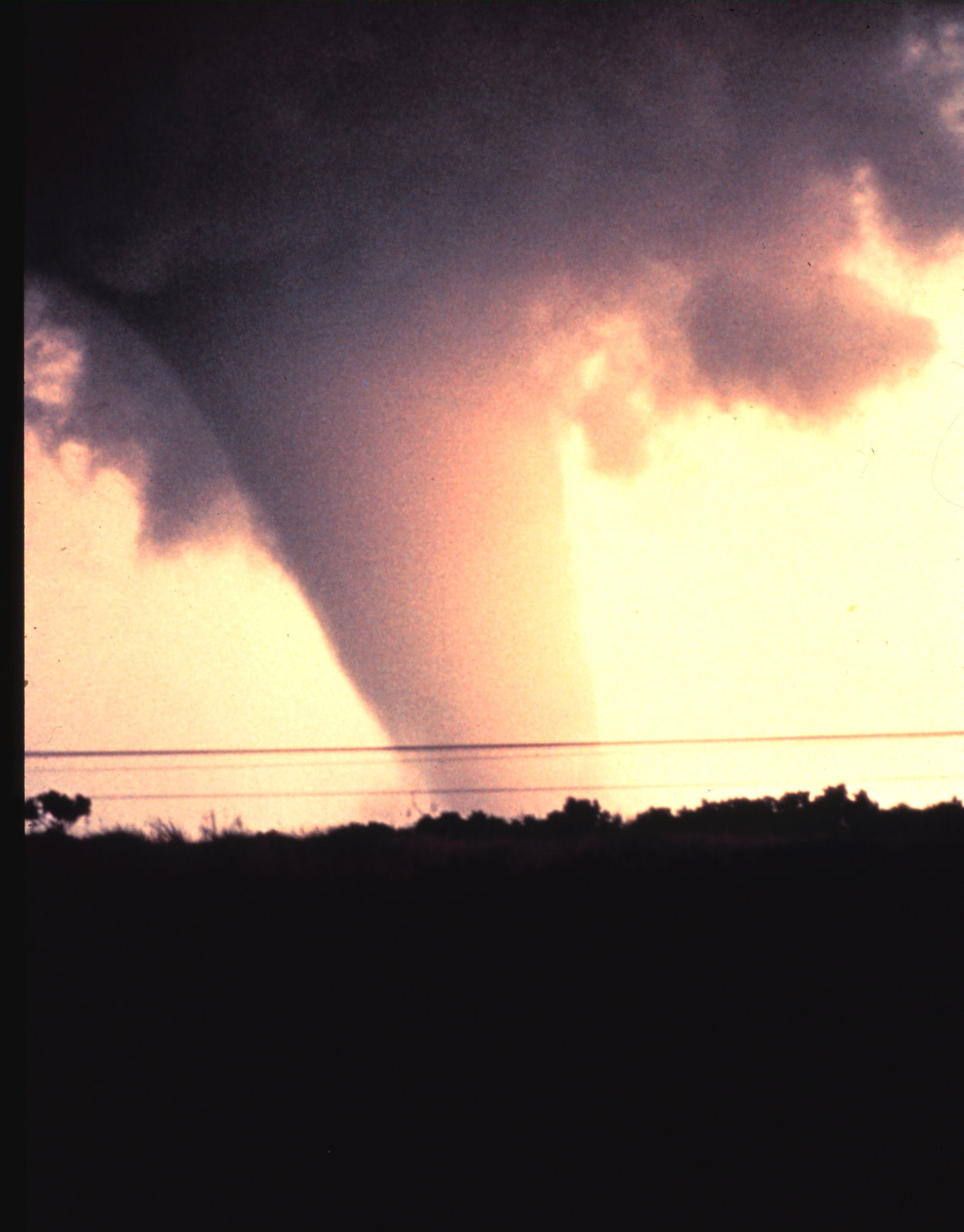
Greetings everyone. Good to see you again. The 2026 Atlantic hurricane outlook has been issued. Severe weather and tornado activity might be taking a break, but we’re still in the thick of the season. Check out the severe weather and tornado safety page. I’ve got your latest US Drought Monitor update, a reminder to check your NOAA weather radio, and plenty of thought provoking weather, climate, and science reads. So, get a refreshing drink, settle in, and let’s get started.
- The same technique that helped contain Nebraska’s devastating wildfires this spring is also the one some ranchers say they’d almost rather face a wildfire than allow on their land.
- Ticks are showing up earlier, spreading further, and biting more often. While the conspiracy theories have millions of views, the actual explanation is both simpler and more unsettling.
- Before you sign on the dotted line, there’s a hidden layer of data that could mean the difference between your home becoming a sanctuary or a casualty of the next storm.
- Climate shocks may tip the scales toward conflict in ways we’re only beginning to understand.
- Imagine a hidden lever in the Arctic that, if pulled, could theoretically halt the planet’s accelerating climate chaos before it’s too late.
- Scientists say the worst-case climate scenarios are officially off the table, but the reason why might not be the comfort you’re hoping for.
- A super El Niño is no longer a worst-case scenario, it’s now the most probable one, and what that means for your weather, your food, and your water is worth understanding before it arrives.
- For a global perspective, tune in and listen to hear why scientists are concerned about El Niño this year and what it could mean for weather and ecosystems worldwide.
- On May 21, NOAA released its official 2026 Atlantic hurricane season outlook. Check out all of the details here. This is essential reading if you live in a region of the USA that is prone to hurricanes or tropical storms.
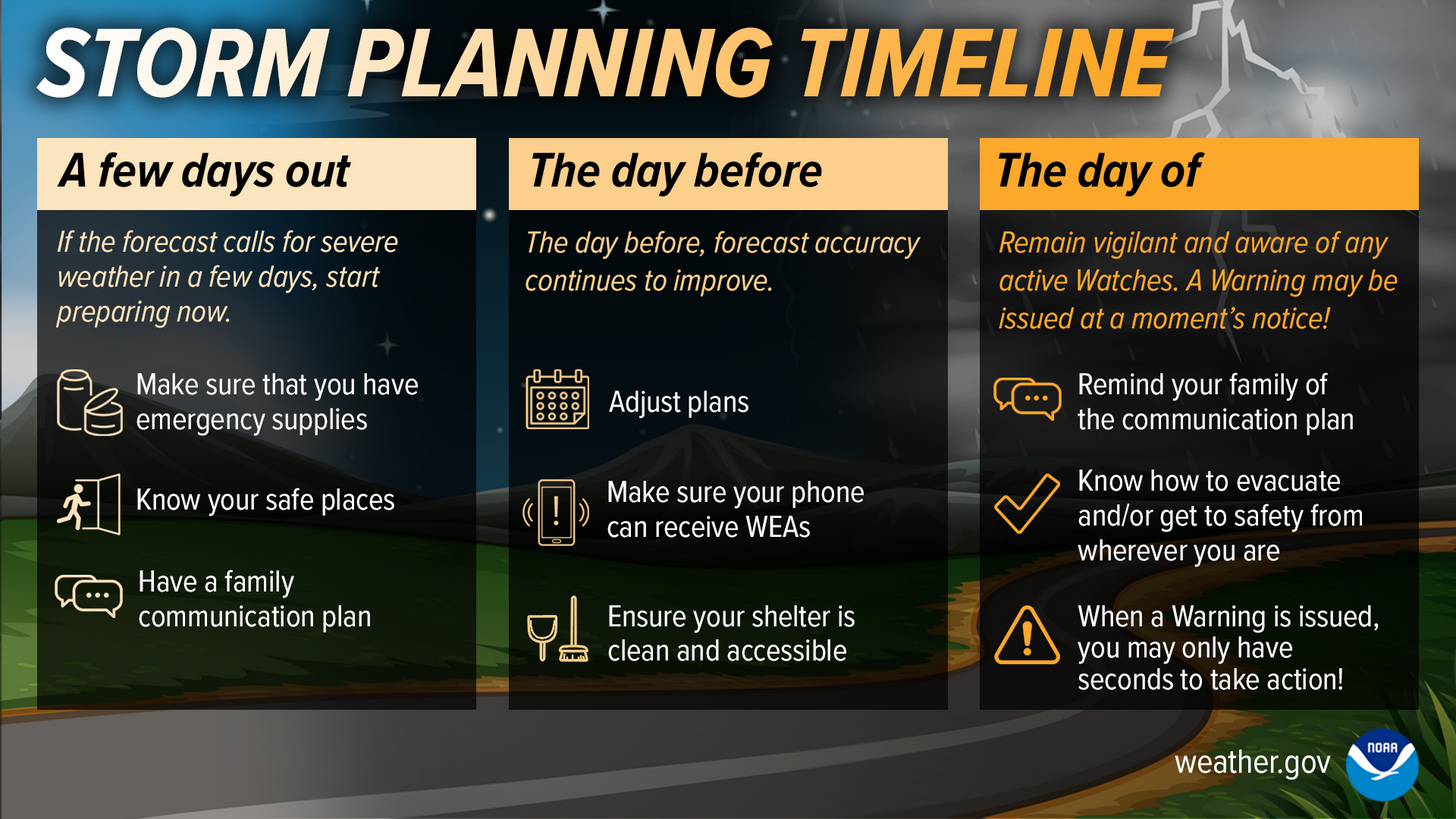
SEVERE WEATHER AND TORNADO SAFETY AND PREPAREDNESS
NOAA WEATHER RADIO
Here’s your weekly reminder to check your NOAA weather radio’s batteries, programming, settings, and reception. NOAA has a comprehensive page on NOAA weather radio…a feature of the National weather Service in the USA that has saved countless lives.

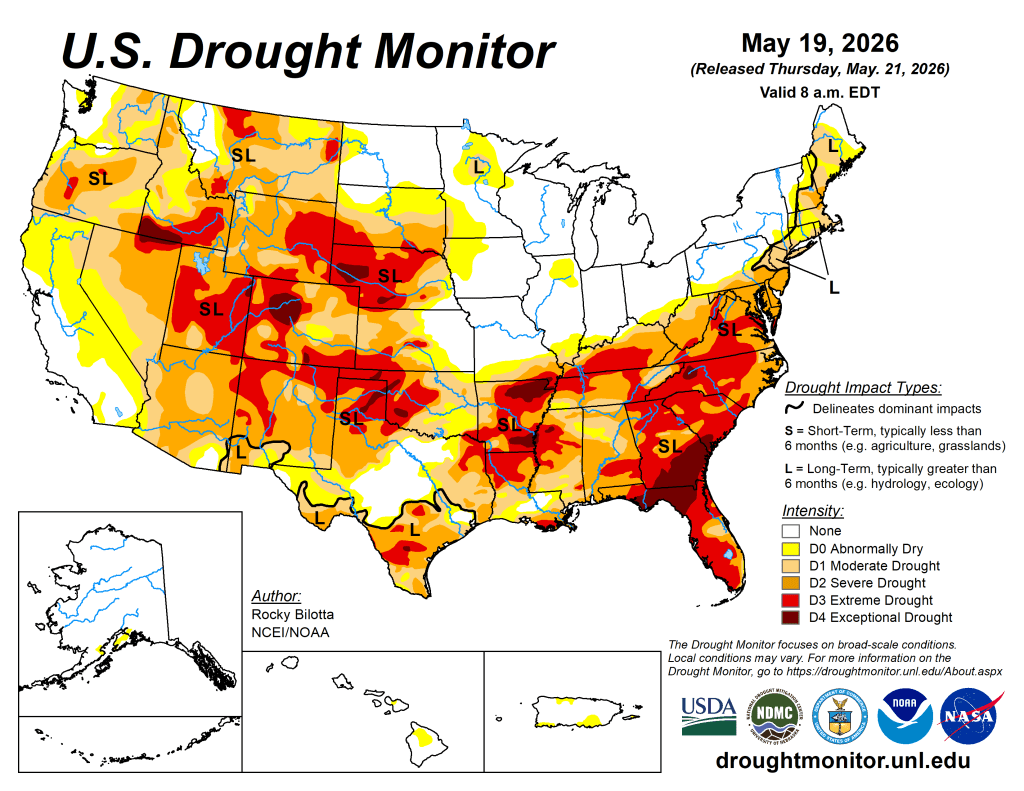
US DROUGHT MONITOR
This week, little change took place across the contiguous US with many areas from Idaho to Nebraska, Colorado, Oklahoma, Texas, Arkansas, Florida, and Georgia seeing Exceptional Drought (D4) spreading or showing up for the first time. Thunderstorms brought brief bouts of relief across the central and southern plains, but this was only temporary. Spring is, for many areas of the plains and south, the wettest season of the year but for 2026, this hasn’t come to fruition.
- NOAA’s US Drought Monitor website has the full regional details.
- The latest daily fire weather outlooks can be found at the Storm Prediction Center’s website.
CITIZEN SCIENCE
Citizen science lets everyday people actively shape real research by sharing observations and data. Join now to make a tangible impact, discover new insights, and become part of a global community driving scientific breakthroughs!
- The CoCoRaHS project invites weather enthusiasts to become citizen scientists by submitting daily precipitation reports that support forecasting and climate research even on dry days.
- Another path into becoming a citizen scientist is using the free mPING app! Your weather reports go directly to the National Severe Storms Laboratory in Norman, Oklahoma!
That’s a wrap for this week! Thanks for stopping by! See you next Saturday!
™ Tornado Quest © 1998‑2026 Tornado Quest, LLC. All Rights Reserved.


You must be logged in to post a comment.