
Greetings to all and thanks for visiting. It’s been an active severe weather week across much of the USA and with May now upon us, the most active month for tornado activity has arrived. Your tornado safety information will be posted again this week along with a reminder on lightning and flash flood safety. As usual, there are several thought provoking science reads along with the updated US Drought Monitor, so let’s get started.
- You’ve probably never heard of hypochlorous acid being used as a disinfectant that is exceptionally effective and safe. Why isn’t it more readily available?
- This is a novel idea on sustainable and renewable energy. Generating electricity from rainfall!
- Just when you thought the dumpster fire couldn’t get worse, it has.
- Could the recent Los Angeles wildfires affect the Pacific ocean? Scientists are rushing to find out how and why the fires may have done more than burn structures and kill people on land.
- This is a fascinating read on the connection between extreme rainfall, flash flooding, and changes in our climate.
- While on the topic of climate, how humanity defines and navigates the challenges present when conflicts arise may well be defined by climate change.
- The date of this post (3 May) marks the 26th anniversary of the largest tornado outbreak in the history of Oklahoma. Take a look at this excellent overview from NOAA’s National Severe Storms Laboratory of that event.
- If you live in a region prone to severe thunderstorms and tornadoes, you need to watch this excellent video presentation from the National Weather Service in Norman, OK on seasonal readiness for severe weather and tornadoes. It goes into extensive detail on many facets of severe weather forecasting that will help many folks increase their appreciation of just how hard the task of a meteorologist is and the lengths they go to in order to make their forecasts easy for the general public to understand.
- Are you interested in weather and would you like to take part in contributing to weather databases as a citizen scientist? Check out the CoCoRaHS project! Your daily precipitation reports, even when no precipitation has occurred, are part of very important weather data forecasting models and data archives!
- Another way you can help with weather reports as a citizen scientist is with the free mPING app! Your reports go directly to the National Severe Storms Laboratory in Norman, OK!
- Here’s your weekly reminder to check your NOAA weather radio’s operation and its batteries. NOAA has a comprehensive page on NOAA weather radio…a feature of the National weather Service in the USA that has saved countless lives.

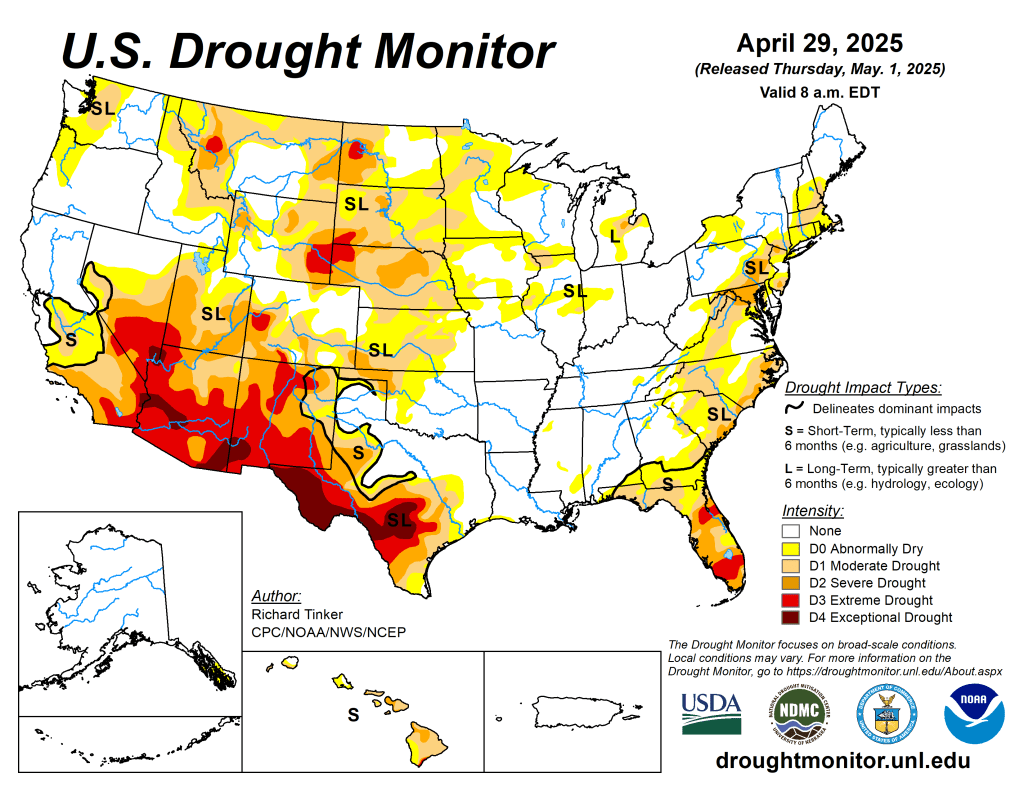
- Here’s the latest update on the US Drought Monitor. Across much of the contiguous USA, drought conditions have improved across the Ohio valley and mid to lower Mississippi valley regions. Many states west of the Mississippi River have seen some relief as well as small parts of the east coast. Extreme to exceptional drought conditions continue to persist from Texas west to to southern California. The latest fire weather outlooks can be found at the Storm Prediction Center website where they are updated daily.
SEVERE WEATHER SAFETY
Please note; Much of the preceding information may not be available/updated in the future due to unnecessary firings en masse at NOAA and the National Weather Service.
THUNDERSTORMS, TORNADOES, AND LIGHTNING…NATURES MOST VIOLENT STORMS
TORNADO SAFETY FROM NOAA’S STORM PREDICTION CENTER
THE MOST FREQUENTLY ASKED QUESTIONS ABOUT TORNADOES FROM NOAA’S STORM PREDICTION CENTER
HOW TO BUILD AN EMERGENCY KIT – INFORMATION COURTESY READY.GOV

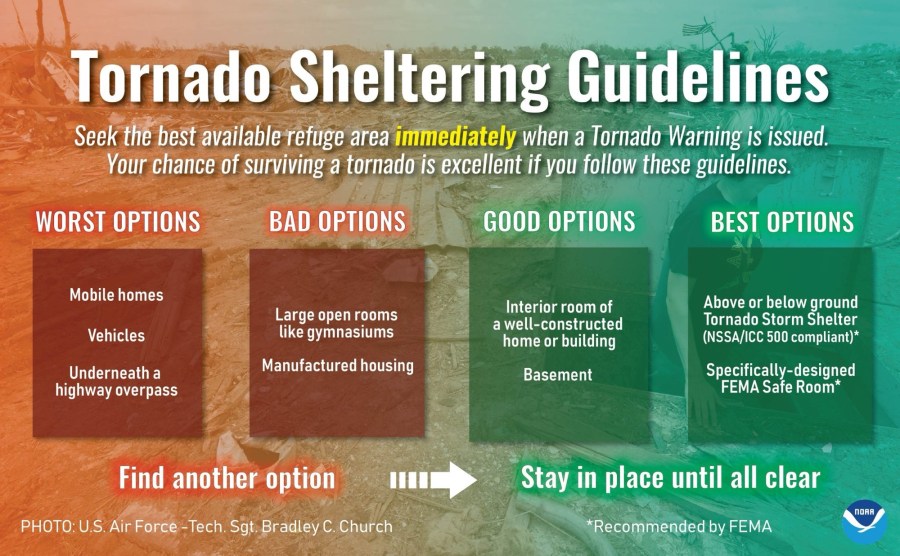

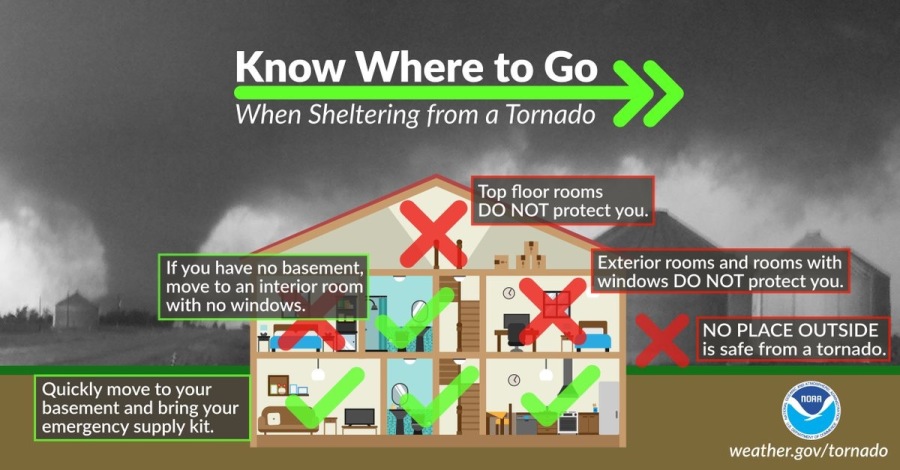

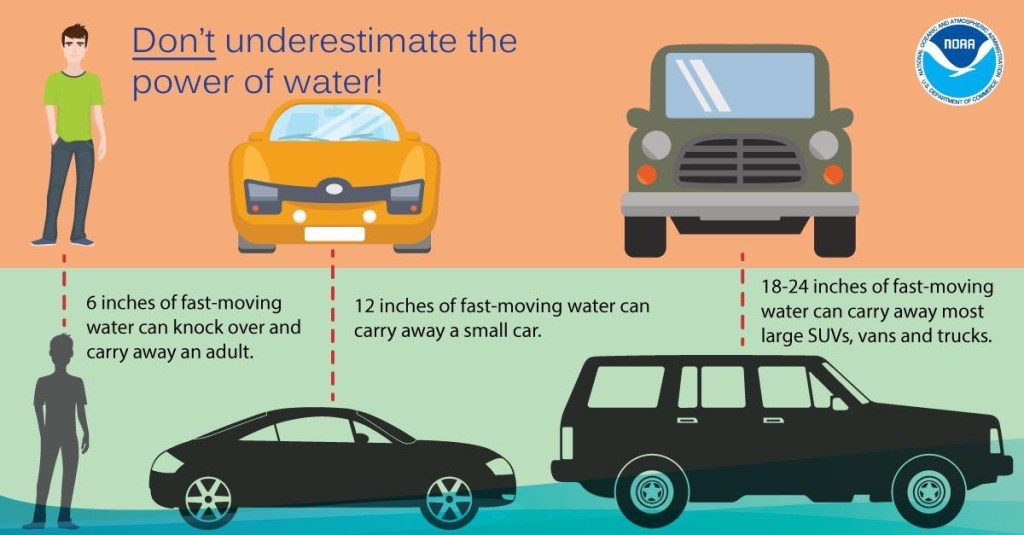
That’s a wrap for this week! Thanks for stopping by! See you next Saturday!
Copyright © 2025 Tornado Quest, LLC. All Rights Reserved.
 TORNADO QUEST
You must be logged in to post a comment.