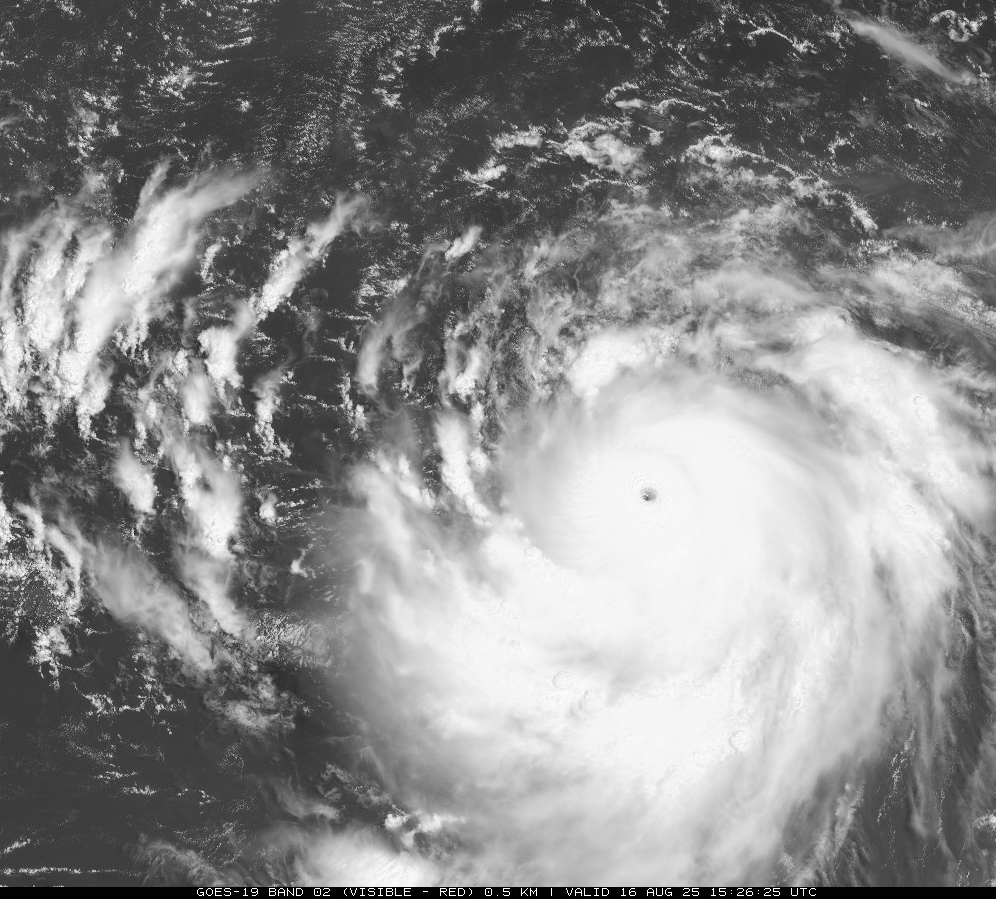
Hurricane Erin was the big weather story this past week and is still roaming in the north Atlantic. Now is the time to prepare for a hurricane. You’ll find a wealth of hurricane preparedness information this week. There’s also engaging science reads including the updated NOAA outlook on the Atlantic hurricane season, the latest from the U.S. Drought Monitor, and a timely reminder to check your NOAA weather radio. A quick test now could save lives later. Let’s get started.
- This kind of draconian loyalty test will eventually trickle down to science classes…and eventually into an anti-science indoctrination.
- The Age of Scientific Reversal denotes those rare, pivotal moments when decisive experiments shatter entrenched scientific paradigms, ushering in transformative breakthroughs such as relativity and germ theory.
- Electric vehicle registrations in Scandinavian countries surged in July, 2025 with Norway leading at 97% EV share, followed by Denmark (67.2%), Finland (36.3%), and Sweden (35.6%), driven by market optimism and manufacturer campaigns.
- A prolonged “triple‑dip” La Niña from 2020‑2022 cooled the Pacific, setting the stage for an unexpectedly early and record‑breaking global‑heat surge in late 2023.
- Hurricane Helene’s damage to Baxter’s North Cove plant, responsible for 60 % of U.S. IV fluid production, exposed how weather‑driven disruptions threaten the USA’s fragile drug supply chain.
- It hasn’t been that long since the deadly floods in central Texas, but it’s time to examine what went wrong so it won’t happen again.
- Heat waves in Texas are becoming more frequent and deadly, with over 300 heat-related deaths in 2023, and research shows that increased airborne pollutants during these events exacerbate health risks.
- Climate models suggest that human-induced warming may have locked the northern Pacific into a prolonged cool phase that is fueling a historic megadrought in the western USA, a trend likely to persist as greenhouse gas emissions rise.
- Hurricane Erin’s explosive, rapid intensification puts it among the five tropical cyclones to grow from Category 1 to Category 5 the fastest.
- As Hurricane Erin moved between the USA and Bermuda, it increased the dangers of rip currents from southern Florida to the Massachusetts coast. What are rip currents and why do they occur so far from a hurricane?
- Rapidly intensifying tropical cyclones like Hurricane Erin, often fueled by climate change, pose growing threats due to their unpredictability and destructive power, making this 2019 research as urgent and relevant today as ever.
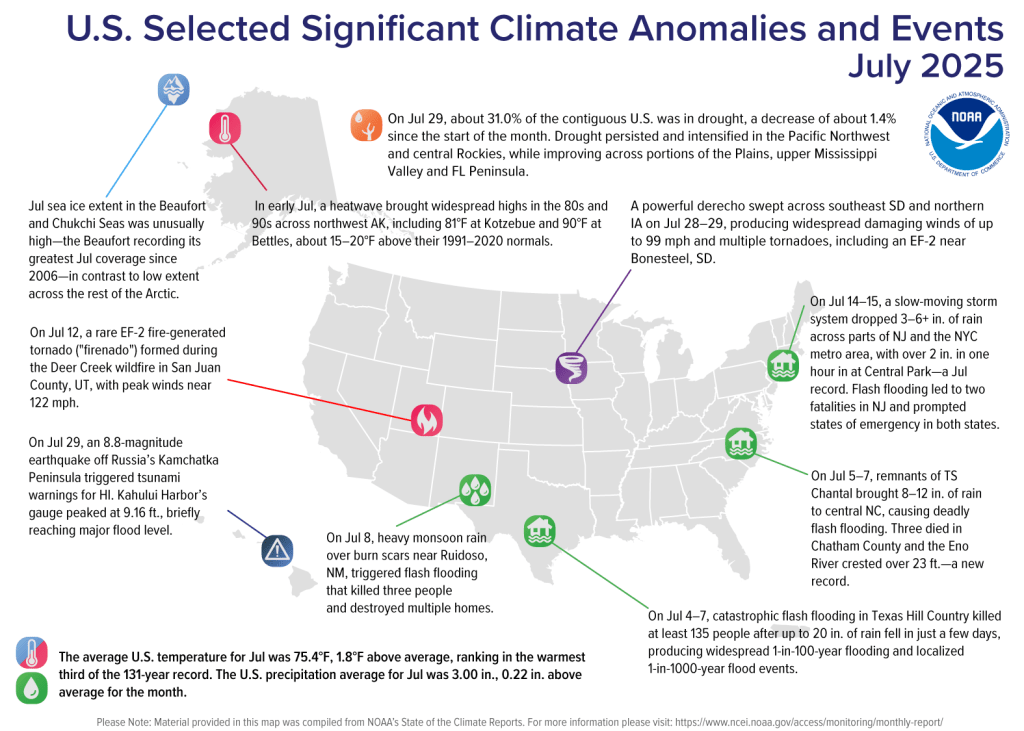
- In case you missed it, the Monthly Climate Report from NOAA is out for July, 2025. The deadly Texas floods, among other events, were front and center for the month.
HURRICANE PREPAREDNESS
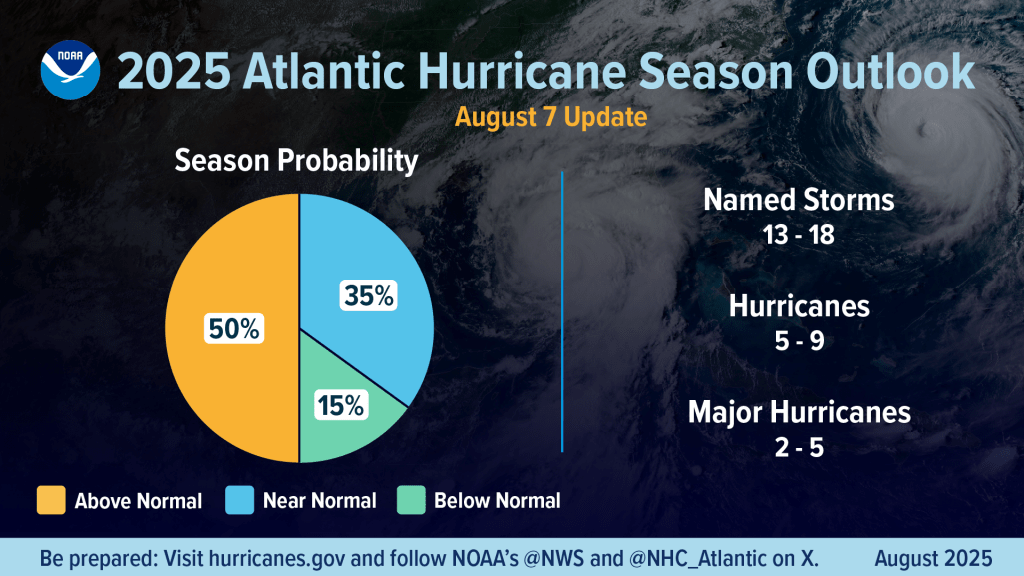
Updated! NOAA’s updated 2025 Atlantic Hurricane Season Outlook predicts 13-18 named storms, including 5-9 hurricanes and 2-5 major hurricanes, with a 50% chance of above-normal activity.
Hurricane Erin is still the focus in the Atlantic basin, and there will be more storms to come. The Atlantic is primed, and the peak of hurricane season is just arriving.
Complacency kills. Mother Nature doesn’t check your calendar. Prepare early, stay vigilant, and protect what matters most.
HURRICANE PREPAREDNESS FROM NOAA
HURRICANE PREPAREDNESS FROM RED CROSS
PREPARE YOUR PETS FOR DISASTERS
HOW TO BUILD AN EMERGENCY KIT – INFORMATION COURTESY READY.GOV
THE SAFFIR-SIMPSON HURRICANE WIND SCALE

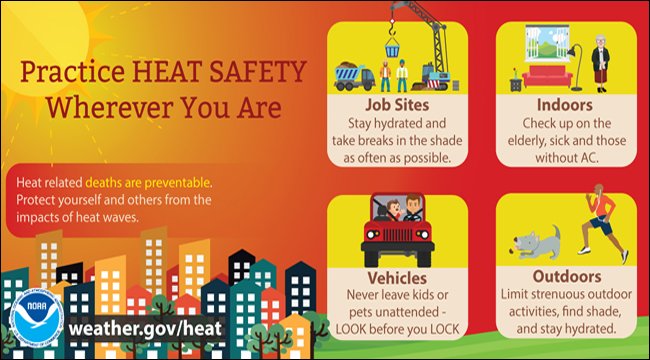
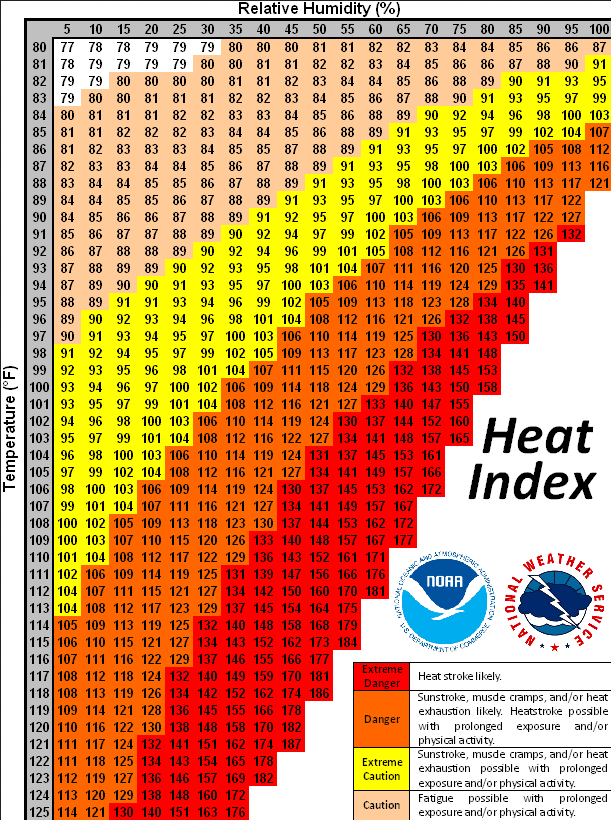
SUMMER HEAT SAFETY
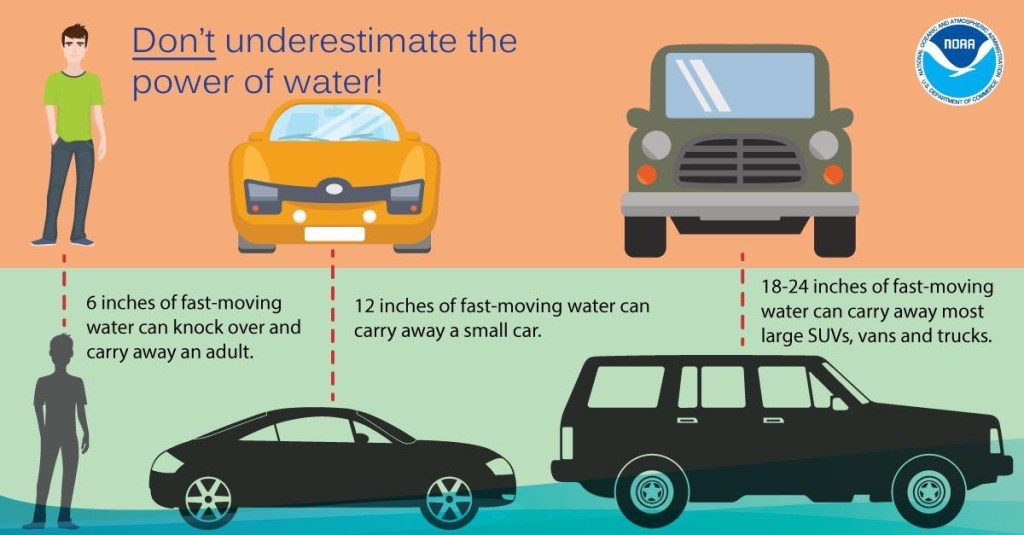
THE BEACH AND SUN: SUMMER SAFETY TIPS FROM NOAA


NOAA WEATHER RADIO
Here’s your weekly reminder to check your NOAA weather radio’s operation and its batteries. NOAA has a comprehensive page on NOAA weather radio…a feature of the National weather Service in the USA that has saved countless lives.

US DROUGHT MONITOR
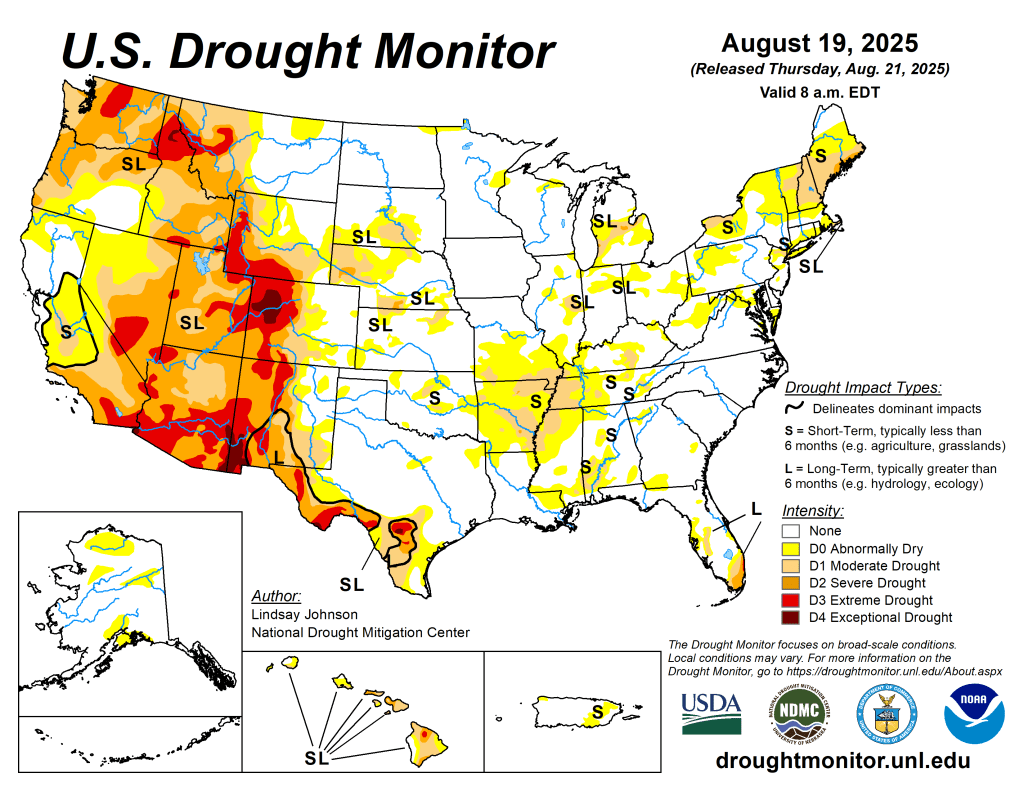
Here’s the latest update on the US Drought Monitor. From August 13 ‑ 19 2025, the United States experienced widespread dry and drought conditions driven by hotter than average temperatures and below‑normal precipitation with severe drought persisting in the West, expanding dryness across the High Plains and Midwest, and only isolated pockets of above‑normal rainfall providing limited relief. The latest fire weather outlooks can be found at the Storm Prediction Center website where they are updated daily.
CITIZEN SCIENCE
- The CoCoRaHS project invites weather enthusiasts to become citizen scientists by submitting daily precipitation reports that support forecasting and climate research even on dry days.
- Another path into becoming a citizen scientist is using the free mPING app! Your weather reports go directly to the National Severe Storms Laboratory in Norman, OK!
That’s a wrap for this week! Thanks for stopping by! See you next Saturday!
Copyright © 2025 Tornado Quest, LLC. All Rights Reserved.
 TORNADO QUEST
You must be logged in to post a comment.