
Hurricane Melissa have exited the stage, but time exists for more tropical cyclones. There’s a few weeks left in the Atlantic hurricane season. Now’s the time to prepare for a late season tropical storm or hurricane this year, or get ready for the big one…next year. This week, I’ve prepared a carefully curated bevy of thought provoking reads, your weekly reminder to test your NOAA weather radio, and the latest USA drought map, so let’s get started.
- A very interesting read for my fellow dinosaur buffs. Just because a dinosaur looks like a Tyrannosaurus Rex doesn’t mean it’s a Tyrannosaurus Rex.
- This is very good news on the renewable energy front lines. Solar power’s rapid expansion, doubling capacity from 2022‑2024 and accounting for most new electricity growth, has helped renewables overtake coal, positioning solar as the dominant driver of the global energy transition.
- The ultra‑rich, who alone drive a fifth of emissions, must stop dreaming they can selfishly “fix” climate change with reckless geo‑engineering and instead be forced into a binding global treaty. Otherwise, we’re courting disaster.
- Australia’s tropical forests have become a net source of carbon, emitting more CO₂ than they absorb which is a stark warning for global climate action ahead of COP30.
- In 2024, atmospheric CO₂ rose by a record 3.5 ppm to 423.9 ppm, the highest level since measurements began. This signals accelerating climate warming and more extreme weather.
- In the wake of Hurricane Melissa, we’re going to see many stories covering the devastation. This is no exception. “‘Catastrophic’ Hurricane Hits Jamaica as Risk of Climate Change-Fueled Tropical Storms Rises.”
- Hurricane Melissa’s rapid intensification to Category 5 was driven by sea‑surface temperatures 1.4 °C above average. These are conditions made roughly 700 times more likely by human‑caused climate change.
- Why did Hurricane Melissa not take a straight line path to the west? What causes the hurricane to take a sharp right turn and head for Jamaica? Read this essay by a meteorologist who forecast for Melissa to find out.
- Take a look at this fantastic video of the ‘stadium effect’ in the eye of Hurricane Melissa.
HURRICANE PREPAREDNESS

Complacency kills. Mother Nature doesn’t check your calendar. Prepare early, stay vigilant, and protect what matters most.

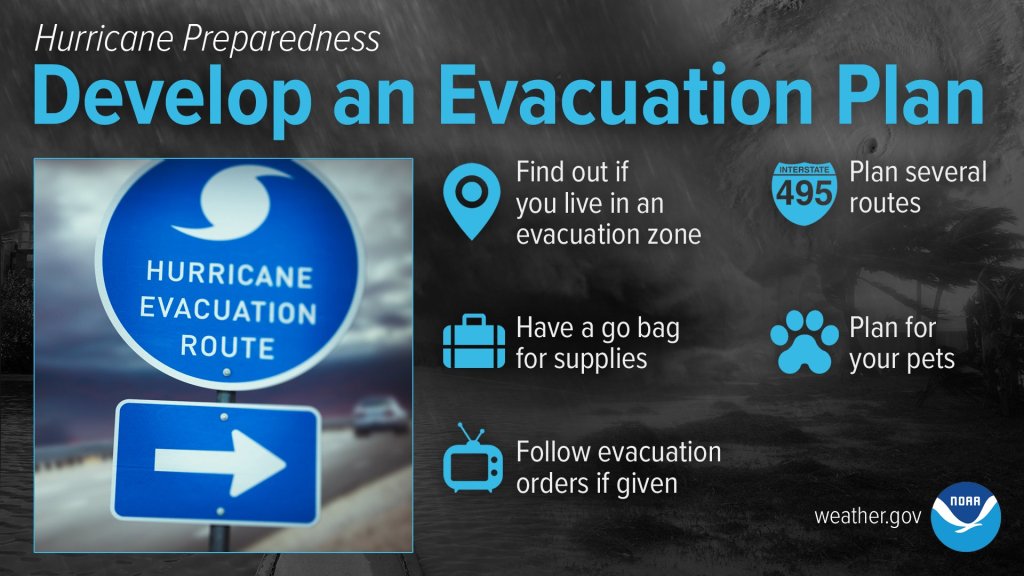

NOAA’s updated 2025 Atlantic Hurricane Season Outlook still predicts 13-18 named storms, including 5-9 hurricanes and 2-5 major hurricanes, with a 50% chance of above-normal activity. We’ve still many weeks of the Atlantic hurricane season to go. It only takes one land-falling storm to make for devastating, and deadly, season.
HURRICANE PREPAREDNESS FROM NOAA
HURRICANE PREPAREDNESS FROM RED CROSS
AMERICAN RED CROSS EMERGENCY CONTACT CARD
PREPARE YOUR PETS FOR DISASTERS
HOW TO BUILD AN EMERGENCY KIT – INFORMATION COURTESY READY.GOV
HOW TO PREPARE FOR A HURRICANE
THE SAFFIR-SIMPSON HURRICANE WIND SCALE
NOAA WEATHER RADIO
Here’s your weekly reminder to check your NOAA weather radio’s operation and its batteries. NOAA has a comprehensive page on NOAA weather radio…a feature of the National weather Service in the USA that has saved countless lives.

US DROUGHT MONITOR
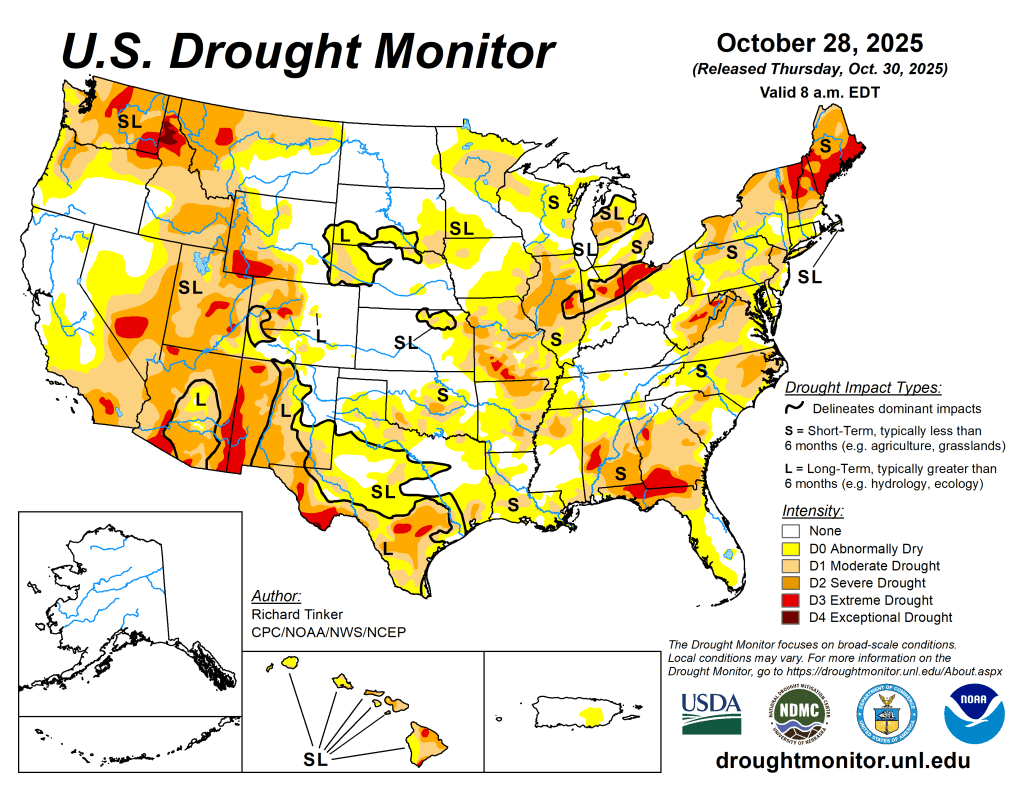
Here’s this week’s update on the US Drought Monitor. Heavy rains, exceeding three inches in many mountain and coastal regions from northern California to Canada and across the central and southern USA, relieved drought in the Pacific Northwest, Great Plains, and parts of the Southeast, while modest precipitation elsewhere left some High Plains, Texas, and the Mid‑Atlantic still dry, resulting in a slight overall decline in both “dry” (D0) and drought (D1+) coverage across the contiguous United States. The latest fire weather outlooks can be found at the Storm Prediction Center website where they are updated daily.
CITIZEN SCIENCE
Citizen science lets everyday people actively shape real research by sharing observations and data. Join now to make a tangible impact, discover new insights, and become part of a global community driving scientific breakthroughs!
- The CoCoRaHS project invites weather enthusiasts to become citizen scientists by submitting daily precipitation reports that support forecasting and climate research even on dry days.
- Another path into becoming a citizen scientist is using the free mPING app! Your weather reports go directly to the National Severe Storms Laboratory in Norman, OK!
That’s a wrap for this week! Thanks for stopping by! See you next Saturday!
Copyright © 2025 Tornado Quest, LLC. All Rights Reserved.
 TORNADO QUEST
You must be logged in to post a comment.