
Hurricane Melissa is long gone and the Atlantic is quiet for now, but time exists for more tropical cyclones. The Atlantic hurricane season officially ends 30 November 2025. However, now’s the time to prepare for a late season tropical storm or hurricane this year, or get ready for the big one…next year. This week, I’ve prepared a carefully curated bevy of thought provoking reads, the latest USA Drought Monitor Map, and your weekly reminder to test your NOAA weather radio…even when the weather’s nice. Let’s get started.
- Let’s start off this week with a fascinating video on Pluto and its moon, Charon. Even well into the 21st century, astronomers are still discovering the secrets of the formation of our solar system.
- The International Space Station has been going strong for a quarter of a century. Here’s a look back at this amazing accomplishment.
- Should a catastrophic outage affect the internet that we’ve all come to depend on, major disruptions in our daily life are a given. Here’s an interesting read on how it could be restored to a certain extent.
- COVID‑19 cases are surging worldwide, with under‑detected infections and waning surveillance leaving us vulnerable to dangerous variants, so ignore the complacency at your peril.
- Standard time year‑round is healthier, supported by the AMA, sleep experts, and Stanford research, because it aligns with the sun and our circadian rhythm, yet daylight‑saving changes persist despite this clear evidence.
- The 2025 COP30 will likely focus on refining existing climate agreements, advancing adaptation measures, and launching finance initiatives.
- Scientists have retrieved a 6‑million‑year‑old ice core from Antarctica, twice as old as any previously dated ice, providing a rare “time‑machine” that helps reconstruct Earth’s ancient climates and informs our understanding of natural climate drivers.
- Here are some startling images of the devastation left in the wake of Hurricane Melissa in Jamaica. It will take many years to rebuild some of these areas, many of whom rely on tourism as the heart of their economy.
HURRICANE PREPAREDNESS
Complacency kills. Mother Nature doesn’t check your calendar. Prepare early, stay vigilant, and protect what matters most.


NOAA’s updated 2025 Atlantic Hurricane Season Outlook predicted 13-18 named storms, including 5-9 hurricanes and 2-5 major hurricanes, with a 50% chance of above-normal activity. The Atlantic hurricane season officially comes to an end on November 30, 2025. Regardless of the date or season, it only takes one land-falling storm to make for devastating, and deadly, scenario.
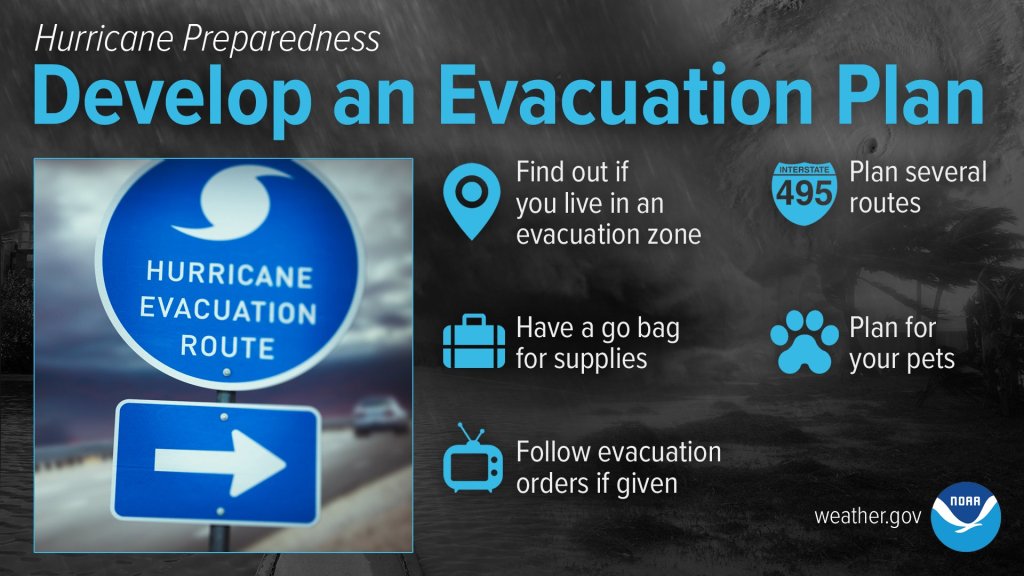
HURRICANE PREPAREDNESS FROM NOAA
HURRICANE PREPAREDNESS FROM RED CROSS
AMERICAN RED CROSS EMERGENCY CONTACT CARD
PREPARE YOUR PETS FOR DISASTERS
HOW TO BUILD AN EMERGENCY KIT – INFORMATION COURTESY READY.GOV
HOW TO PREPARE FOR A HURRICANE
THE SAFFIR-SIMPSON HURRICANE WIND SCALE
US DROUGHT MONITOR
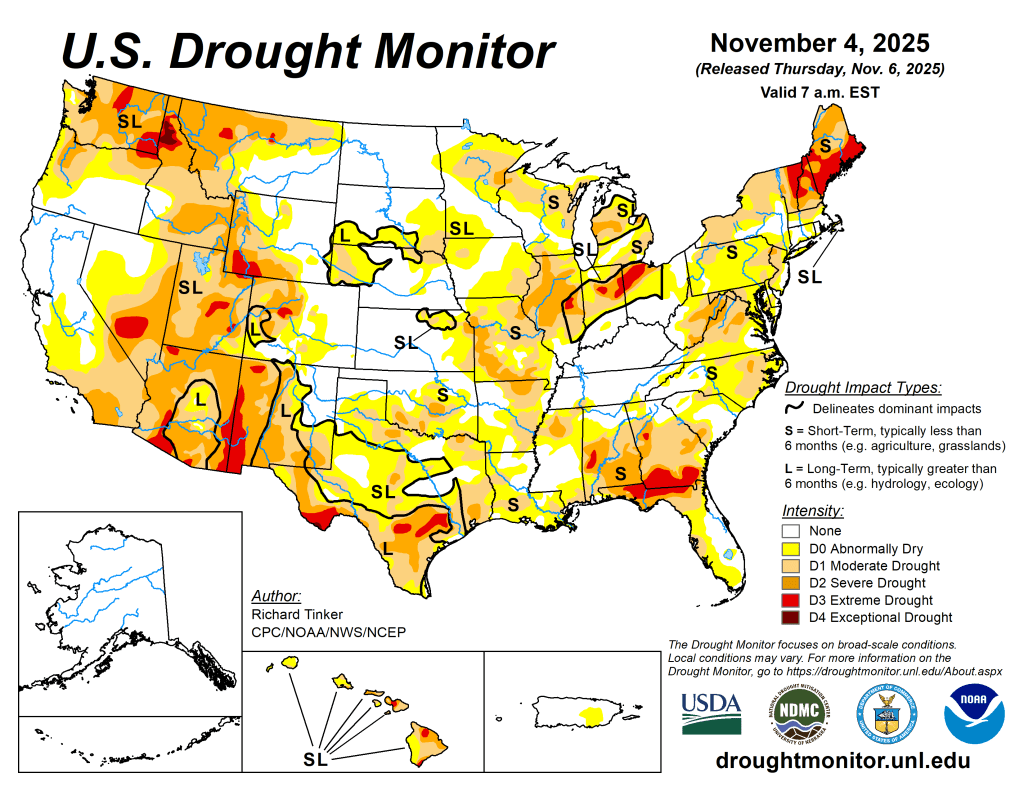
Here’s this week’s update on the US Drought Monitor. Heavy rain drenched the Pacific Northwest and much of the Northeast, improving moisture in those regions, while most of the central and southern U.S., the Great Plains, and the Gulf Coast remained dry, intensifying drought conditions in large swaths of Texas, Oklahoma, the Great Lakes, and parts of the Rockies. The latest fire weather outlooks can be found at the Storm Prediction Center website where they are updated daily.
NOAA WEATHER RADIO
Here’s your weekly reminder to check your NOAA weather radio’s operation and its batteries. NOAA has a comprehensive page on NOAA weather radio…a feature of the National weather Service in the USA that has saved countless lives.

CITIZEN SCIENCE
Citizen science lets everyday people actively shape real research by sharing observations and data. Join now to make a tangible impact, discover new insights, and become part of a global community driving scientific breakthroughs!
- The CoCoRaHS project invites weather enthusiasts to become citizen scientists by submitting daily precipitation reports that support forecasting and climate research even on dry days.
- Another path into becoming a citizen scientist is using the free mPING app! Your weather reports go directly to the National Severe Storms Laboratory in Norman, OK!
That’s a wrap for this week! Thanks for stopping by! See you next Saturday!
Copyright © 2025 Tornado Quest, LLC. All Rights Reserved.
 TORNADO QUEST
You must be logged in to post a comment.