Greetings everyone, and welcome back. It’s good to see you. Happy Thanksgiving for those celebrating the holiday. It’s been a rather quiet week weatherwise, so I won’t add to the noise. I’ll stick to what I always try to do: a handful of good reads worth your time, a few reminders that could matter on a bad day, and a little space to just think. This week’s lineup runs from a spacecraft crossing a line no human made object ever has, to a few tweaks that could clear the air in your kitchen before Thursday’s feast. The newest Tornado Quest Chronicles essay is up too, and it’s a fitting one for the season. The daunting challenge of forecasting winter weather and why meteorologists sweat the details long before the first snowflake falls. A friendly reminder that hurricane season runs through November 30, so it’s worth a few minutes to browse the hurricane safety and preparedness page. The quiet weeks are exactly when a quick preparedness check pays off. On December 5, I’ll have the Winter Weather Safety page up and you can consider the essay your warm up for winter weather. I’ve also added new entries to the citizen science links, so if you’ve ever wanted to help the researchers who study weather, climate, environmental science and much more, now there are even more ways to pitch in from your home, school, workplace, or a morning walk. And if you’d rather listen than read, the Tornado Quest Podcast is on Spotify too. The US Drought Monitor update and a reminder to check your NOAA weather radio is here as well. Pour something warm, get comfortable, and happy reading.
- Half a century after leaving Earth, a spacecraft the size of a small car is so far away that a ‘hello’ and its reply now take two full days. This week it crosses a line no human-made object ever has.
- NASA’s newest eye on the universe hasn’t even started work yet, but engineers have already discovered it sees sharper and will live twice as long as anyone promised. That has astronomers wondering what else it might surprise us with.
- California’s coast is already being swallowed by waves taller than a four story building. Furthermore, the ocean hasn’t even played its highest cards yet, with three dates this winter circled for trouble.
- Washington is quietly debating a bill that could decide how fast your electric bill drops, how easily wind farms get built and who loses their say when a pipeline comes through town.
- That glorious Thanksgiving feast filling your home with aromas may also be filling it with something you can’t smell. A scientist says a few tweaks to your cooking routine can clear the air without spoiling the day.
- The world’s pollution clock ticked backward this year for the first time in a while. However, the reason has nothing to do with wind turbines or electric cars, and that’s exactly the uncomfortable part.
- A giant warm patch of ocean thousands of miles from your dinner plate may already be deciding what food costs next year. Furthermore, scientists say the world is running out of time to get ready.
- With concerns about climate change at an all time high, how do people reconcile their worries as they struggle to decide how to have a “normal” life?
- I don’t usually write about infectious diseases. This site is about weather, climate, our environment, and the science of the world around us. But sometimes the world around us includes the science we choose to ignore. For years I’ve written and shared links here about misinformation, disinformation, and the rapid spread of anti-science rhetoric. How it spreads, why it sticks, and how quickly it fills the space where trust used to live. This week, that abstract threat came due. The United States just lost a designation it spent 26 years earning and was the first country in the Americas to achieve. This happened because a preventable disease we once beat came back through the gap where vaccination rates fell below what basic arithmetic requires. This isn’t about politics, and I’d ask you to resist reading it that way. It’s about what happens when the loudest voices drown out the boring, reliable, life-saving facts. I’ll warn you upfront: this one made me angry to write. I think it should.
- Last but not least, let’s end on a bright note with a look back at the biggest scientific breakthroughs of the past 70 years.
HURRICANE SAFETY AND PREPAREDNESS
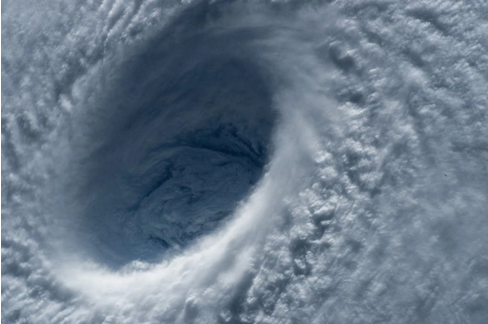
The tropical Atlantic has settled into a long stretch of calm, and with the 2026 hurricane season officially winding down toward its November 30th finish, all signs point to a quiet ending. Quiet, though, is not the same as uneventful. Even a subdued season found a way to send one storm ashore in Florida, a familiar reminder that it only takes one to make it a memorable year where you live.
The good news is that hurricane preparedness doesn’t expire when the season does. The checklist that serves you in June; a family plan, stocked supplies, a known evacuation route, and a habit of paying attention, works just as well for tornado outbreaks, winter storms, severe weather, and even earthquakes. There’s no bad week to review your plan, check your supply kit, and refresh your memory on where you’d go and how you’d get there, while store shelves are full and the sky is quiet.
A calm Atlantic is the perfect time to prepare for a stormy day, because preparedness isn’t paranoia. It’s the reason some families ride out trouble calmly while others scramble. Stay prepared, stay informed, and get a good start at the link below.
US DROUGHT MONITOR UPDATE
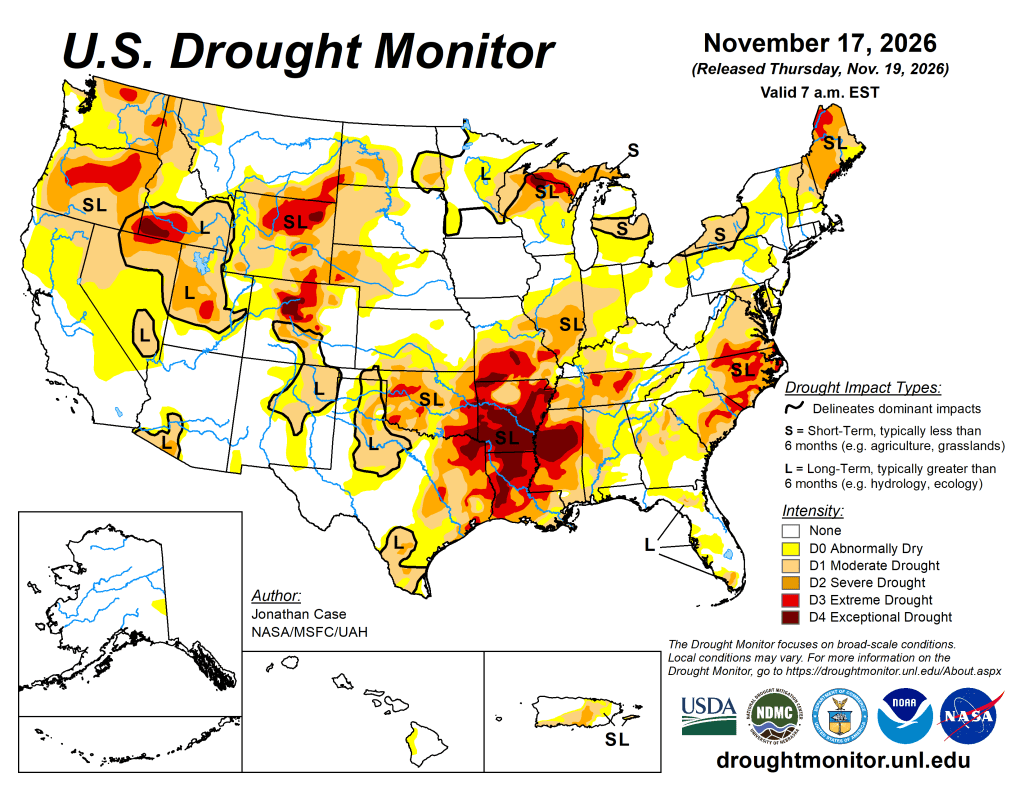
US Drought Monitor Summary
Drought is worsening from the Mississippi Valley through the Southeast and Mid-Atlantic, with dryness expanding in parts of the northern Rockies, while conditions improve across Southern California, the Four Corners, much of Texas and Oklahoma, and pockets of Washington, South Florida, and the interior Northeast. Relief may be coming. A powerful storm will soak the West with heavy rain and 50 to 100 inches of Sierra snow, and another system off Florida could soak that drenched state and send beneficial rain into the Carolinas and Mid-Atlantic drought zones. The 6-to-10 day outlook favors above normal temperatures for most of the country with above average precipitation for the West, South, and East
- NOAA’s US Drought Monitor website has the full regional and state drought conditions details.
- The latest daily fire weather outlooks can be found at the Storm Prediction Center’s website.
NOAA WEATHER RADIO

Here’s your weekly reminder to check your NOAA weather radio’s batteries, programming, settings, and reception. NOAA has a comprehensive page on NOAA weather radio…a feature of the National weather Service in the USA that has saved countless lives.
CITIZEN SCIENCE
Science doesn’t just happen in labs. It happens in backyards, on phones, and under night skies. And right now, researchers genuinely need your help. Below are places where you can roll up your sleeves, contribute real data, and make a difference for your community and the scientific community alike.
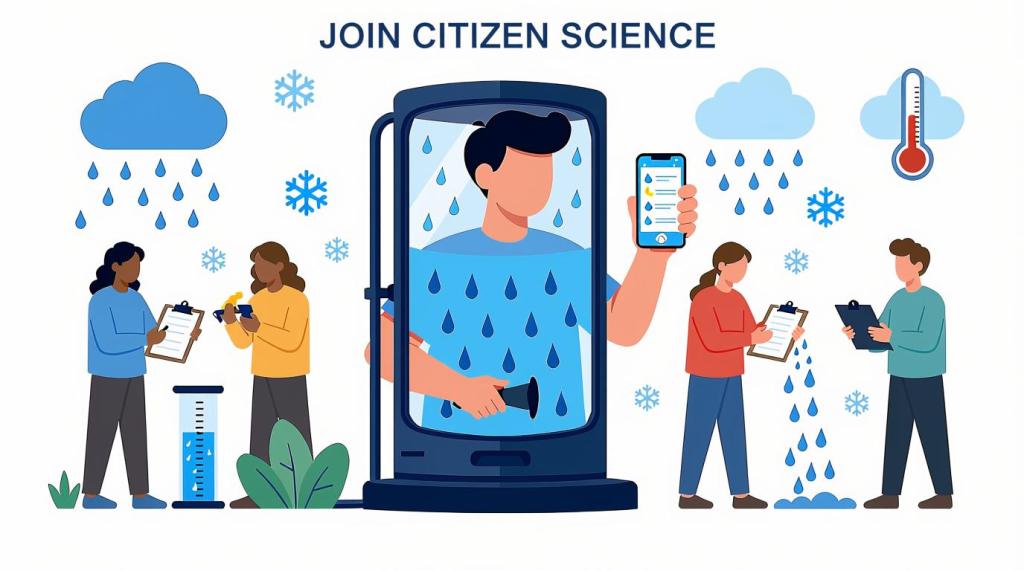
Citizen science lets everyday people actively shape real research by sharing observations and data. Join now to make a tangible impact, discover new insights, and become part of a global community driving scientific breakthroughs!
- The CoCoRaHS project invites weather enthusiasts to become citizen scientists by submitting daily precipitation reports that support forecasting and climate research even on dry days.
- Another path into becoming a citizen scientist is using the free mPING app! Your weather reports go directly to the National Severe Storms Laboratory in Norman, Oklahoma!
- SKYWARN has been around for decades, and for a good reason. When you get the next tornado warning, the reports that made it possible may have come from your neighbors, or someone like you. SKYWARN turns everyday people into the National Weather Service’s eyes on the ground.
- iSeeChange is where stories about the weird weather in your neighborhood aren’t small talk, they’re climate data, and this platform connects what you’re seeing to real science.
- GLOBE Observer is amazing. NASA scientists can’t be everywhere, but with a phone and a few minutes, you can collect the cloud, land, and mosquito data their satellites can’t get.
- SciStarter is a great place to explore a vast variety of citizen science projects.
- Zoonivese is another website that has a plethora of citizen science projects from climate to astronomy to ecology.
That’s a wrap for this week! Thanks for stopping by! See you next Saturday!
™ Tornado Quest © 1998‑2026 Tornado Quest, LLC. All Rights Reserved.


You must be logged in to post a comment.