Greetings everyone, and welcome back. It’s good to see you. It’s been a relatively quiet week weatherwise around the globe, so this week we’ll have a handful of good reads worth your time, a few reminders that could matter on a bad day, and a little space to just think. This week’s lineup includes an ocean pattern that’s playing two very different tricks on America’s coasts, a record-setting Pacific hurricane season while the Atlantic barely stirred, and a look at whether the phone in your pocket could someday blur the forecasts we all count on. There’s also a dinosaur quiz that’s harder than it looks, and a winter sky that’s about to deliver three supermoons, one of the year’s best meteor showers, and a pair of planets at their very best. Hurricane season officially comes to a close this Monday, November 30, so it’s the last call for a few minutes with the hurricane safety and preparedness page. With meteorological winter starting Sunday, the Winter Weather Safety and Preparedness page arrives right on time next Saturday, December 5. The latest US Drought Monitor update is here too. If you’ve ever wanted to help the researchers who study weather, climate, and environmental science, the citizen science links have grown. No lab coat required, just curiosity. And if you’d rather listen than read, the Tornado Quest Podcast is on Spotify. One more friend worth having this winter: a NOAA Weather Radio. It’s the one receiver that will still wake you when the alerts matter, even while you sleep. Pour something warm, get comfortable, and happy reading.
- Think you know your dinosaurs? Twelve of them, from a Transylvanian dwarf to a titan in Argentina, are about to test your knowledge.
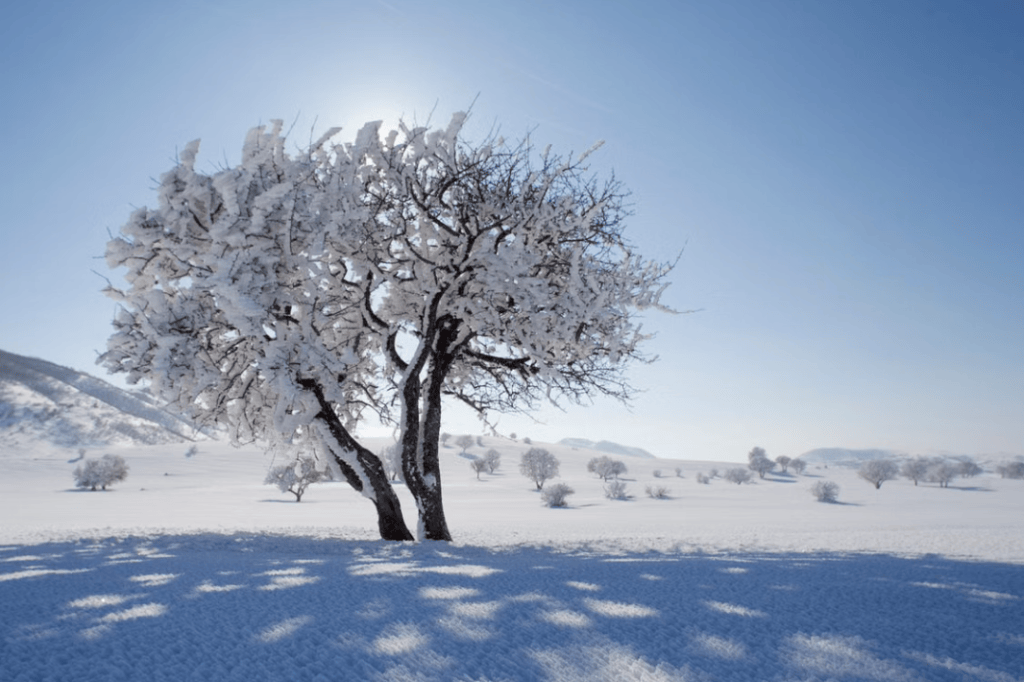
- Winter gets a bad rap, but it hands you the darkest skies of the year. The bonus…three supermoons, up to 150 meteors an hour, and two planets at their best are all queued up, and the only ticket is a warm coat.
- The same roving laboratory that’s been crawling across Mars for fourteen years just caught something in the evening sky that only shows up briefly each autumn…and it’s worth the watch.
- When the world’s biggest climate meeting ended in a shouting match, it would’ve been easy to call it hopeless, but history says otherwise. The last time talks collapsed this badly, the world came back six years later and signed the Paris Agreement. So what happens now?
- Ever wonder why pilots ask you to keep that seatbelt fastened even when the sky looks perfectly calm or why one airline’s answer to brutal desert heat is simply scheduling flights at midnight? The invisible forces above the clouds are getting more interesting, and the science of staying ahead of them is racing to keep up.
- Everyone knows the old saying “it’s not the heat, it’s the humidity.” However, few of us grasp just how literally true that is for the human body, or why the combination is quietly becoming one of the biggest summer threats in more places than you’d expect. (Free to read. New Scientist just asks for a quick, no-cost registration.)
- Your weather app doesn’t ask your phone for much. However, your phone may be asking the sky for something, and by 2040 it could be enough to blur the forecasts we all depend on.
- An ocean pattern unlike any other on record is redrawing the weather map…fueling the busiest Pacific hurricane season ever measured while keeping the Atlantic so quiet its first storm arrived later than any in more than a century…and its fingerprint will be on our weather well into 2027.
HURRICANE SAFETY AND PREPAREDNESS
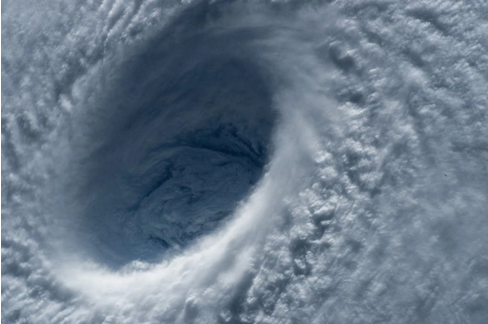
The tropical Atlantic has settled into a long stretch of calm, and with the 2026 hurricane season officially winding down toward its November 30th finish, all signs point to a quiet ending. Quiet, though, is not the same as uneventful. Even a subdued season found a way to send one storm ashore in Florida, a familiar reminder that it only takes one to make it a memorable year where you live.
The good news is that hurricane preparedness doesn’t expire when the season does. The checklist that serves you in June; a family plan, stocked supplies, a known evacuation route, and a habit of paying attention, works just as well for tornado outbreaks, winter storms, severe weather, and even earthquakes. There’s no bad week to review your plan, check your supply kit, and refresh your memory on where you’d go and how you’d get there, while store shelves are full and the sky is quiet.
A calm Atlantic is the perfect time to prepare for a stormy day, because preparedness isn’t paranoia. It’s the reason some families ride out trouble calmly while others scramble. Stay prepared, stay informed, and get a good start at the link below.
US DROUGHT MONITOR UPDATE
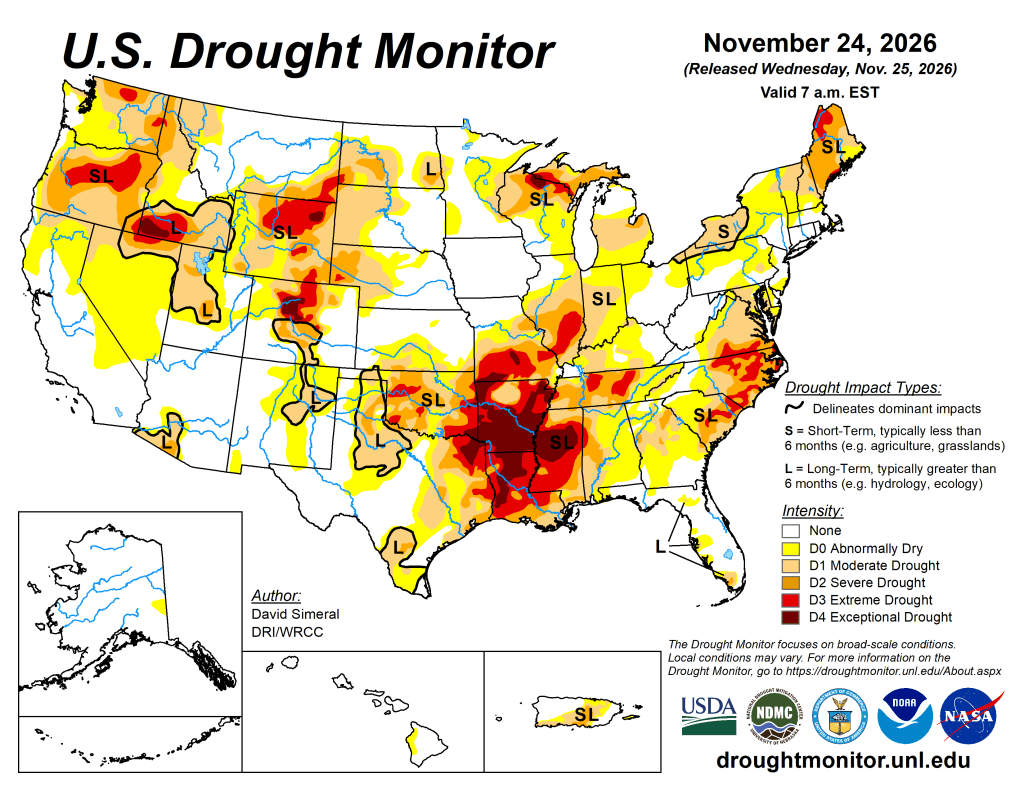
US Drought Monitor Summary
This week’s US Drought Monitor shows the map flipping from last week. Widespread improvement occurred across the western U.S., southern and eastern Texas, Florida, and pockets of the Carolinas as a parade of Pacific storms dumped heavy rain on California and buried the Sierra Nevada in more than three feet of snow, while conditions deteriorated across much of the Midwest, South, Southeast, Mid-Atlantic, and Northeast with Florida’s relief arriving via a multi-day deluge that topped 10 inches in spots. Above-normal precipitation over the past 30 to 90 days continues to fuel drought recovery in California, Nevada, and the Four Corners, while a mostly dry week deepened concerns from the Plains to the Northeast, where temperatures ran 8 to 16+ degrees above normal. Looking ahead, the forecast keeps the good news rolling with 2 to 5+ inches of rain for the Pacific Northwest and northern California coasts, 1 to 3 inches across the South through Northeast, and above-normal precipitation favored for most of the country through early December even though the entire contiguous U.S. is favored to run warmer than normal into the first days of December.
- NOAA’s US Drought Monitor website has the full regional and state drought conditions details.
- The latest daily fire weather outlooks can be found at the Storm Prediction Center’s website.
NOAA WEATHER RADIO

Here’s your weekly reminder to check your NOAA weather radio’s batteries, programming, settings, and reception. NOAA has a comprehensive page on NOAA weather radio…a feature of the National weather Service in the USA that has saved countless lives.
CITIZEN SCIENCE
Science doesn’t just happen in labs. It happens in backyards, on phones, and under night skies. And right now, researchers genuinely need your help. Below are places where you can roll up your sleeves, contribute real data, and make a difference for your community and the scientific community alike.
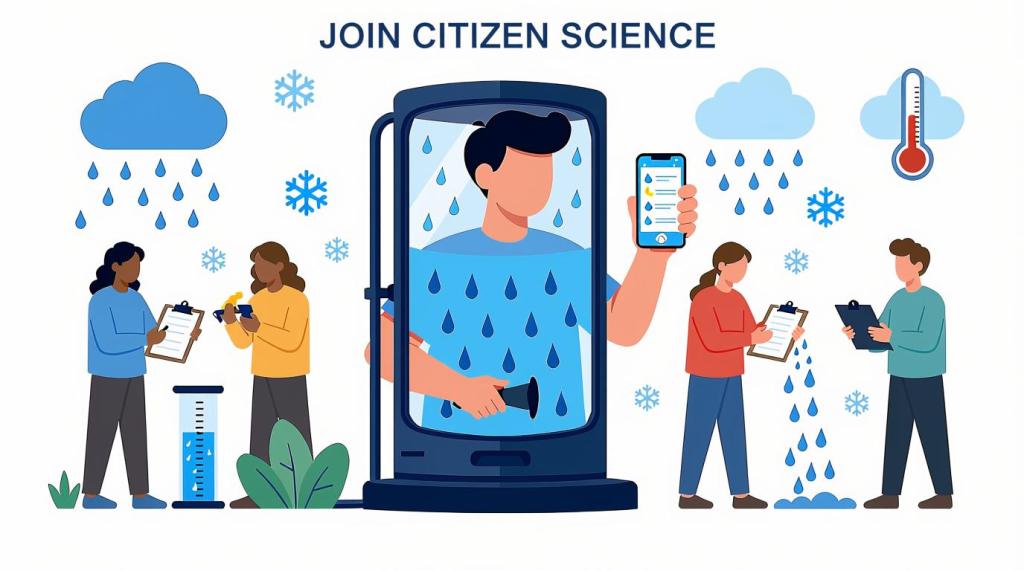
Citizen science lets everyday people actively shape real research by sharing observations and data. Join now to make a tangible impact, discover new insights, and become part of a global community driving scientific breakthroughs!
- The CoCoRaHS project invites weather enthusiasts to become citizen scientists by submitting daily precipitation reports that support forecasting and climate research even on dry days.
- Another path into becoming a citizen scientist is using the free mPING app! Your weather reports go directly to the National Severe Storms Laboratory in Norman, Oklahoma!
- SKYWARN has been around for decades, and for a good reason. When you get the next tornado warning, the reports that made it possible may have come from your neighbors, or someone like you. SKYWARN turns everyday people into the National Weather Service’s eyes on the ground.
- iSeeChange is where stories about the weird weather in your neighborhood aren’t small talk, they’re climate data, and this platform connects what you’re seeing to real science.
- GLOBE Observer is amazing. NASA scientists can’t be everywhere, but with a phone and a few minutes, you can collect the cloud, land, and mosquito data their satellites can’t get.
- SciStarter is a great place to explore a vast variety of citizen science projects.
- Zoonivese is another website that has a plethora of citizen science projects from climate to astronomy to ecology.
That’s a wrap for this week! Thanks for stopping by! See you next Saturday!
™ Tornado Quest © 1998‑2026 Tornado Quest, LLC. All Rights Reserved.


You must be logged in to post a comment.