
As the tropical Atlantic settles into a calm spell and the official hurricane season winds down on November 30, 2025, it’s the perfect moment to stay vigilant whether you’re bracing for a late‑season storm this year or gearing up for next year’s big event. In this edition I’ve gathered a handful of thought‑provoking articles, the newest U.S. Drought Monitor map, and a friendly reminder to test your NOAA weather radio…even when the skies look clear. And be sure to check out the Tornado Quest Chronicles, a new monthly essay that will cover a wide variety of science based topics. Let’s dive in!
- After the 1908 discovery of Edmontosaurus, new fossil finds at the same site revealed exquisitely detailed skin impressions, finally delivering a precise picture of the dinosaur’s scales, tail spikes, and overall appearance.
- A Mars‑sized protoplanet, Theia, struck early Earth, merging its iron‑rich core material into Earth’s mantle and spawning a debris disk that formed the Moon, showing Theia formed nearby and contributed significantly to Earth’s composition.
- A 1‑billion‑year‑old “metal‑free” galaxy may finally expose the elusive first‑generation stars, hinting that the universe’s earliest secrets could still be within reach.
- A new wave of “don’t say climate” politics is quietly reshaping disaster preparedness. Find out how the hidden agenda could jeopardize your home, health, and wallet.
- By showing how even modest progress under the Paris Agreement is already cutting thousands of extreme‑heat days, this story reveals why every fraction of a degree matters for our health and future.
- With the next wave of ultra‑high‑resolution climate models poised to deliver far more precise forecasts of regional impacts, readers will soon discover just how closely tomorrow’s weather could shape their own lives.
- Heat waves are silently turning parts of the USA into deadly climate hot-spots. Discover how unprepared communities like yours could face a lethal surprise.
- Deep‑ocean warming off Greenland is silently heating the Arctic’s hidden depths, threatening sea‑ice loss and permafrost melt that could soon impact coastal communities worldwide. Read more to see how this unseen heat could affect you.
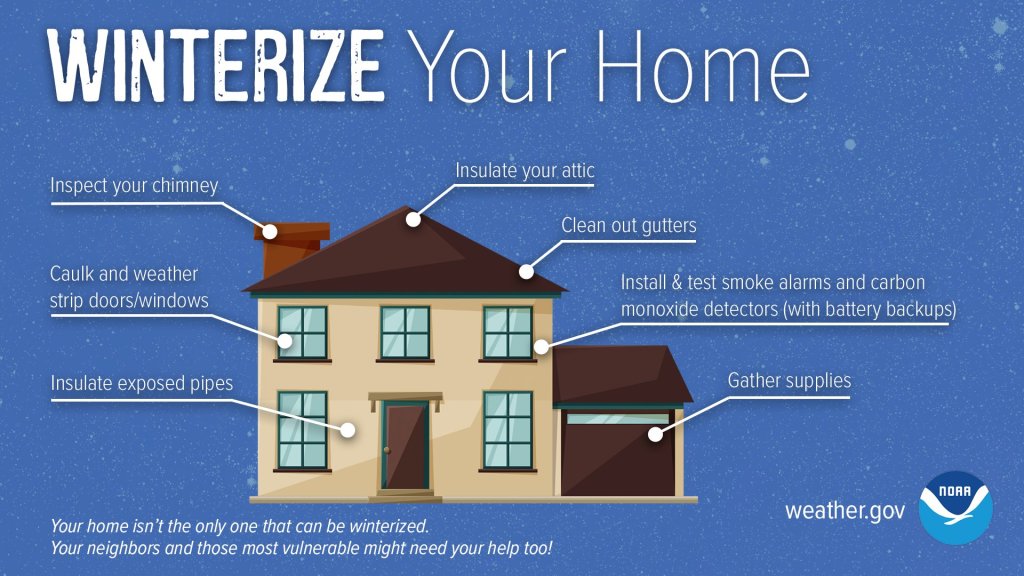
- Meteorological winter is only days away. Are you ready? Here’s your winter weather safety and preparedness link. Click here to see a very comprehensive site for all of your winter weather safety info from NOAA’s National Weather Service.

HURRICANE PREPAREDNESS
Complacency kills. Mother Nature doesn’t check your calendar. Prepare early, stay vigilant, and protect what matters most. Now is the ideal time to prepare for next year!

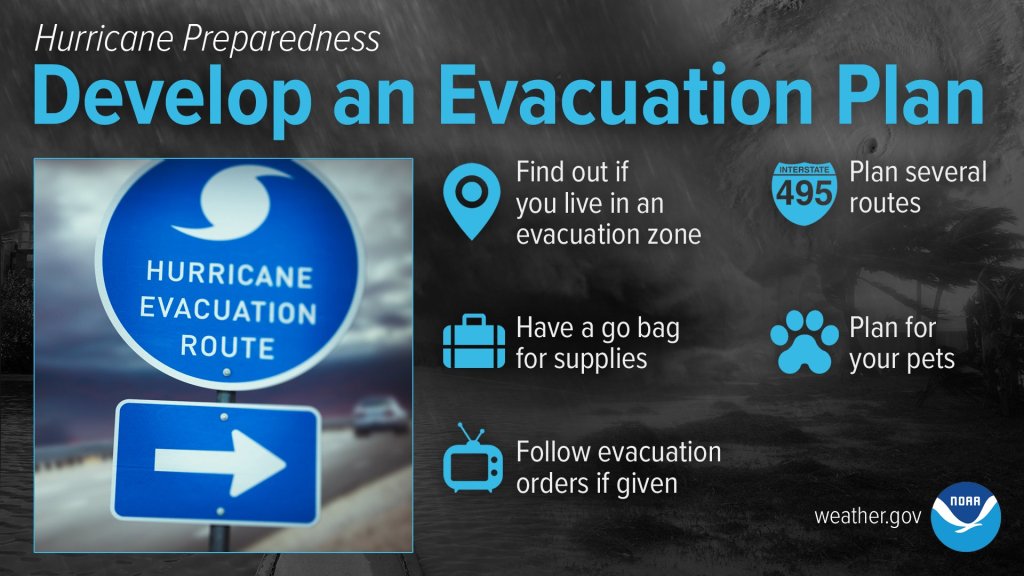
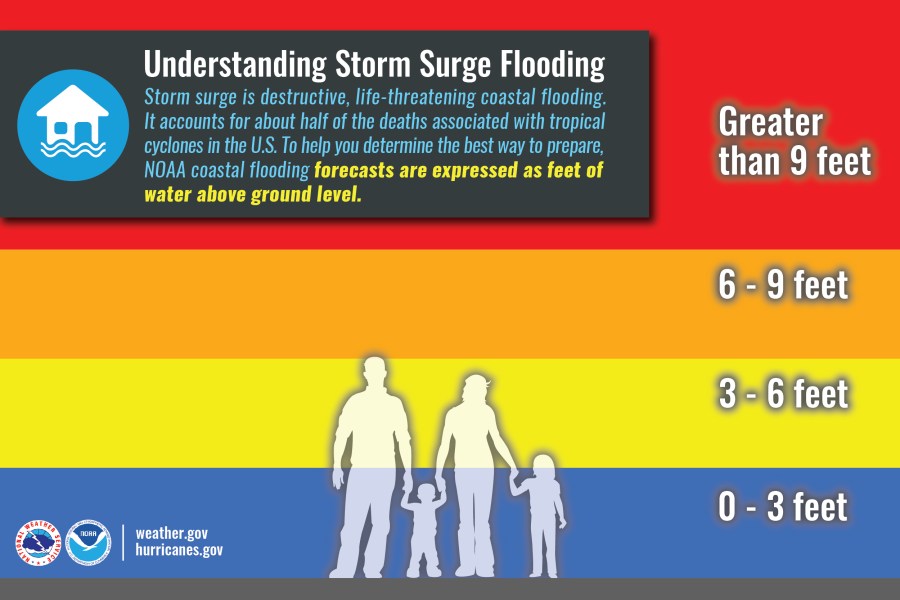
The Atlantic hurricane season officially comes to an end on November 30, 2025. Next week, we’ll take a look back at the 2025 Atlantic hurricane season. In the meantime, this is an ideal time to prepare for the 2026 hurricane season…and the storm you hope never happens.
HURRICANE PREPAREDNESS FROM NOAA
HURRICANE PREPAREDNESS FROM RED CROSS
AMERICAN RED CROSS EMERGENCY CONTACT CARD
PREPARE YOUR PETS FOR DISASTERS
HOW TO BUILD AN EMERGENCY KIT – INFORMATION COURTESY READY.GOV
HOW TO PREPARE FOR A HURRICANE
THE SAFFIR-SIMPSON HURRICANE WIND SCALE
US DROUGHT MONITOR
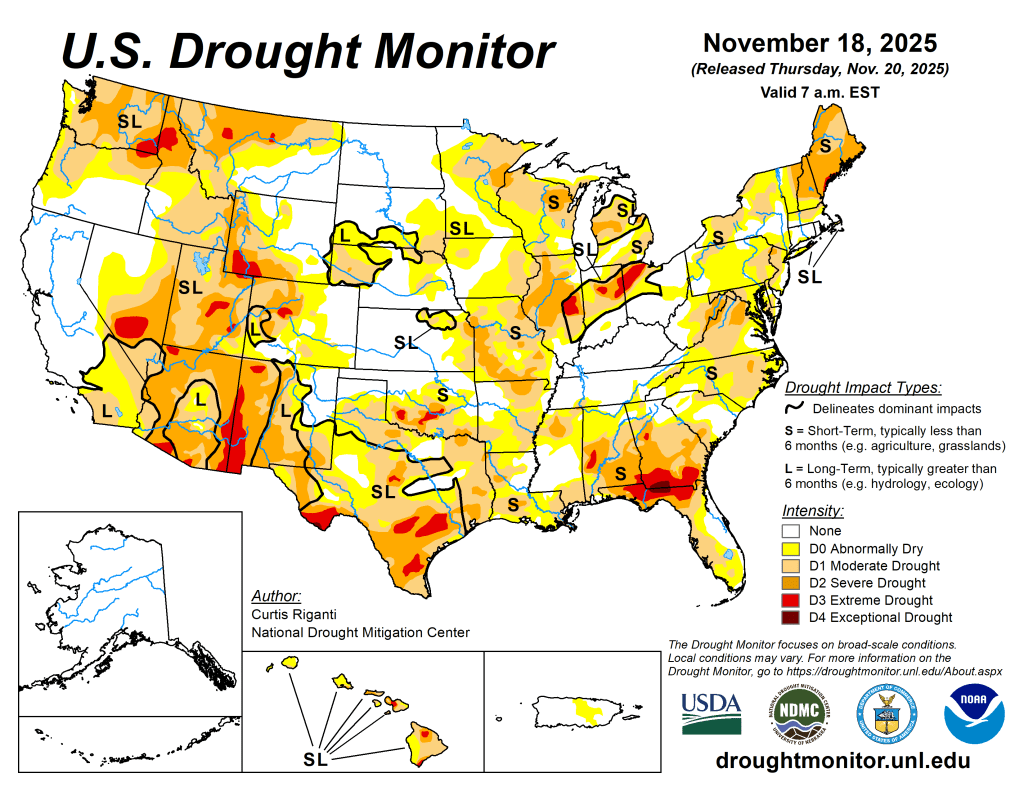
Here’s this week’s update on the US Drought Monitor. Dry conditions dominated the central and eastern U.S., while the West experienced widespread heavy rain and snow, with above‑normal warmth west of the Mississippi and near or below‑normal temperatures east, leading to mixed hydrologic impacts, improvements in the Northeast, California, and Washington, but degradations across much of the Gulf Coast, the Plains, and parts of the Great Lakes region.. The latest fire weather outlooks can be found at the Storm Prediction Center website where they are updated daily.
NOAA WEATHER RADIO
Here’s your weekly reminder to check your NOAA weather radio’s operation and its batteries. NOAA has a comprehensive page on NOAA weather radio…a feature of the National weather Service in the USA that has saved countless lives.

CITIZEN SCIENCE
Citizen science lets everyday people actively shape real research by sharing observations and data. Join now to make a tangible impact, discover new insights, and become part of a global community driving scientific breakthroughs!
- The CoCoRaHS project invites weather enthusiasts to become citizen scientists by submitting daily precipitation reports that support forecasting and climate research even on dry days.
- Another path into becoming a citizen scientist is using the free mPING app! Your weather reports go directly to the National Severe Storms Laboratory in Norman, OK!
That’s a wrap for this week! Thanks for stopping by! See you next Saturday!
™ Tornado Quest © 1998‑2025 Tornado Quest, LLC. All Rights Reserved.
 TORNADO QUEST
You must be logged in to post a comment.