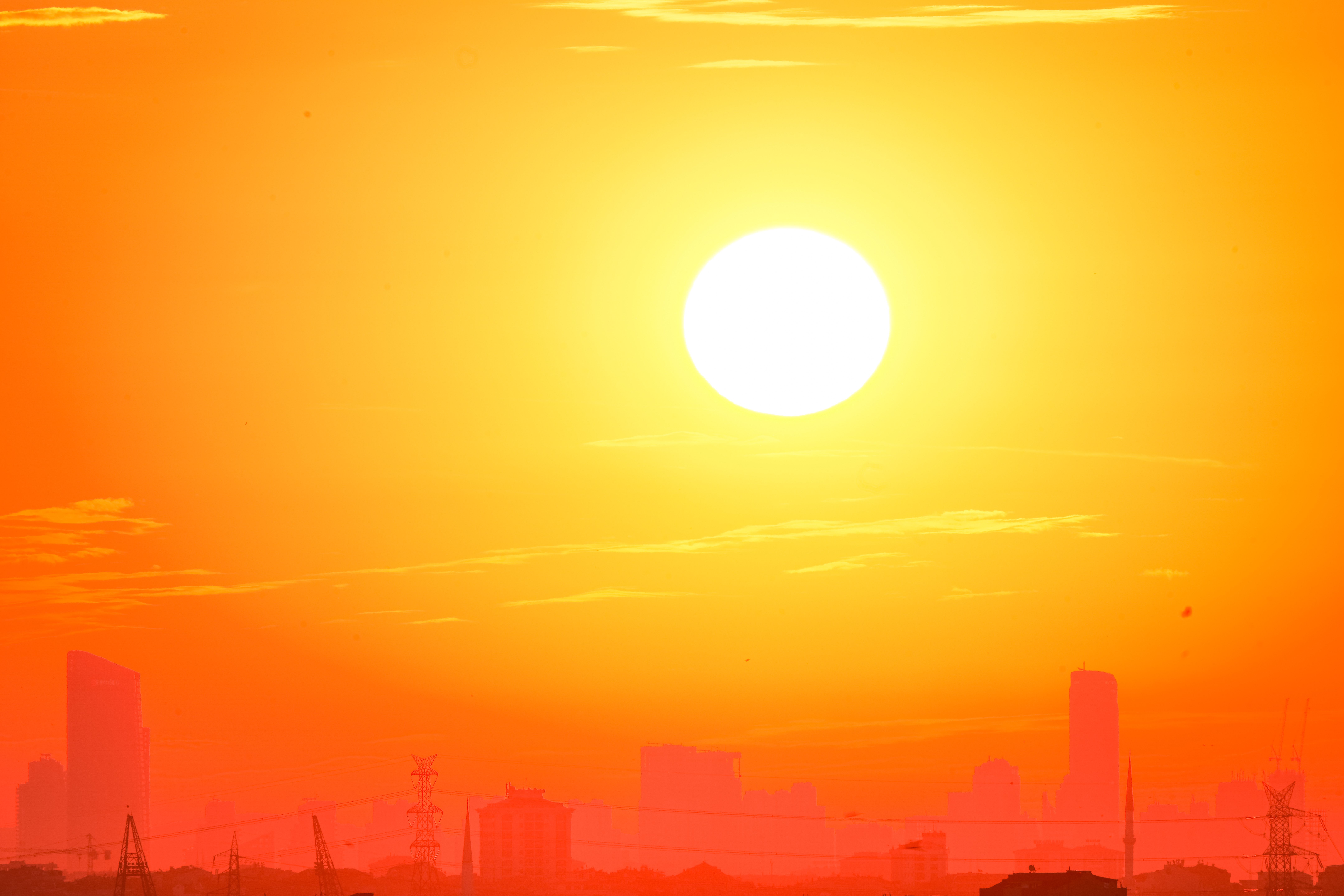
Ten links this week and the heat thread running through nearly all of them should tell you something about the summer we’re living through. Before you read anything else, please visit the Severe Weather and Tornado Safety page, the Invisible Storm Heat Safety page, and the Hurricane Safety information right here on Tornado Quest. Your NOAA Weather Radio deserves a battery check this week, Citizen Science links are in the post, and the US Drought Monitor update is there as well. And don’t forget the quarterly edition of my Tornado Quest Chronicles essay. This week’s reads range from the 50th anniversary of humanity’s first look at the surface of Mars to a story about an American scientist fired for refusing to stop doing his job. Settle in. There’s a lot here worth your time.
- This month marks the 50th anniversary of a watershed event in the history of science in general, and astronomy in particular.
- Life on Mars? Perhaps. Here’s a take on the concept both past and future.
- This week saw an unabashed, nefarious attempt by American public servants (aka elected officials/politicians) to discredit the entire scientific community.
- An American EPA scientist was fired for refusing to stop researching climate change and environmental health. This clearly shows political pressure is undermining the government’s ability to protect public health with independent science.
- Does recycling really distract from bigger climate action? There is new research that has your answer.
- From New York to California, scorching summer temperatures are forcing American schools to close early or go remote, undermining efforts to help struggling students catch up.
- Most people blame stress or screens for their bad sleep this summer. A new analysis just identified something happening outside their window that’s stealing up to 56 hours of rest a year.
- The ongoing wildfires in France and Spain are like nothing those countries have seen before.
- French firefighters risking life and limb have enough hazards already. But this potentially deadly danger is in a league all it’s own.
- An Atlantic ocean current that is a major player in our planets weather could have dramatic effects on nearby land masses like Greenland, but that doesn’t let California off the hook.
THE INVISIBLE STORM
HURRICANE AND TROPICAL CYCLONE SAFETY AND PREPAREDNESS
SEVERE WEATHER AND TORNADO SAFETY AND PREPAREDNESS
NOAA WEATHER RADIO
Here’s your weekly reminder to check your NOAA weather radio’s batteries, programming, settings, and reception. NOAA has a comprehensive page on NOAA weather radio…a feature of the National weather Service in the USA that has saved countless lives.

US DROUGHT MONITOR
Over the next five days, expect significant rainfall across the Gulf Coast from Louisiana to Florida, with some areas potentially receiving 3-5 inches of rain. Lighter showers are expected elsewhere in the Southeast and Mid-Atlantic. Most of the rest of the country, including the Northeast, Midwest, and eastern Plains, should see modest rainfall of 1-4 inches. The Four Corners region may get isolated monsoon rain, while the Intermountain West, Great Basin, and West Coast will likely stay dry.
Looking further ahead (August 3-7), warmer-than-average temperatures are expected across nearly the entire United States, especially in California, the Desert Southwest, and the Rockies. As for rainfall during that period, the Southwest, Texas, southern Florida, Upper Midwest, and Northeast should see wetter-than-usual conditions, while the Pacific Northwest, northern Rockies, and western Plains may stay drier than normal. Hawaii is forecast to get above-average rain as well.
In short: the Gulf Coast faces heavy rain soon, most of America will run hotter than usual next week, and rainfall patterns will be mixed depending on your region. In spite of rainfall potential, many areas are at the peak of their annual average high temperatures. See The Invisible Storm for heat safety information.
- NOAA’s US Drought Monitor website has the full regional and state details.
- The latest daily fire weather outlooks can be found at the Storm Prediction Center’s website.

CITIZEN SCIENCE
Citizen science lets everyday people actively shape real research by sharing observations and data. Join now to make a tangible impact, discover new insights, and become part of a global community driving scientific breakthroughs!
- The CoCoRaHS project invites weather enthusiasts to become citizen scientists by submitting daily precipitation reports that support forecasting and climate research even on dry days.
- Another path into becoming a citizen scientist is using the free mPING app! Your weather reports go directly to the National Severe Storms Laboratory in Norman, Oklahoma!
That’s a wrap for this week! Thanks for stopping by! See you next Saturday!
™ Tornado Quest © 1998‑2026 Tornado Quest, LLC. All Rights Reserved.


You must be logged in to post a comment.