
Hurricane Melissa near Puerto Rico on October 28, 2025.
Most Americans say they trust science, yet a striking gap leaves millions feeling disconnected from the field they believe in. The disconnect isn’t about belief. It’s about access. Summer 2026 just became the hottest on record for the contiguous United States, with over 290 million Americans facing extreme heat conditions. New research asks whether you can train your body to survive these temperatures and the answer could save lives. Beyond the visible haze of wildfire smoke, a groundbreaking tool is finally revealing the invisible toxic metals riding those plumes, warning firefighters and communities before lungs bear the cost. Living in most American states means extreme weather will reach you somehow. For some segments of the population, homeowners insurance rates are already being priced beyond reach. Your NOAA Weather Radio stays charged. The hurricane safety and preparedness page is ready and waiting. Eleven reads this week from dinosaurs to the most frequently asked questions about tornadoes. Settle in, relax, and enjoy this week’s reads.
- Most Americans say they value science, yet a striking gap leaves millions feeling disconnected from the very field they trust.
- Most people tend to think of dinosaurs, like our lovable Tyrannosaurus Rex, as being cold blooded. Hold your hats because there’s a new view of their physiology.
- Beyond the visible haze, a groundbreaking new tool could finally reveal the invisible toxic metals riding wildfire smoke plumes. This can warn firefighters and communities before their lungs, and yours, bear the cost.
- Climate change likely triggered a deadly 2026 Nepal mountain collapse by melting glaciers and permafrost, threatening water systems that support billions and warning that similar disasters will increase globally as temperatures rise.
- Living in most American states means you’ll experience extreme weather in some form. Unfortunately, for some segments of the population, their homeowners insurance rates are disproportionately being affected.
- Yes, your summers are getting dangerously hotter. Can you train your body to survive extreme heat, and could it save lives as summers grow deadlier?
- The air quality monitors around America are vanishing at an alarming rate. This has a direct affect on you to stand up for your rights and protect your family and property more than you’d think.
- Summer 2026 was the hottest on record for the contiguous USA with over 290 million Americans facing extreme heat. This is a climate driven trend that experts warn could worsen with the current El Niño.
- El Niño has shattered Atlantic hurricane records. You need to know why this is important to you and if you’re in the clear.
- The current El Niño just reached “super” status. Aside from hurricanes, what does that mean for the weather, and the winter ahead of you in your region? Regardless of political views, the data on El Niño’s impact is clear and it’s reshaping weather patterns globally.
- NOAA’s Storm Prediction Center’s Online Tornado FAQ has a new look and new information! Check it out here!
HURRICANE SAFETY AND PREPAREDNESS
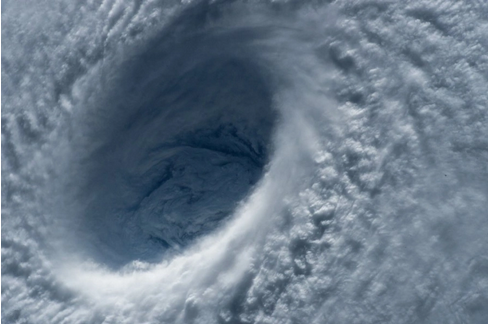
Don’t Let the Quiet Atlantic Fool You: Why Now Is Not the Time to Relax!
The Atlantic hurricane season in 2026 has been unusually quiet so far, with record-low activity and no major storms making landfall. But here’s the catch: a quiet season doesn’t mean zero risk. In fact, history shows that some of the most destructive hurricanes, like Andrew in 1992, have struck during years when the season seemed slow at first. Forecasters say this year’s calm is largely due to a strong El Niño, which creates wind patterns that disrupt storm formation. However, the season isn’t over yet, and it only takes one powerful storm to cause devastating damage.
Even with fewer storms, the lack of activity can lead to complacency. People let their guard down, emergency plans get ignored, and resources may be diverted elsewhere. But the reality is that hurricane preparedness isn’t just about the number of storms; it’s about being ready for the one that could hit your community. So while the Atlantic may be quiet now, stay prepared, stay informed, and don’t assume we’re in the clear.
US DROUGHT MONITOR
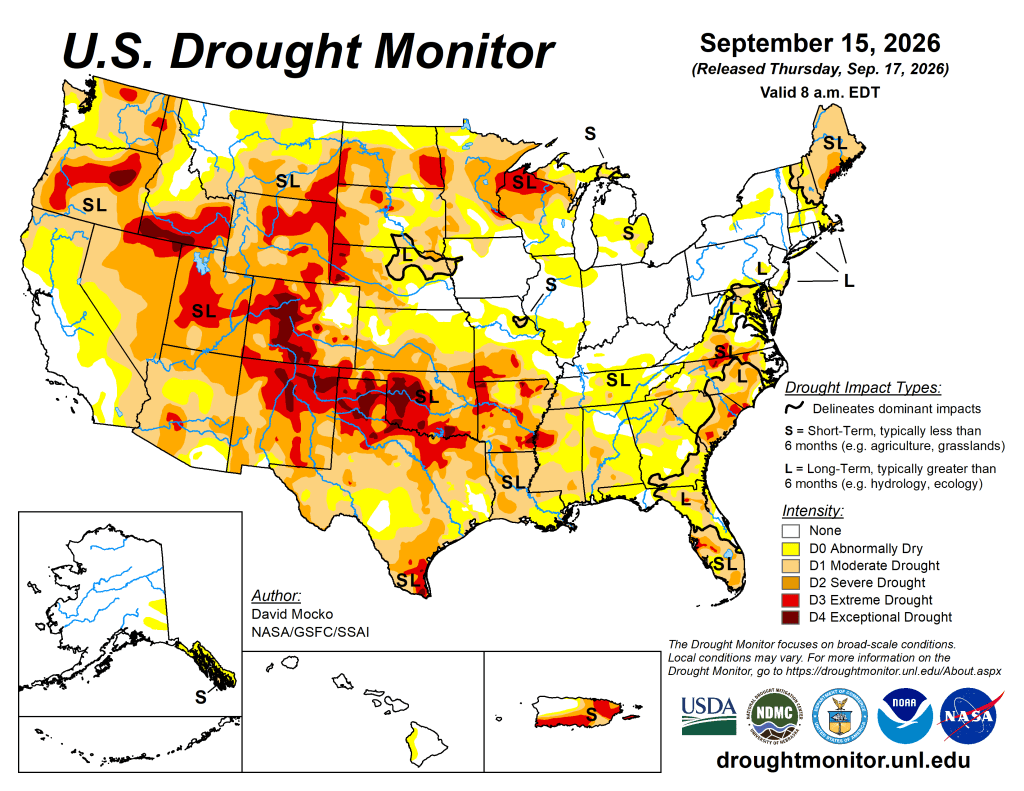
US Drought Monitor Summary
The drought picture this week is a story of haves and have-nots. Iowa, eastern Nebraska, Kansas, and northwest Missouri received meaningful relief with some areas picking up more than four inches while Ohio, West Virginia, and Florida also saw beneficial rain. But Texas, Oklahoma, and most of the southern Plains stayed stubbornly dry, with temperatures running more than 10 degrees above normal in some locations. That combination of heat and no rain is the definition of flash drought territory, and it’s not improving anytime soon.
The forecast through next week offers little comfort for the south central United States. Texas, Oklahoma, Arkansas, Louisiana, Mississippi, and Alabama are expected to receive little to no rainfall while above-normal heat continues to bake the region. The upper Midwest and Great Lakes corridor gets the best rain chances. Looking further out to late September, the pattern locks in with nearly the entire continental US running warmer than normal, the central US tilts drier, and the Eastern Seaboard and Southwest see the best precipitation prospects. If you’re in drought-stricken Oklahoma or Texas right now, the models are not painting an encouraging picture for the weeks ahead. In summary, Nearly 70% of the U.S. remains in drought as of early September 2026, with worsening conditions across the South-Central region, Intermountain West, and Upper Midwest despite isolated relief in the Mid-Atlantic and parts of the Plains. With little rainfall expected through late September and above-normal heat baking the hardest hit areas like Texas and Oklahoma, the outlook remains grim for water resources, agriculture, and wildfire risk across much of the continental U.S.
- NOAA’s US Drought Monitor website has the full regional and state details.
- The latest daily fire weather outlooks can be found at the Storm Prediction Center’s website.
NOAA WEATHER RADIO

Here’s your weekly reminder to check your NOAA weather radio’s batteries, programming, settings, and reception. NOAA has a comprehensive page on NOAA weather radio…a feature of the National weather Service in the USA that has saved countless lives.
THE INVISIBLE STORM
CITIZEN SCIENCE
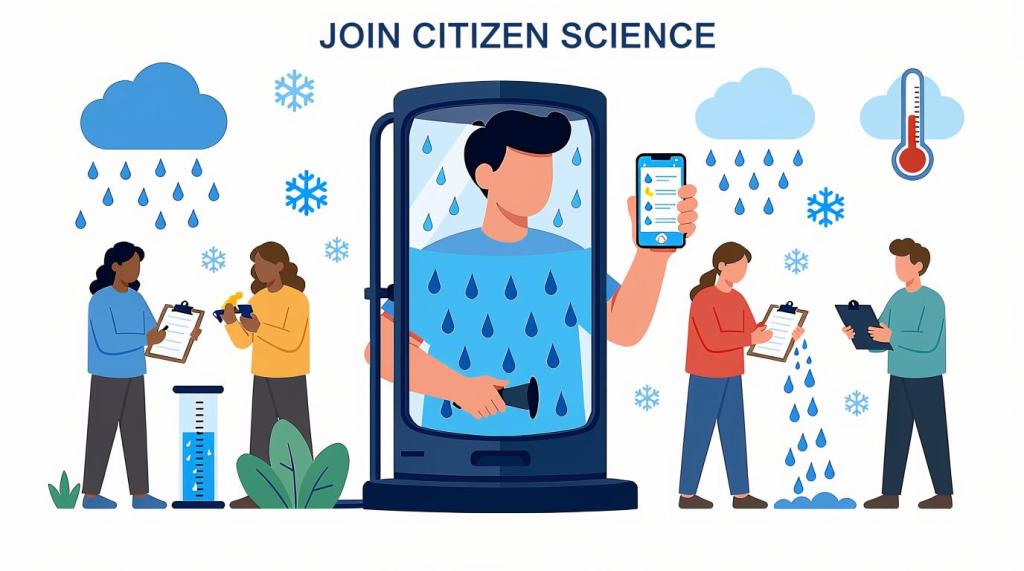
Citizen science lets everyday people actively shape real research by sharing observations and data. Join now to make a tangible impact, discover new insights, and become part of a global community driving scientific breakthroughs!
- The CoCoRaHS project invites weather enthusiasts to become citizen scientists by submitting daily precipitation reports that support forecasting and climate research even on dry days.
- Another path into becoming a citizen scientist is using the free mPING app! Your weather reports go directly to the National Severe Storms Laboratory in Norman, Oklahoma!
- SciStarter is a great place to explore a vast variety of citizen science projects.
- Zoonivese is another website that has a plethora of citizen science projects from climate to astronomy to ecology.
That’s a wrap for this week! Thanks for stopping by! See you next Saturday!
™ Tornado Quest © 1998‑2026 Tornado Quest, LLC. All Rights Reserved.


You must be logged in to post a comment.