Greetings everyone and thanks for coming back. I’ve got lots of good reads this week but first, in case you missed it, I’ve got a new quarterly edition of the Tornado Quest Chronicles published. The focus of this autumn’s essay is winter weather forecasting which is one of the most daunting challenges a meteorologist can face during their career. As usual, there are several other interesting reads ranging from Voyager 1 becoming the first human made object to travel a full light day from Earth, to new research on what you wear in extreme heat, to a Caltech study showing how much lead was in the smoke from LA’s fires. As always, you can depend on a reminder to check your NOAA Weather Radio, citizen science links for everyone, and hurricane safety, because the Atlantic season is far from over. Grab a cup of your favorite drink and settle in for some good reads.
- The Voyager 1 spacecraft is about to become the first human made object to travel a full light day from Earth. What’s more amazing is that it’s still making discoveries.
- That pile of reusable bags under your sink might be trying to tell you something. Here are some ideas on what to do with the extras that could help your community.
- What you wear in extreme heat could determine whether you tolerate it or get sick. The right answer may surprise you.
- Fossil fuels aren’t just in your gas tank. They’re hiding all over your house, and some may be affecting your health.
- Europe’s record hot summer turned out to be its deadliest. The numbers are staggering.
- Colorado’s glaciers lost decades worth of ice in just one year. They may have only 20 years left.
- Climate change is reshaping the planet itself. More surprising is the way it’s changing isn’t what you’d expect.
- When the Los Angeles, CA fires swept through neighborhoods, the smoke wasn’t ordinary wildfire smoke. New research reveals millions breathed lead levels 80 times above normal.
- Methane, a gas that traps 80 times more heat than carbon dioxide, is quietly being deregulated, with rules on leaks and flaring slashed and oversight of the aging wells behind half the industry’s emissions all but gone.
- NASA’s own scientists lay out the unequivocal evidence, backed by more than a dozen peer reviewed references, that Earth is warming faster than at any point in 10,000 years. Given the current presidential administration’s war on science, you’d better read the truth while the agency’s still allowed to publish it.
HURRICANE SAFETY AND PREPAREDNESS
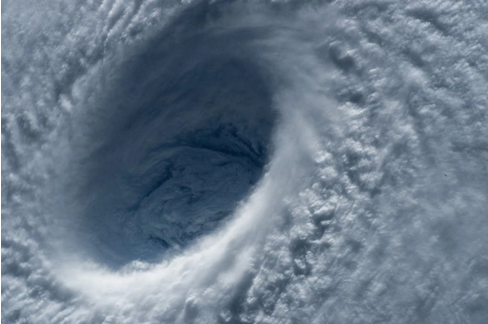
The Atlantic may have gone quiet, but don’t mistake silence for safety.
Hurricane Isaias’s landfall on the Florida coast proved it. A record slow start to the 2026 season never meant the threat had passed. History agrees. 1992’s season didn’t produce its first named storm until late August, yet Category 5 Andrew became one of the most devastating hurricanes to ever strike the United States.
The encouraging news is that preparedness works. Every family that had a plan, stocked supplies, and heeded warnings ahead of Isaias got through it far better than those who didn’t. With several weeks left before the season winds down in November, there’s still time to join them. Review your emergency plan, check your supplies, and know your evacuation route before a watch is issued and store shelves empty. Preparedness isn’t paranoia; it’s the reason some families weather storms calmly while others scramble.
One storm is all it takes to undo months of quiet. The Atlantic isn’t done waking up so make sure you are. Stay prepared, stay informed, and get a good start at the link below.
US DROUGHT MONITOR UPDATE
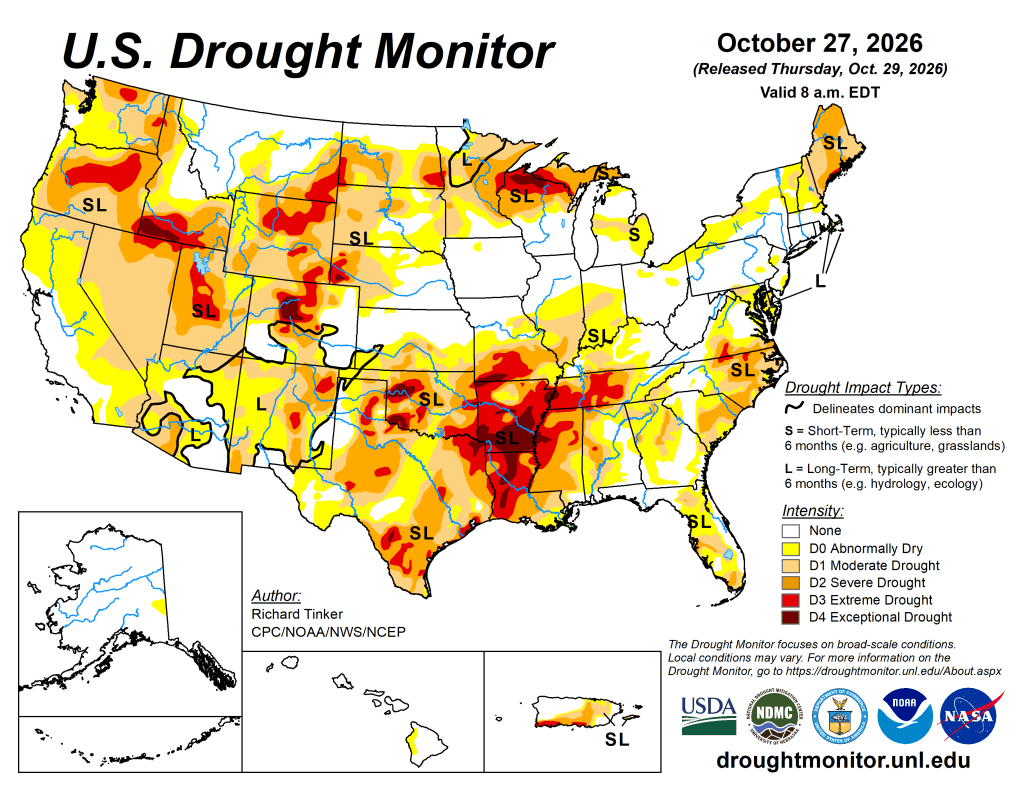
US Drought Monitor Summary
Last week brought a stark contrast in precipitation: welcome heavy rain fell across the Four Corners region, southern California, and the Pacific Northwest bringing meaningful drought relief to some badly parched areas while nearly all of the eastern half of the country stayed dry, with conditions actually worsening from the southern Mississippi Valley through the lower Mid-Atlantic. The concern for everyday Americans is quiet but real. The dry zone now stretches across productive farmland and heavily populated regions, and the forecast offers little help. Warm, mostly rainless weather is expected over the Northeast, Mid-Atlantic, and Great Lakes into early November, with above normal temperatures blanketing most of the nation. It’s the kind of slow moving trend that’s easy to overlook until it starts affecting water supplies, agriculture, and food prices closer to home.
- NOAA’s US Drought Monitor website has the full regional and state drought conditions details.
- The latest daily fire weather outlooks can be found at the Storm Prediction Center’s website.
NOAA WEATHER RADIO

Here’s your weekly reminder to check your NOAA weather radio’s batteries, programming, settings, and reception. NOAA has a comprehensive page on NOAA weather radio…a feature of the National weather Service in the USA that has saved countless lives.
CITIZEN SCIENCE
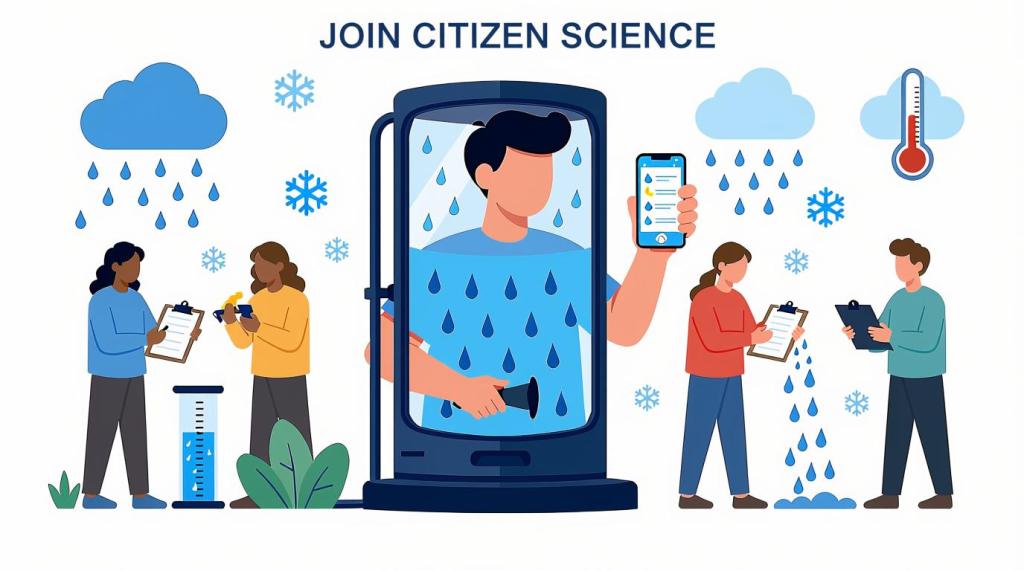
Citizen science lets everyday people actively shape real research by sharing observations and data. Join now to make a tangible impact, discover new insights, and become part of a global community driving scientific breakthroughs!
- The CoCoRaHS project invites weather enthusiasts to become citizen scientists by submitting daily precipitation reports that support forecasting and climate research even on dry days.
- Another path into becoming a citizen scientist is using the free mPING app! Your weather reports go directly to the National Severe Storms Laboratory in Norman, Oklahoma!
- SciStarter is a great place to explore a vast variety of citizen science projects.
- Zoonivese is another website that has a plethora of citizen science projects from climate to astronomy to ecology.
That’s a wrap for this week! Thanks for stopping by! See you next Saturday!
™ Tornado Quest © 1998‑2026 Tornado Quest, LLC. All Rights Reserved.


You must be logged in to post a comment.