Greetings everyone and thanks for coming back. It’s been a loud week in America, and I’m not going to add to the noise. I’ll do what I always do. A handful of good reads, a few reminders that could matter on a bad day, and some room to think. This week’s links run from a rock on Mars that may never make it home to a question about what your air quality app isn’t telling you. The autumn Tornado Quest Chronicles essay is up too. Hurricane season doesn’t end until November 30, so the hurricane safety page is here, along with the US Drought Monitor update and the citizen science links if you’d like to help the people who study this stuff. Pour something warm and happy reading.
- A rock that could answer humanity’s biggest question is sitting in a tube on Mars, and the mission to bring it home was just canceled.
- Scientists admit they understand far less than they claim. That confession isn’t a scandal but the engine of science itself working exactly as it’s supposed to.
- He was hailed a hero for exposing one of America’s biggest public health scandals. Then, the same commitment to verifiable scientific evidence that made him famous turned his own community against him, and cost him his friends.
- World leaders gather for climate talks this week in the middle of what feels like three blockbuster movies at once. A horror story, a love triangle, and a war. Only one of them ends well.
- The wilderness that thrives without us might be a myth: new research suggests some ecosystems don’t just tolerate people, they need us. The implications could upend how the world conserves nature.
- Everyone thinks they’re immune to natural disaster rumors until catastrophe proves otherwise, and the unsettling reason why reveals more about human nature than any conspiracy theory ever could.
- Earth’s two hemispheres both have summer, but one runs longer, burns hotter, and defies everything you thought you knew about how our planet tilts toward the sun.
- That air quality app on your phone could be steering you wrong. When the readings involve your lungs, heart, and long-term health, trusting the wrong source can matter more than you think.
HURRICANE SAFETY AND PREPAREDNESS
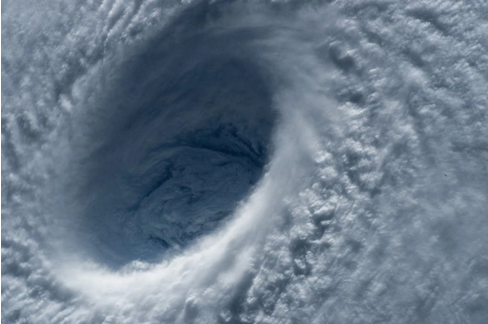
The Atlantic may have gone quiet, but don’t mistake silence for safety.
Hurricane Isaias’s landfall on the Florida coast proved it. A record slow start to the 2026 season never meant the threat had passed. History agrees. 1992’s season didn’t produce its first named storm until late August, yet Category 5 Andrew became one of the most devastating hurricanes to ever strike the United States.
The encouraging news is that preparedness works. Every family that had a plan, stocked supplies, and heeded warnings ahead of Isaias got through it far better than those who didn’t. With several weeks left before the season winds down in November, there’s still time to join them. Review your emergency plan, check your supplies, and know your evacuation route before a watch is issued and store shelves empty. Preparedness isn’t paranoia; it’s the reason some families weather storms calmly while others scramble.
One storm is all it takes to undo months of quiet. The Atlantic isn’t done waking up so make sure you are. Stay prepared, stay informed, and get a good start at the link below.
US DROUGHT MONITOR UPDATE
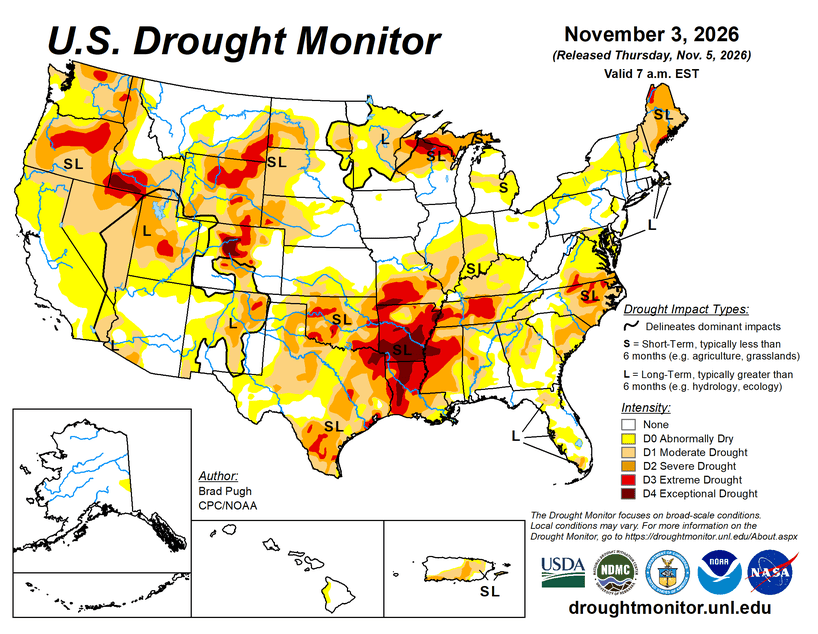
US Drought Monitor Summary
The western U.S. got some genuinely good news this fall. Repeated heavy rains from a very wet October brought widespread drought relief to the Southwest, Great Basin, and Texas (helped along by the remnants of Hurricane Vance) with more improvements stretching into the Great Plains, and Florida’s drought continuing to shrink. The flip side is that drought is instead expanding and intensifying across the Mississippi Valley, Ohio Valley, Mid-Atlantic, and New England, the more populated eastern half of the country, so it’s worth keeping an eye on conditions closer to home. Looking ahead, most of the lower 48 gets a drier, more typical November stretch, but an atmospheric river may drench the West Coast by mid-November, and a strong El Niño pattern is expected to keep nearly the whole country warmer than normal through the period.
- NOAA’s US Drought Monitor website has the full regional and state drought conditions details.
- The latest daily fire weather outlooks can be found at the Storm Prediction Center’s website.
NOAA WEATHER RADIO

Here’s your weekly reminder to check your NOAA weather radio’s batteries, programming, settings, and reception. NOAA has a comprehensive page on NOAA weather radio…a feature of the National weather Service in the USA that has saved countless lives.
CITIZEN SCIENCE
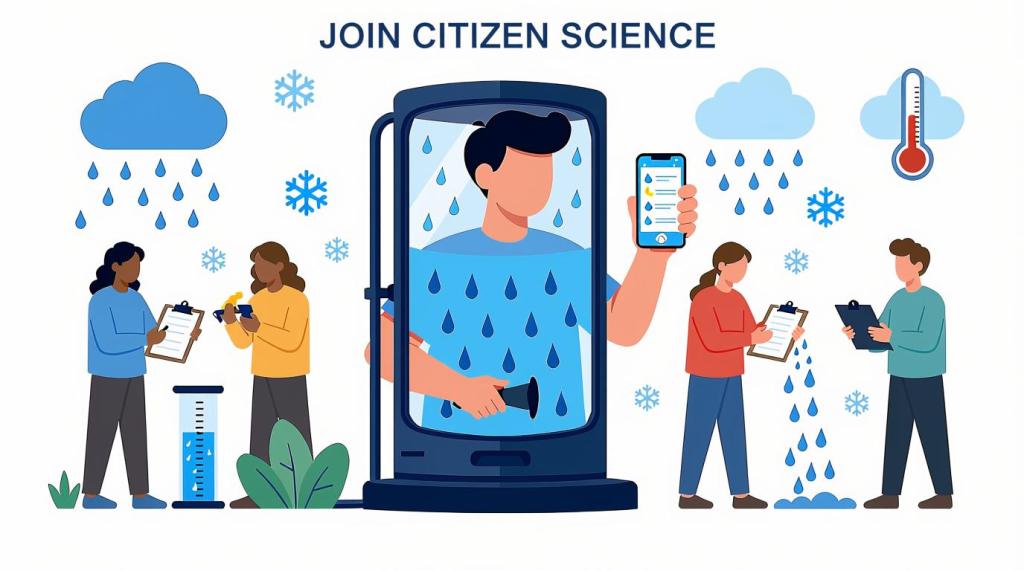
Citizen science lets everyday people actively shape real research by sharing observations and data. Join now to make a tangible impact, discover new insights, and become part of a global community driving scientific breakthroughs!
- The CoCoRaHS project invites weather enthusiasts to become citizen scientists by submitting daily precipitation reports that support forecasting and climate research even on dry days.
- Another path into becoming a citizen scientist is using the free mPING app! Your weather reports go directly to the National Severe Storms Laboratory in Norman, Oklahoma!
- SciStarter is a great place to explore a vast variety of citizen science projects.
- Zoonivese is another website that has a plethora of citizen science projects from climate to astronomy to ecology.
That’s a wrap for this week! Thanks for stopping by! See you next Saturday!
™ Tornado Quest © 1998‑2026 Tornado Quest, LLC. All Rights Reserved.


You must be logged in to post a comment.