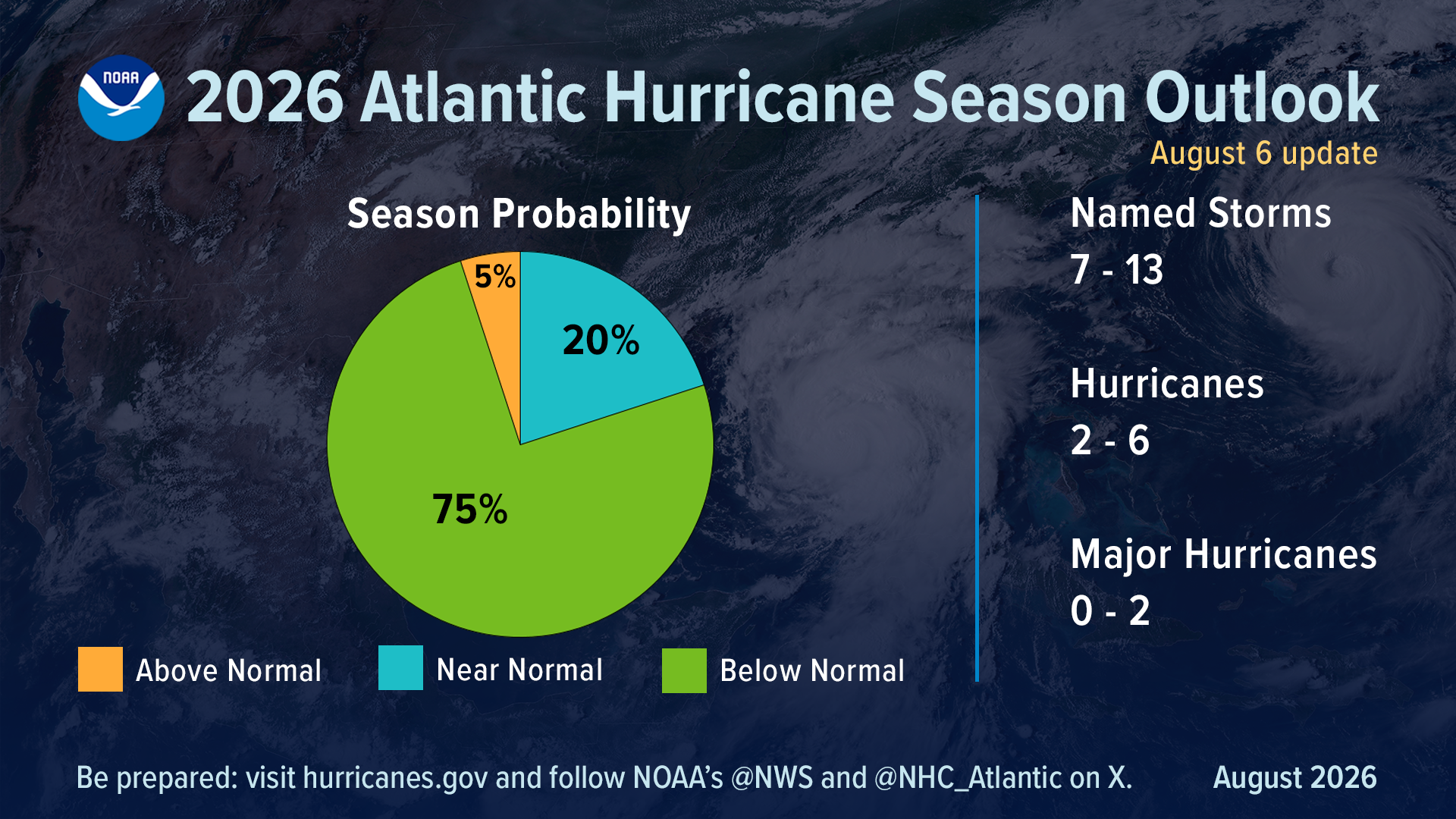
Peak hurricane season is here, and this week the National Hurricane Center released a must-read update on hurricane advisories, watches, warnings, and everything you need to understand when a storm threatens. That link is in the post alongside the full Tornado Quest hurricane safety page. Please read both before you need them. Heat safety information is on the Invisible Storm page, citizen science links are in the post, your NOAA Weather Radio deserves a battery check this week, and the US Drought Monitor update is there as well. I’ve got links this week ranging from what happens when your smartphone fails you during a disaster, to something psychologists discovered about climate headlines that genuinely surprised me, to why Europe’s devastating summer of wildfires may be just the opening chapter. Settle in. We’ve got a lot to cover.
- There’s an environmental price to using AI. This read tells you how to lessen your impact if you use AI.
- The term “Thunderquakes” isn’t one you hear every day. This read explains what they are and how they can help us maintain infrastructure.
- When headlines about climate change backfire, psychologists discovered a intriguing way to protect against the paralysis they cause. The answers are surprising.
- Commercial flights can be bumpy, but that goes hand-in-hand with air travel. NOAA has a new tool that has the potential to make your next airplane ride smoother.
- As rising temperatures make marathons more dangerous, race organizers are shifting dates, starting earlier, and offering shorter routes to protect runners from heat-related health risks.
- Europe’s forests are already burning, but scientists say this summer’s 1,750 wildfires are merely the opening chapter of a story three times worse.
- As climate disasters force us indoors, loneliness becomes lethal with isolation cutting off the community lifelines we need to survive extreme heat, floods, and storms.
- We rely on smartphones for survival during disasters, but what happens when technology fails us at the worst possible moment? Here’s how to stay safe either way.
- We assumed we could trace humanity’s warming fingerprint globally, but new analysis shows the signal vanishes where nature masks the truth.
- You’d think watching your neighborhood flood would make you fight harder for change, but a new Gallup survey reveals something stranger is happening when Americans face extreme weather.
- Last but not least, this very important update from the National Hurricane Center is a must read for anyone living in a region prone to hurricanes. It includes a vast amount of information that will help you understand hurricane advisories, watches, warnings, and much more during very stressful situations!
HURRICANE AND TROPICAL CYCLONE SAFETY AND PREPAREDNESS
THE INVISIBLE STORM
NOAA WEATHER RADIO
Here’s your weekly reminder to check your NOAA weather radio’s batteries, programming, settings, and reception. NOAA has a comprehensive page on NOAA weather radio…a feature of the National weather Service in the USA that has saved countless lives.

US DROUGHT MONITOR
This past week brought heavy rains across the Midwest, with central Illinois and Indiana receiving over 5 inches. Some spots in Indiana saw more than a foot while areas along the southern U.S. stayed dry under high pressure. Temperatures are running dangerously hot in Oklahoma and the southern Great Plains, though stormy weather kept central plains states a bit cooler. Looking ahead, expect more wet conditions along the Atlantic coast, parts of the Southeast, and where the Ohio and Mississippi rivers meet, while the South continues to stay dry. By late August, rain is likely to favor the northern half of the East Coast through New England, with most of the country trending warmer than normal except for the West Coast. Many regions are still broiling in dangerous heat wave conditions. See The Invisible Storm for heat safety information.
- NOAA’s US Drought Monitor website has the full regional and state details.
- The latest daily fire weather outlooks can be found at the Storm Prediction Center’s website.

CITIZEN SCIENCE
Citizen science lets everyday people actively shape real research by sharing observations and data. Join now to make a tangible impact, discover new insights, and become part of a global community driving scientific breakthroughs!
- The CoCoRaHS project invites weather enthusiasts to become citizen scientists by submitting daily precipitation reports that support forecasting and climate research even on dry days.
- Another path into becoming a citizen scientist is using the free mPING app! Your weather reports go directly to the National Severe Storms Laboratory in Norman, Oklahoma!
That’s a wrap for this week! Thanks for stopping by! See you next Saturday!
™ Tornado Quest © 1998‑2026 Tornado Quest, LLC. All Rights Reserved.


You must be logged in to post a comment.